REVIEW · COPENHAGEN
Copenhagen: Guided Architecture and Sustainability Tour
Book on GetYourGuide →Operated by Tropical Bikes · Bookable on GetYourGuide
Copenhagen’s buildings make more sense when you pedal. This guided architecture-and-sustainability ride shows how new design and green planning work together in everyday city life. You’ll cover a solid stretch of town, but with regular stops so the “why” behind each project sticks.
What I like most is the way the guides connect architecture to real human needs, not just looks. I also love that you ride past the big-name sights and still end up with strong moments, especially around the harbour and Ørestad, where modern living ideas feel practical, not theoretical.
One consideration: this is only for people who can comfortably bike. You’ll cover roughly 17 km in about 3 hours, and the tour runs in any weather, so you’ll want shoes and clothing you can move in.
In This Review
- Key points at a glance
- Why Copenhagen reads like a story when you’re on two wheels
- Route rundown: from Blox to Ørestad and back via the harbour
- Blox: architecture you can talk about right away
- Lille Langebro and the bridge-view perspective
- Havnebadet Islands Brygge: when waterfront planning becomes daily life
- Karen Blixens Plads: public space with a purpose
- Ørestad: modern design with a sustainability mindset
- Tietgen Residence Hall: housing design as a city value
- Amager Fælled: green space in the city plan
- E/F Gemini Residence: a modern living model you can see
- Cykelslangen: a scenic ride moment that’s actually useful
- Kaktus Towers: modern towers with an explanation behind them
- Enghave Plads and the shift to community-centered transformation
- Israels Plads (and the industrial-to-public-space lesson)
- What sustainability means on this tour (not just words on a sign)
- Design that supports everyday movement
- Revitalization instead of erasing the past
- Modern architecture shaped by living needs
- Bikes, safety, and included comfort: the stuff that saves your day
- Standard equipment included
- Optional upgrades (only if you need them)
- Kids and bike sizes
- The big practical note: you must ride
- Price and value: what $70 gets you in Copenhagen time
- The one drawback to plan around before you book
- Who should book this biking architecture tour
- Should you book this tour?
- FAQ
- FAQ
- How long is the bike tour?
- How far will I cycle?
- Do I get a bike and safety gear?
- Does the tour run in bad weather?
- What are the tour languages?
- Where do I meet the tour?
- Can I upgrade to an e-bike or cargo bike?
- Are there options for children?
- Is it suitable if I can’t ride a bike?
- What’s the cancellation policy?
Key points at a glance
- Local guides who explain sustainability in plain language (and in English or German)
- A bike route that cuts off the main tourist circuit while still hitting meaningful sites
- Modern architecture stops that show how design affects daily life
- You ride about 17 km, with frequent short guided moments so it doesn’t feel like one long slog
- Comfort add-ons included like helmets, rain poncho, luggage storage, and a lounge before and after
- Optional upgrades if standard bikes aren’t enough (e-bike, cargo, child-seat)
Why Copenhagen reads like a story when you’re on two wheels
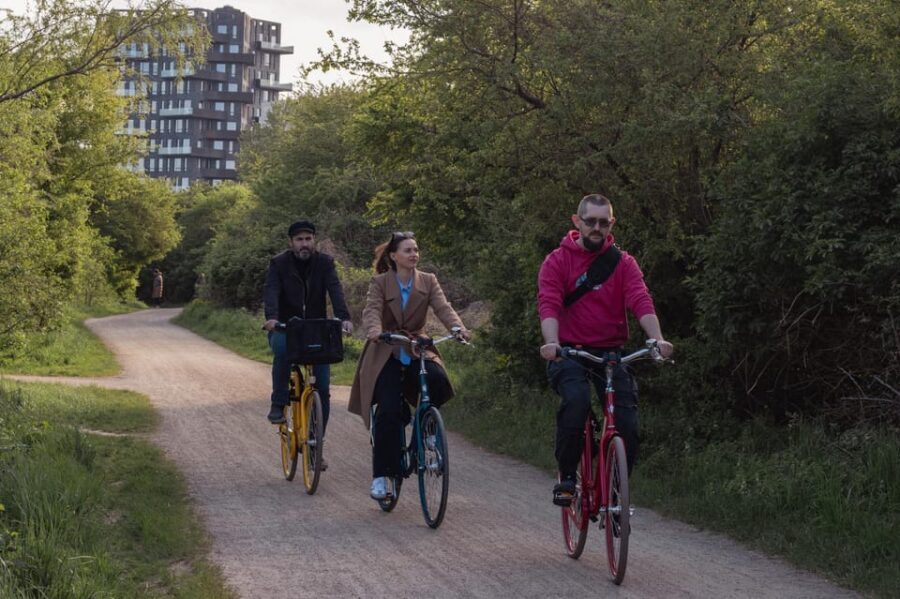
Copenhagen has a special talent: it keeps improving while staying livable. On foot, it can feel like you’re just moving between sights. On a bike, you get the “in-between” parts—streets, waterfront sections, public squares—where planning decisions show up.
This tour is built around that idea. You don’t just see buildings; you learn how the city’s sustainable and human-first approach shapes what gets built and how people move. The guide makes it personal too. In the feedback I saw, names like Rene’ and Jörn kept showing up as big contributors—friendly, competent, and good at making you feel safe on the ride.
And because you’re cycling, you’ll naturally compare neighborhoods. Copenhagen blends new projects with older context all the time, but on this route the contrast feels sharper. You’ll notice how the city supports both everyday routines and public life without turning everything into a theme park.
Other architecture and sustainability tours we've reviewed in Copenhagen

Route rundown: from Blox to Ørestad and back via the harbour
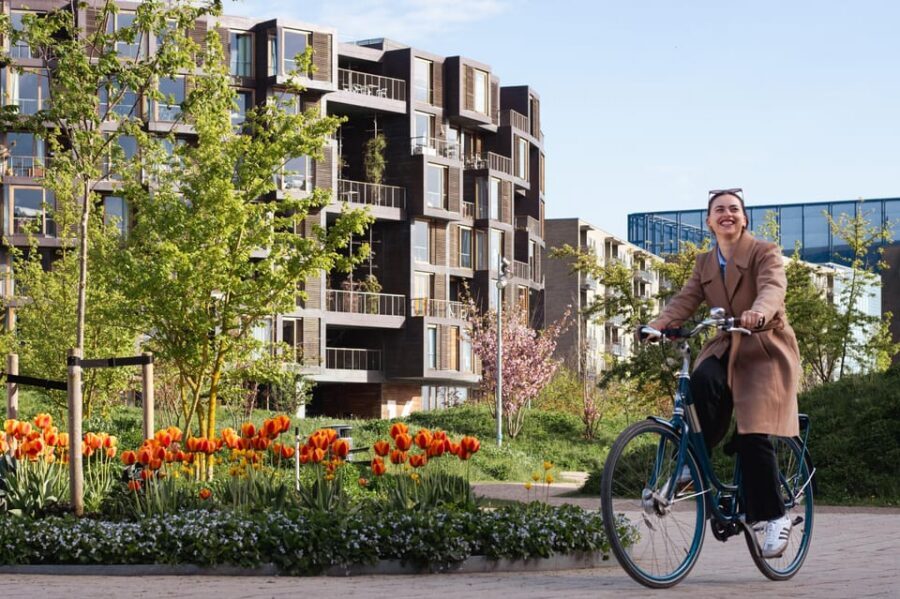
You’ll start from one of three meeting options (the exact point depends on what you book). One common start is at Tropical Bikes on Vester Voldgade. From there, the route is paced with short guided stops, plus a couple of scenic stretches where you can just watch and absorb.
Here’s what stands out along the way.
Blox: architecture you can talk about right away
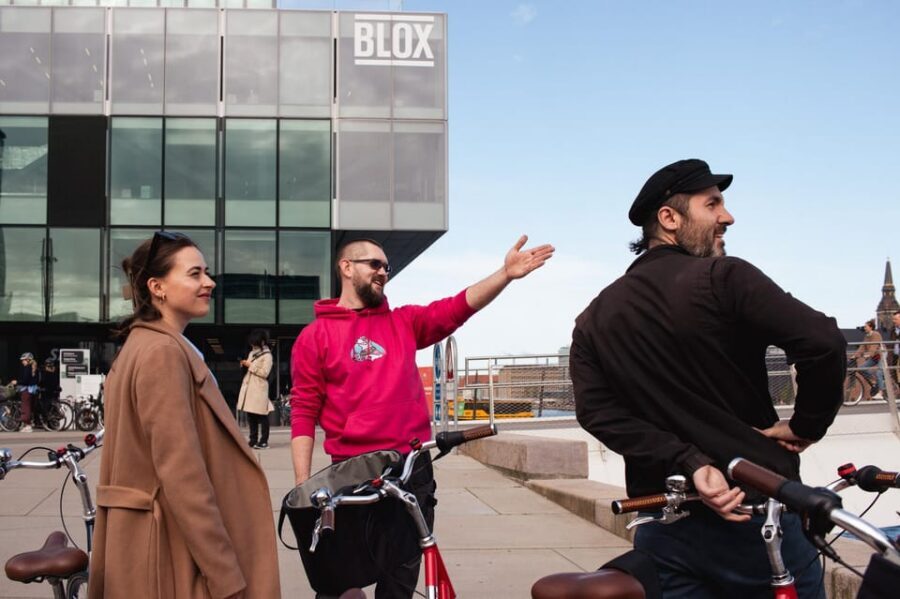
Your first guided stop is at Blox. Expect a short, focused introduction that helps you “read” what you’re seeing. This is a good opener because it frames the theme: modern architecture in Copenhagen is never only about form—it’s also about how people use space.
The timing is tight (about 10 minutes), so it won’t turn into a lecture. If you like learning fast and then seeing the proof in the street, this kind of start works.
Lille Langebro and the bridge-view perspective
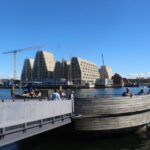
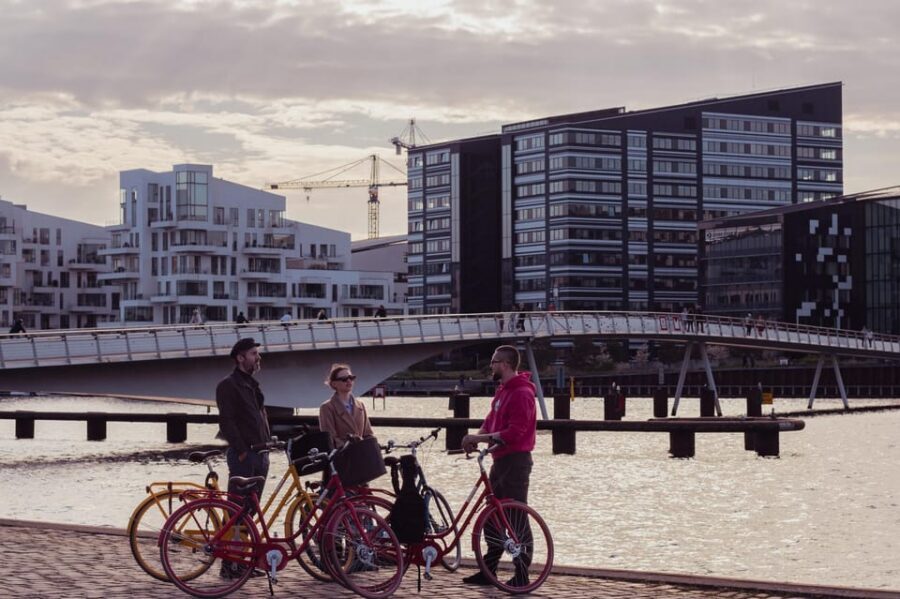
Next comes Lille Langebro with a short guided moment. Bridges are a Copenhagen superpower for architecture storytelling because they force you to see the city in layers—water, movement, and the planned connections between areas.
You’ll get a quick explanation and then roll on. The advantage is that you’re not stuck in one spot. The trade-off is that you’ll want to slow down with your eyes, not with your feet.
Havnebadet Islands Brygge: when waterfront planning becomes daily life
At Havnebadet Islands Brygge, you’ll stop for another short guided segment (around 10 minutes). This is one of those Copenhagen-style ideas: the waterfront isn’t only for views; it becomes a place people use.
In practical terms, this is where you start to see what sustainability looks like beyond slogans. You’re watching how the city treats public space as part of health and community, not just scenery.
Other guided tours in Copenhagen


Karen Blixens Plads: public space with a purpose
Karen Blixens Plads is on the route too, with about 10 minutes of guidance. Think of this as a “people space” stop. Even without getting technical about materials, the guide can point out how squares and open areas work as meeting points and as practical urban design.
If you’re the kind of traveler who likes understanding where people actually hang out, this stop will feel worth it. If you want only major architectural icons, you might wish for more time here—but the bike schedule keeps the pace lively.
Ørestad: modern design with a sustainability mindset
Then you reach Ørestad for scenic views on the way (about 5 minutes). Ørestad is where the tour starts to feel like a clear “modern Copenhagen” chapter. The planning is newer, and the result is easier to read: you can sense how zoning, housing, and mobility fit together.
What I like about how this part is framed is the emphasis on sustainable living. You’ll hear how the architecture here supports daily routines and not just architectural ambition.
Tietgen Residence Hall: housing design as a city value
At the Tietgen Residence Hall, you’ll get another guided stop (about 10 minutes). Residence buildings are a great lens for architecture tours because they’re visible proof of what a city believes about living standards.
This stop won’t be about grand sightseeing. It’s more about how design affects residents and how cities plan for housing as part of sustainability.
Amager Fælled: green space in the city plan
The route continues to Amager Fælled for a guided stop (about 10 minutes). Even if you don’t spend long here, this kind of stop changes your understanding of sustainability. Green areas aren’t just decoration; they’re part of how Copenhagen manages livability.
I find that these brief pauses are useful. They prevent the tour from becoming only an architecture-objects parade. You get a balance of building-focused and city-system thinking.
E/F Gemini Residence: a modern living model you can see
Next is E/F Gemini Residence with guidance for about 10 minutes. Residential architecture is where sustainability becomes tangible. You can’t really fake it—people live with the choices every day.
The guide’s job here is to connect what you see to what it means: how form supports function, and how planning choices support healthier, more efficient living.
Cykelslangen: a scenic ride moment that’s actually useful
Between stops you’ll pass Cykelslangen with a scenic drive moment (about 5 minutes). This is one of the parts that makes the bike feel like the right tool. You’re moving while you’re watching, which gives the city a rhythm.
If you’re prone to motion sickness on boats but feel fine on bikes, this scenic stretch should work well. The short duration also keeps it from turning into boredom.
Kaktus Towers: modern towers with an explanation behind them
Then comes Kaktus Towers with about 10 minutes of guided talk. Towers can easily feel like just skyline components, but the point here is interpretation. You’ll hear how modern projects fit into the broader sustainability story, and how the city’s development decisions create real neighborhoods around them.
One good sign from the guide feedback: people loved how guides handled the explanations. Jörn and Josephine were specifically praised for being passionate and for keeping things fun while still informative.
Enghave Plads and the shift to community-centered transformation
At Enghave Plads, you’ll stop for guidance (about 10 minutes). This is where the tour starts to feel more grounded in community life—how places change, who benefits, and why older structures or industrial areas matter in a modern green future.
Israels Plads (and the industrial-to-public-space lesson)
The last guided stop is Israels Plads (about 10 minutes). This area ties into a key theme of the tour: revitalization—turning older industrial spaces into places that support community life.
It’s also directly connected to the story the guide shares about Copenhagen’s transformation over time. In the tour framing, areas like Kødbyen and Israels Plads come up as examples of how Copenhagen can keep heritage while steering toward greener ways to live.
After that, you’ll ride back and end at one of the drop-off locations, often Tropical Bikes again.
What sustainability means on this tour (not just words on a sign)
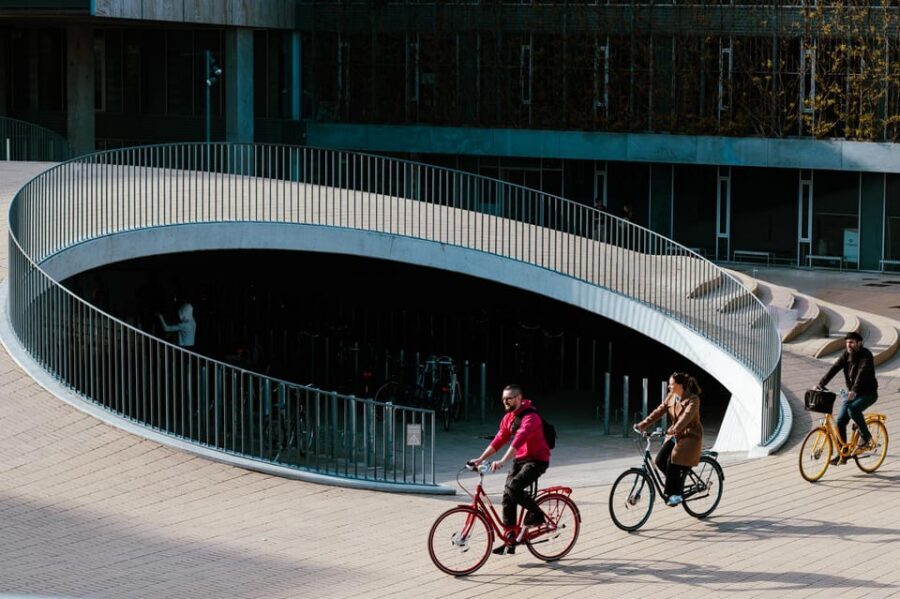
A lot of sustainability tours get stuck in slogans. This one tries to make the topic visible. You’ll hear about Copenhagen’s planning ideas as sustainable and humanistic, meaning the goal isn’t just reducing impact—it’s making the city easier to live in.
Here are the themes that become clear as you ride.
Design that supports everyday movement
When you cycle through a city like Copenhagen, you feel the planning. Bike routes, street layouts, and how different neighborhoods connect become obvious. The guide uses those visible choices to explain sustainability as everyday convenience.
Revitalization instead of erasing the past
The tour doesn’t treat history as a museum. Instead, it highlights how areas once linked to industry can become modern community hubs. You’ll get this message strongly around the harbour route and places like Kødbyen and Israels Plads.
Modern architecture shaped by living needs
In Ørestad and the residence-focused stops, the tour leans into the idea that buildings are tools for living. Even when you’re talking about design, you’re also talking about who uses the space, how residents move, and how the city plans for real life.
If you like architecture as a practical subject, you’ll probably enjoy this angle more than a purely aesthetic one.
Bikes, safety, and included comfort: the stuff that saves your day
The bike portion is one of the main reasons this tour works. You’re not just transported; you’re actively participating, and the tour includes the basics that prevent common bike-tour headaches.
Standard equipment included
You get:
- Bikes in different sizes (48 cm, 51 cm, and 56 cm frames)
- A helmet
- A rain poncho if the weather turns
- Luggage storage
- A comfy lounge before and after the tour, including toilets
That lounge detail matters more than you’d think. After a few hours in wet or cool Copenhagen weather, having a warm indoor spot helps you finish the experience without rushing.
Optional upgrades (only if you need them)
If you want a different setup, you can arrange upgrades:
- Cargo/tandem: 449 DKK
- E-bike: 249 DKK
- E-cargo: 649 DKK
- Child-seat: 119 DKK
Also, if you want things like baskets or phone holders, you can buy them on-site for 49 DKK each. (Those extras aren’t included.)
Kids and bike sizes
There’s a children’s bike option with 24-inch and 26-inch frames, but you’ll need to reserve it in advance. If you’re traveling with a family, plan ahead so the bike lineup actually matches your child.
The big practical note: you must ride
The one non-negotiable: it’s not suitable if you can’t ride a bike. Even if you’re a confident rider, consider that you’ll cycle roughly 17 km total.
If you’re the type who enjoys leisurely biking, this should feel manageable. If you’re rusty, do a quick test ride before you join, and wear shoes that won’t slip.
Price and value: what $70 gets you in Copenhagen time
At $70 per person for about 3 hours, this is the kind of activity that can make sense even when Copenhagen gets expensive. You’re paying for more than a bike rental.
You’re paying for:
- A guided interpretation that turns stops into lessons
- A route that mixes built form and city planning ideas
- The convenience of equipment and comfort included (helmet, poncho, storage, lounge)
If you tried to recreate this on your own, you’d still need to solve bike logistics and figure out which places actually connect to the sustainability theme. Here, you get the thread already pulled for you—so you spend your limited time in Copenhagen learning, not researching.
In the guide feedback, the strongest praise consistently centered on the guides being friendly, safe, and genuinely good at explaining. That human factor is where the money often goes.
The one drawback to plan around before you book
The main drawback is simple: you need bike comfort. Since the route runs in any weather and covers about 17 km, you should show up dressed for movement and with shoes that handle damp streets.
A second minor consideration: the tour is clearly oriented toward modern architecture and urban design. If you’re hoping for heavy early-history coverage, you might find you learn more about contemporary planning choices than older eras.
And one more practical thing to watch for: in any group cycling activity, staying together matters. If you’re easily distracted by side streets or you’re learning how the bikes handle, you’ll want to keep your attention on the guide and regroup quickly at each stop.
Who should book this biking architecture tour
This is a great pick if you:
- Love architecture but want the meaning behind it
- Care about sustainability and want it explained as city planning you can see
- Prefer active sightseeing over standing in lines
- Want a route that spends time away from the most obvious tourist clusters
It’s also a solid option if you like a guide-led pace. Many people in the feedback talked about guides being passionate and making the ride feel safe, with frequent stops that let you look closely.
If you’re traveling with a child, it can work, as long as you reserve the child bike early.
If you can’t bike, or if you hate cycling distances, skip it and choose a walking-based architecture option instead.
Should you book this tour?
I think you should book this if you want Copenhagen to feel like a living design puzzle you can actually move through. The combination of bike time, guided interpretation, and a route that connects modern architecture to sustainability makes it more than a drive-by.
If you’re mainly interested in only the oldest sights, or if 17 km on two wheels sounds stressful, then pass. Otherwise, this is one of those Copenhagen activities where the city starts making sense fast.
FAQ
FAQ
How long is the bike tour?
The tour lasts about 3 hours.
How far will I cycle?
You’ll cycle roughly 17 km total.
Do I get a bike and safety gear?
Yes. Bikes are included in different sizes, and you also get a helmet.
Does the tour run in bad weather?
Yes. The tour starts in any weather, and you’re provided with a rain poncho.
What are the tour languages?
The live guide speaks English and German.
Where do I meet the tour?
Meeting points can vary depending on the option booked. One listed option is Tropical Bikes at Vester Voldgade 2A.
Can I upgrade to an e-bike or cargo bike?
Yes. E-bike, e-cargo, and cargo/tandem upgrades are available (with the listed DKK prices), and some upgrades need advance reservation.
Are there options for children?
Yes. There are children’s bikes (24-inch and 26-inch frames), but you need to reserve them beforehand. A child-seat upgrade is also available with advance reservation.
Is it suitable if I can’t ride a bike?
No. The tour isn’t suitable for people who can’t ride a bike.
What’s the cancellation policy?
You can cancel up to 24 hours in advance for a full refund.