REVIEW · COPENHAGEN
The Art of Baking Danish Pastry
Book on Viator →Operated by Terrible - Konditorskole · Bookable on Viator
Crisp layers start with your hands. This small-group morning class in Frederiksberg has you baking Danish pastries step by step, guided by Chef Frederic Terrible and his no-nonsense, friendly style. I especially love the hands-on structure: you practice real dough skills like kneading, rolling, and folding, not just watch a demo.
Second, I really like that you leave with more than one pastry type to show for it—cinnamon rolls, Spandauer, and Frøsnapper—and you get coffee and tea while your bakes finish. The only true drawback is the amount: expect a big take-home haul, and you may not be able to eat it all right away.
In This Review
- Key highlights worth getting excited about
- A Copenhagen pastry class with a built-in morning advantage
- Getting to Grundtvigsvej 10A in Frederiksberg (and not missing the entrance)
- Terrible – Konditorskole: what the small-group setup changes
- From kneading to folding: Chef Frederic Terrible’s dough lesson
- Hands-on baking: kanelsnegle, Spandauer, and Frøsnapper twists
- Cinnamon rolls (kanelsnegle)
- Spandauer (Danish pastry)
- Frøsnapper twists
- Tea, coffee, and your first taste of what you built
- Value check: why $117.23 can make sense for Danish pastry lovers
- Tips for making your morning smoother (and your pastries happier)
- Who should book this Danish pastry class in Copenhagen?
- Should you book The Art of Baking Danish Pastry?
- FAQ
- What time does the Danish pastry baking class start?
- How many people are in the class?
- Is the class taught in English?
- Where do I meet for the class?
- What pastries will I make?
- Will I get recipes after the class?
- How does ticketing work?
- What is the cancellation and refund policy?
- When will I receive confirmation after booking?
Key highlights worth getting excited about
- Small group (max 12): more time for the chef to check your shaping and folding.
- Chef Frederic Terrible’s coaching: clear, organized instructions that keep novices moving.
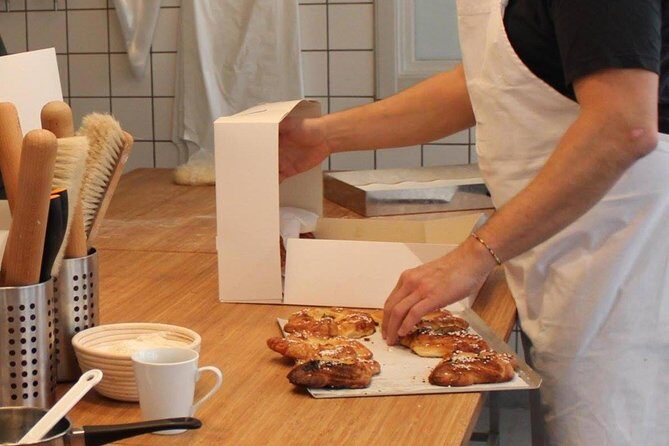
- You make several classics: cinnamon rolls (kanelsnegle), Spandauer (danish pastry), and Frøsnapper twists.
- Tea and coffee included: a proper tasting moment after the baking.
- Recipes emailed after class: so you can repeat the techniques at home.
A Copenhagen pastry class with a built-in morning advantage
This is a great choice when you want food culture without losing your whole day. The class starts at 9:00 am, runs about 3 hours 30 minutes, and ends back where you started—so you can still plan sightseeing, lunch, or a relaxed afternoon after your bread-scented morning.
The biggest win is that you’re not waiting around. You’re doing. From the start, you’re learning the mechanics behind Danish pastry: how dough feels as you knead, what rolling should look like, and why folding matters. Danish pastry isn’t hard because it’s mysterious. It’s hard because it’s precise. And that’s exactly why a live chef matters.
You’ll also enjoy the pacing. The morning format gives you energy for a hands-on session, and it keeps the whole experience focused. No evening exhaustion. No rushing to fit it into your last hours in Copenhagen. Just bake, taste, and carry your winnings home.
Other Danish pastry tours we've reviewed in Copenhagen

Getting to Grundtvigsvej 10A in Frederiksberg (and not missing the entrance)
The meeting point is Grundtvigsvej 10A, 1864 Frederiksberg, and it’s a neighborhood west of Copenhagen’s city center. You’ll find it doable by public transport, and it’s described as near public transportation, but there’s one practical tip: maps can be a little misleading about the exact entrance.
A couple of people noted that the entrance is around the other side of the street versus what navigation apps may suggest. So when you arrive, don’t just stop at the pin on your phone. Walk around the block once to confirm you’re at the right door. It’s an easy fix and saves that last-minute stress.
Also, you’ll want to plan for the fact that you’re carrying pastries afterward. The class ends back at the meeting point, so you’re not dragging a long trail across town with warm bags. Still, bring something you can manage easily—because you will be leaving with plenty.
Terrible – Konditorskole: what the small-group setup changes
The experience caps at 12 travelers, and that matters more than it sounds. In a class like this, technique is everything. If the chef can’t see what you’re doing, you’re stuck guessing. Here, the group size makes it realistic for Chef Frederic Terrible to circulate, check your progress, and keep you from building problems into your final pastries.
The setting is also built for doing, not hovering. You’ll follow along with demonstrations, then you’ll take over. You’re actively shaping dough, assembling pastries, and learning how to handle the parts that usually intimidate beginners: getting folds even, managing dough thickness, and keeping your work organized so it bakes right.
A nice bonus: the class is offered in English, and you get a mobile ticket. That usually means fewer paper headaches and less time spent at the start of your day. You should still build in a little time for arrival and settling in, since a baking class moves fast once it gets going.
From kneading to folding: Chef Frederic Terrible’s dough lesson
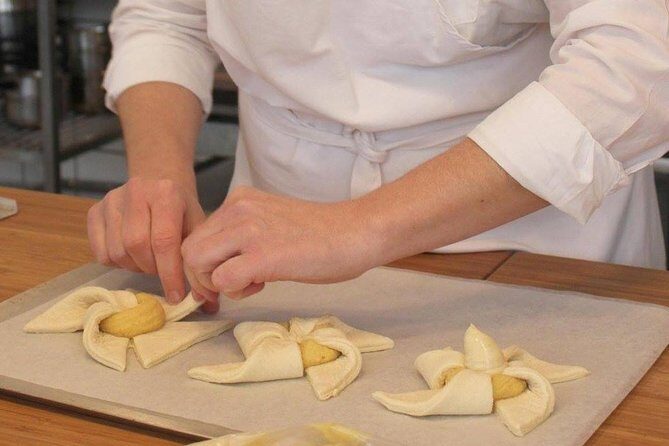
The first chunk of your morning is about technique. You won’t just get a pastry recipe. You’ll learn the building blocks that make Danish pastry work.
Expect the chef to walk you through a set of core actions, including:
- Kneading: so the dough develops the right feel and structure.
- Rolling: so you get consistent thickness for layering.
- Folding: the step that helps create that layered Danish pastry texture.
Chef Frederic Terrible’s teaching style comes up repeatedly in the feedback: organized, patient when needed, and quick to give clear directions. People also described him as having a mix of seriousness and humor—so the room stays focused without turning tense.
One practical note from past participants: he can talk quickly while giving directions. You don’t need to panic, but do listen carefully during the transitions—when the class shifts from one pastry to the next, timing matters. If something is unclear, ask right then. That’s when the chef can fix your process while there’s still time.
This is the part of the class that pays off later. Even if you only bake one kind of pastry at home after this, you’ll understand what kneading, rolling, and folding are supposed to accomplish.
Hands-on baking: kanelsnegle, Spandauer, and Frøsnapper twists
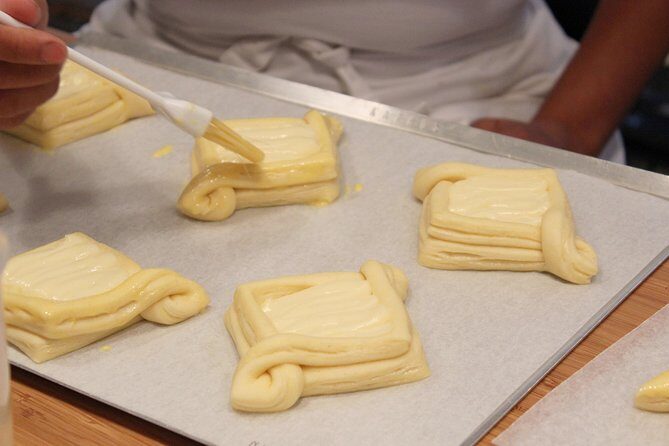
After the foundation, you’ll make several Danish pastries yourself. The sample menu gives you a clear idea of what you’ll be working with:
- Cinnamon rolls (kanelsnegle)
- Danish pastry (Spandauer)
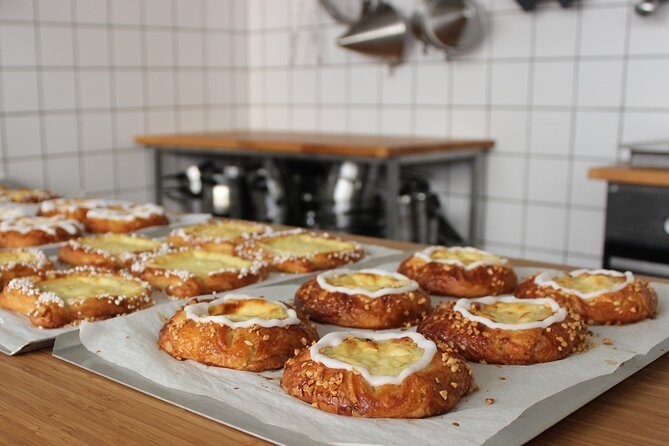
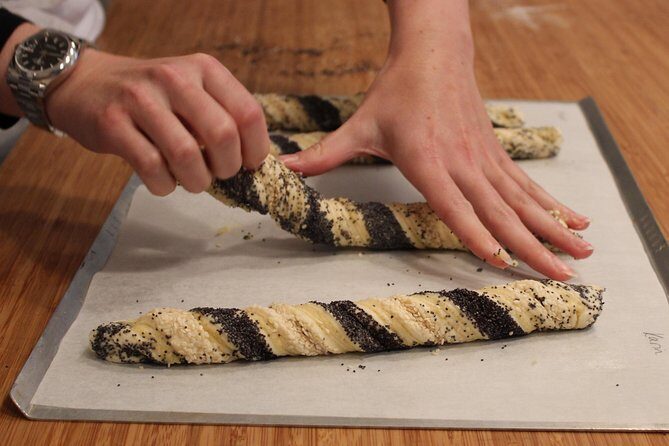
- Poppy seed and sesame seed twists (Frøsnapper)
You’ll move from technique to assembly. That’s where beginners often surprise themselves. When the chef breaks it into steps, it stops feeling like a vague craft project and starts feeling like guided work—like you can actually do it.





Cinnamon rolls (kanelsnegle)
These are the comfort-food entry point. You’ll practice portioning and rolling dough into a shape that bakes evenly. The satisfaction here is quick: the aroma starts building before the class is finished, and your finished pastry becomes proof that your work mattered.
Spandauer (Danish pastry)
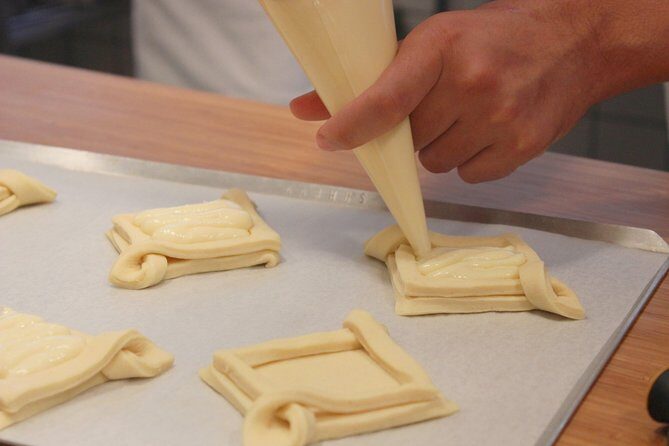
This is where the Danish style shows up most. Spandauer is the pastry that rewards patience with structure. You’ll focus on shaping and assembling in a way that supports layering and produces a more classic Danish texture.
Frøsnapper twists
The poppy-sesame twists are a favorite in the class. One detail that came up in feedback: these can include a marzipan element, and people got excited about it. If you like nutty, sweet fillings, this is the one to keep an eye on during assembly.
No matter which pastries you’re making, expect a lot of output. Multiple participants described leaving with roughly a dozen pastries per person, and some mentioned enough to keep eating for days—or even needing to give some away before it all went stale.
Tea, coffee, and your first taste of what you built
Once your creations are in the oven and finished baking, you’ll get tea and coffee and a chance to taste what you made. This part matters. If you only bake, you miss the feedback loop. Here, you can compare what you did with how the pastries actually turn out—flaky layers, texture, sweetness level, and whether your shaping held up.
It’s also a friendly moment to slow down. You get to eat your way through the result of the morning’s labor instead of just rushing back onto the street and hoping the bakes survive transit.
And because this is a morning class, you’re not stuck in an all-day food event. Your coffee break ends the session, and then you’re out with your baked goods and a head full of technique.
Value check: why $117.23 can make sense for Danish pastry lovers

Pricing is personal, but here’s how I’d judge value for this one.
You’re paying for:
- Skill instruction on real dough technique (kneading, rolling, folding)
- Ingredients and equipment for making multiple pastries
- Tea and coffee
- A substantial take-home quantity (often around a dozen pastries per person)
- Recipes emailed after the class, so your learning doesn’t end when the oven door closes
In other words, you’re not just buying a pastry. You’re paying to build repeatable know-how. That’s why the cost can feel fair even if Danish pastries bought in Copenhagen are already a tempting splurge. This class adds labor, coaching, and multiple finished results.
Also, the take-home amount changes the math. People described leaving with two full boxes of pastries and even commented that it was enough for weeks. If you’re traveling with family or friends, sharing becomes part of the experience. If you’re traveling solo, you’ll want to plan how you’ll store and finish everything before it loses its best texture.
Tips for making your morning smoother (and your pastries happier)
A few practical lessons from the pattern of what worked for others:
- Plan for extra food. You may make more than you can eat immediately. Bring a plan for sharing or storing.
- Listen closely during transitions. The chef can move quickly with directions, so don’t tune out during the switch between pastries.
- Watch the entrance. If you rely on navigation, double-check where the door actually is.
- Go earlier in your trip if you can. Some people saved the class for the last day and then struggled to fit all the pastries into flight and home time. If it’s at the start of your stay, the pastries fit better into your schedule.
These aren’t complaints. They’re just the small things that keep your morning from turning into a logistics puzzle.
Who should book this Danish pastry class in Copenhagen?
This class is a strong fit if you:
- Like food activities that are hands-on, not just tasting
- Want to learn technique you can repeat at home
- Enjoy pastries enough that a morning baking session feels fun, not tiring
- Appreciate small groups and clear, step-by-step teaching
It’s also ideal for couples and friends. The class naturally creates shared results: you both get pastry-making wins, and you both leave with boxes.
If you’re the type who hates making a lot of food or you want a light, low-effort activity, this might feel like too much. Danish pastry is work, and the output is big. But if you’re excited to bake and eat, that’s the point.
Should you book The Art of Baking Danish Pastry?
I’d book it if Danish pastries are on your Copenhagen wish list and you want to go past eating them. The combination of small-group coaching, real dough technique (kneading, rolling, folding), and the chance to make multiple classic styles makes this one of those experiences that leaves you with both memories and skills.
I’d think twice if you:
- Need a flexible schedule or last-minute changes (it’s not described as changeable)
- Don’t want to carry home lots of baked goods
- Are hoping for a low-activity “watch and snack” tour
If you’re a food lover who enjoys learning by doing, this morning class is a high-odds, practical choice.
FAQ
What time does the Danish pastry baking class start?
It starts at 9:00 am and runs for about 3 hours 30 minutes (approx.).
How many people are in the class?
The class has a maximum of 12 travelers, so it stays small.
Is the class taught in English?
Yes, it’s offered in English.
Where do I meet for the class?
You meet at Grundtvigsvej 10A, 1864 Frederiksberg, Denmark, and the activity ends back at the meeting point.
What pastries will I make?
You’ll make cinnamon rolls (kanelsnegle), Danish pastry (Spandauer), and poppy seed and sesame seed twists (Frøsnapper).
Will I get recipes after the class?
Yes. The recipes used in the class are emailed to you after the session.
How does ticketing work?
You get a mobile ticket.
What is the cancellation and refund policy?
It’s non-refundable and cannot be changed for any reason. If the minimum traveler requirement isn’t met and the class is canceled, you’ll be offered a different date or a full refund.
When will I receive confirmation after booking?
You should receive confirmation within 48 hours of booking, subject to availability.