REVIEW · COPENHAGEN
Copenhagen City Private Walking Tour
Book on Viator →Operated by OURWAY Tours - Copenhagen · Bookable on Viator
Copenhagen clicks into place fast on this walk. A private, 2-hour route with tailored commentary helps you read the city’s landmarks without yelling over crowds. I love the way the guide can shape the story to your interests as you move through the center, and I like that the stops are packed with real character—from Christiansborg’s political island to Nyhavn’s Andersen connections. One thing to consider: traffic noise is unavoidable in this area, so bring comfy shoes and expect the streets to be busy.
This is the kind of tour you take to get your bearings quickly, then keep exploring on your own after. You’ll start at Højbro Plads and finish at Kongens Nytorv, close to Nyhavn, with plenty of room to wander in whatever direction suits you.
In This Review
- Key things that make this Copenhagen tour worth your time
- Why a 2-Hour Private Walk Makes Copenhagen Feel Simple
- Højbro Plads to Christiansborg: Slotsholmen’s Best First Look
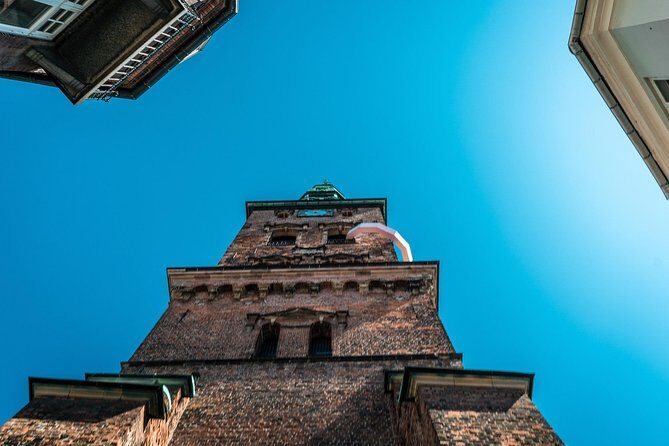
- St. Nicolaj Tower Views and the Rebuilt Church Story
- Royal Danish Theatre and Charlottenborg: Culture Without the Museum Overload
- Nyhavn: Andersen Addresses, Canal Color, and a Place to Start Wandering
- Copenhagen Opera House at Holmen: Denmark’s Modern Face
- Amalienborg Palace Museum and Frederik’s Church: Royal Life to Wedding Bells
- St. Annæ Plads to Kongens Nytorv: Embassy Square and a Famous Hotel’s Backstory
- Price and Value: Getting a Private Guide Without Overpaying for Little Time
- Who Should Book This Copenhagen Walk (and Who Might Skip It)
- Should You Book This Private Walking Tour of Copenhagen?
- FAQ
- How long is the Copenhagen City Private Walking Tour?
- Is this tour private?
- Where does the tour start and end?
- What ticketing is included?
- Does the tour run in bad weather?
- Is it suitable for most travelers?
- Is the guide included?
Key things that make this Copenhagen tour worth your time
- Private pace and undivided attention so you’re not stuck straining to hear
- Tailored commentary that adjusts as you go, instead of running one fixed script
- Slotsholmen views from Højbro Plads, including Christiansborg and Børsen sightlines
- Literary and royal stops that connect Hans Christian Andersen, palaces, and everyday Copenhagen
- A practical finish at Kongens Nytorv, one of the easiest places to branch off
Why a 2-Hour Private Walk Makes Copenhagen Feel Simple
Copenhagen can look polished and orderly from afar, but it’s the details that make it memorable: the sightlines across water, the mix of old civic power and new cultural buildings, and the way neighborhoods quietly change as you cross a few blocks.
That’s why this format works. In about two hours, you cover a tight circuit through the historic center and still move at a human pace. This isn’t a long haul with constant stops for photos; it’s a guided walk designed to help you understand what you’re seeing as you see it. The tour is private, meaning it’s only your group, so the guide can slow down, speed up, or add context based on what you care about—history, architecture, canals, or the stories behind famous addresses.
The other smart part is where it starts and ends. Beginning at Højbro Plads gives you instant landmark orientation, and finishing at Kongens Nytorv places you right in the center, near Nyhavn, so you can keep going without backtracking.
One practical note: this is mostly city center walking, and the tour explicitly warns that street traffic noise can be unavoidable. So if you’re the type who struggles to concentrate with constant background sound, plan on using the guide’s explanations as your anchor and keep your expectation realistic.
Other walking tours we've reviewed in Copenhagen
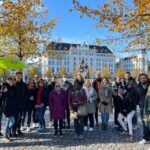

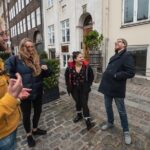
Højbro Plads to Christiansborg: Slotsholmen’s Best First Look
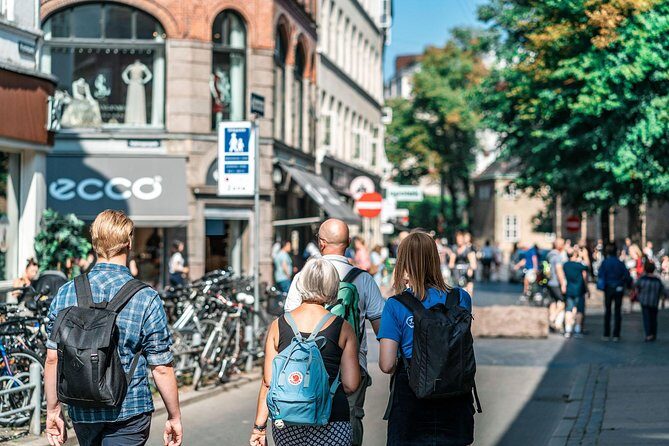
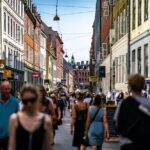
You start at Højbro Plads, just off the main shopping street Strøget. This spot is short-walk convenient, but it’s also a classic “get your bearings” viewpoint. From here, you get a strong visual connection to Christiansborg Palace and Børsen, the former stock exchange. It’s the kind of view that makes your later stops feel less random.
You also get an immediate sculpture-and-symbol moment with Bishop Absalon on Horseback. That’s not just a statue; it’s a quick reminder that Copenhagen’s Danish identity and city power stories were never confined to one era.
From Højbro Plads, you move to Christiansborg Slot on Slotsholmen, the palace island. Today, this is where the Danish Parliament operates, and it’s also tied to royal presence. The tour highlights that this is the fifth version of Christiansborg Palace on the island. Even without stepping inside, knowing that the building has been rebuilt multiple times adds weight to what you’re seeing outside—architecture here isn’t frozen; it’s the result of changes over time.
Practical reality check: the tour notes admission is not included at Christiansborg. So you’re likely treating this stop as a close-up look from the outside or what you can access without tickets.
If you like your city experiences with context, this segment is a win. You’re not just looking at pretty buildings—you’re learning how Copenhagen’s civic and royal roles overlap on Slotsholmen.
St. Nicolaj Tower Views and the Rebuilt Church Story
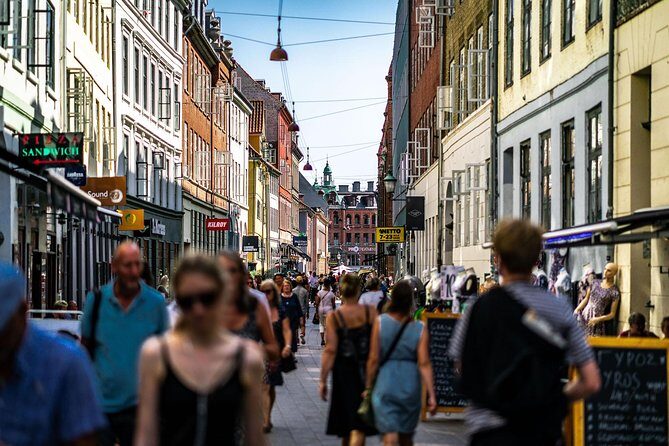
Next comes St. Nicolaj Church, one of those Copenhagen landmarks you notice even if you’re not trying. The tour points out that the building you see now is a modern reconstruction after a major turning point: the Great Fire of 1795, which destroyed the earlier church. It also emphasizes that there wasn’t just one fire—there were multiple ones, and they shaped how the city developed and rebuilt.
This stop is useful for two reasons. First, it gives you a concrete reason to care about “old buildings,” because they’re evidence of events, not just decoration. Second, the tower access is a payoff: the church tower is described as offering some of the best views of central Copenhagen.
Admission is not included here, so treat this as either a viewpoint plan if you decide to buy a ticket on site, or a landmark appreciation stop if you keep the pace strictly to walking time.
If you’re visiting in a day where your legs want something more than “look and move,” St. Nicolaj is one of the most likely places to justify lingering. A tower view helps you understand the city grid, the water edges, and where major landmarks sit relative to one another.
Royal Danish Theatre and Charlottenborg: Culture Without the Museum Overload
After Christiansborg and St. Nicolaj, the route shifts toward culture—still walkable, but less heavy than palace history.
You’ll pass the Royal Danish Theatre (Kongelige Teater) area, where the tour notes the mix of venues: the Old Stage on Kongens Nytorv and the newer Copenhagen Opera House and Royal Danish Playhouse near the harbor. Even if you’re not going inside, this gives you a better map of where Copenhagen’s performing arts world lives—spread out across different buildings rather than concentrated in one single hall.
Then you reach Kunsthal Charlottenborg, a stop that feels modern and student-focused. Here, Charlottenborg is linked with an art space and a Danish Art Library, and it often features exhibitions connected to graduates from the Art Academy. The practical angle is that this is a chance to see emerging artists work, and in some cases you might find work available at prices that are described as reasonable.
No admission is listed for this stop, which makes it a nice mid-tour reset: you can keep moving without committing your afternoon to a ticketed museum visit.
Nyhavn: Andersen Addresses, Canal Color, and a Place to Start Wandering
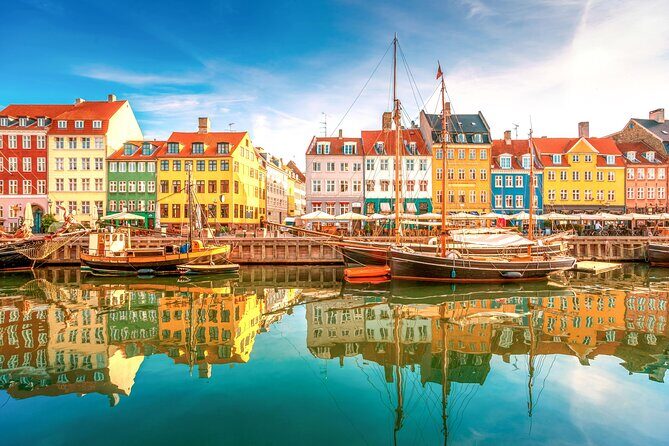
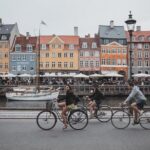
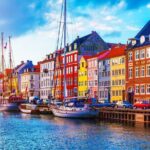
If you’ve only heard one thing about Copenhagen, it’s probably Nyhavn. This tour gives you a focused block of time here—about 15 minutes—so it’s not a quick drive-by. You’ll see the colorful canalfront houses, and the guide ties them to Hans Christian Andersen in a very specific way: Andersen lived in Nyhavn, including house No. 20, where he wrote the fairy tale The Princess and the Pea. The tour also notes his other Nyhavn addresses, including No. 67 and No. 18.
That kind of detail changes how you experience Nyhavn. Instead of just admiring the postcard waterfront, you start thinking like a reader: which stories might have been influenced by walking these streets, watching the canal life, and living so close to the harbor.
This stop is marked as free, which is great because it keeps the day flexible. You can choose what to do next on your own. When the tour ends, the route’s ending point near Kongens Nytorv makes it easy to continue the walk toward or along Nyhavn without needing a plan.
Other city tours we've reviewed in Copenhagen



Copenhagen Opera House at Holmen: Denmark’s Modern Face

From Nyhavn, the tour moves you to the Copenhagen Opera House, specifically noted as being on Holmen opposite Amalienborg Palace. Even though the stop is short, it’s packed with the kind of facts that make modern architecture feel grounded in real-world decisions.
The tour describes it as one of the world’s most modern and well-equipped opera buildings. It also includes two key dates: the A.P. Møller Foundation donated the opera house to the state in August 2000, and it was inaugurated in 2005.
Why that matters for you: Copenhagen’s cultural buildings can feel intimidating if you don’t know what to look for. A quick guided context like this helps you frame the building as a deliberate, relatively recent investment in arts and public life—not just something you pass.
Admission is not included here, and the stop is only about 5 minutes, so you’re in landmark-and-spotting mode. Still, it’s enough time to notice how the opera house sits in the broader geography of the palace area across the water.
Amalienborg Palace Museum and Frederik’s Church: Royal Life to Wedding Bells
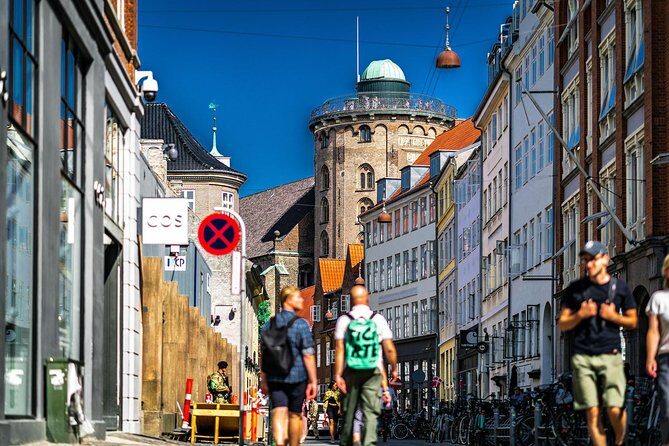
Now you get the royal core of the city.
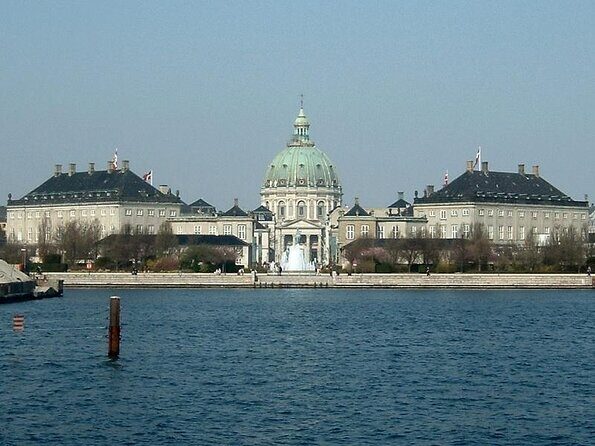
At Amalienborg Palace Museum, the tour explains that Amalienborg is the official residence of the Royal Family. It gives you clear location cues: former Queen Margrethe is said to live in the palace on the left closest to the waterfront, while King Frederik lives opposite her with Queen Mary and their four children.
Even if you don’t go inside, having those specifics makes your view more meaningful. You can orient yourself and understand why the area feels both formal and lived-in at the same time.
Then the walk shifts to Frederik’s Church, also called the Marble Church. The tour notes construction dates reaching back to the 1700s, which again ties Copenhagen’s skyline to long timelines rather than trendy modernity alone.
This stop also comes with a couple of “you’ll remember this” details. It’s described as popular for weddings, and the tour says wedding bells chime nearly all day on Fridays and Saturdays. If you’re curious about experiencing the church beyond just seeing it from the street, the tour says you can enjoy a great view from the top of the dome and that it can be visited every day.
Admission is not included for this stop, so factor that into your decision if dome access is a priority.
For many people, Frederik’s Church is the emotional high point of the tour: palaces tell you about power, but a church dome view tells you about the city’s scale and geometry.
St. Annæ Plads to Kongens Nytorv: Embassy Square and a Famous Hotel’s Backstory
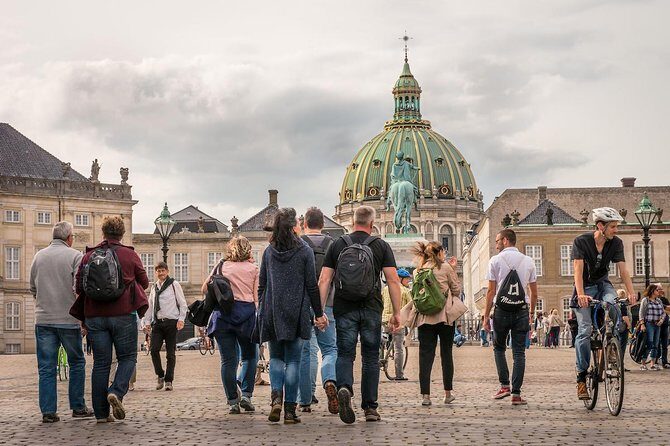
After the palace and church segment, the route keeps your feet moving while shifting to city-center textures.
You’ll stop at Sankt Annae Kirke in St. Ann’s Square (Sankt Annæ Plads), described as the border between the city center neighborhoods of Nyhavn and Frederiksstaden. This stop is short—about 5 minutes—but the tour frames it as a place where you notice how neighborhoods transition. It’s also noted as home to park space, statues, and embassies.
This kind of stop is easy to underestimate if you’re only chasing major sights. But border points teach you the city’s logic: Copenhagen isn’t one long straight line of monuments; it’s a sequence of areas with different purposes and identities.
Finally, you reach Kongens Nytorvs Skating Rink (Skojtebane) at Kongens Nytorv, the large central square where historical buildings cluster around you. The tour points out several nearby anchors:
- Magasin du Nord, with its flagship store at Kongens Nytorv
- Hotel d’Angleterre, whose origin is described as a restaurant called The Strong Man’s Garden before becoming a hotel with rooms
- A list of famous names tied to the hotel, including Winston Churchill, Bill Clinton, Ozzy Osbourne, and Neil Diamond
That is a fun stop if you like your travel with stories that connect places to personalities. It also makes a good finishing point because the tour ends at Kongens Nytorv, close to Nyhavn. Translation: once you’re done with the guided part, you can choose your next move without needing transit.
Price and Value: Getting a Private Guide Without Overpaying for Little Time
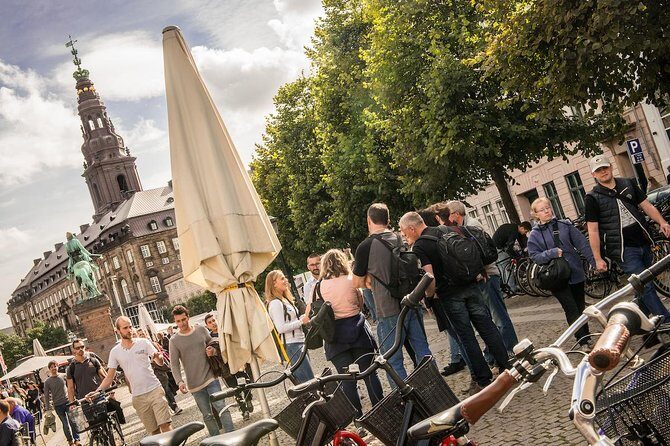
The listed price is $267.07 per person for a 2-hour private walking tour. That sounds steep until you compare it to the reality of private guiding: you’re paying for one guide to spend real time with your group, with the flexibility to tailor commentary and keep the route smooth.
The best value signals here are the things that usually cost you time and money on your own:
- You don’t need to figure out what to prioritize among palaces, churches, canals, and culture in a short window
- You get context on what you’re seeing, including specifics like Andersens Nyhavn addresses and the reason Christiansborg matters politically
- You avoid the herd problem, because it’s private and your guide can keep conversation at a comfortable pace
There’s also group discounts listed, which can make this more reasonable if you’re traveling as a small group. The tour uses a mobile ticket, which is a minor detail but still practical—you avoid paper scrambling.
Where price can feel less justified: if your group already has strong Copenhagen know-how and doesn’t care about interpretation. If you just want a casual wander with minimal explanation, a self-guided walk might cost you less. But if you want the city to make sense while you’re walking, the private format is the trade-off.
In short, I’d call it good value for people who want a guided “read the city” session early in the trip.
Who Should Book This Copenhagen Walk (and Who Might Skip It)
I think this tour fits best when you meet one or more of these needs:
You want a fast orientation in the center without feeling like you’re rushing from one ticket line to another. You like your landmarks connected to stories—fires that reshaped buildings, addresses tied to famous writers, and palaces that still function in public life.
It also suits you if you appreciate private attention. If you hate the pressure of a group tour (keeping up, hearing the guide from far away, asking questions and getting cut off), this format is much more relaxing.
You might consider skipping it if:
- You only want outdoor sights and don’t care about any guided context.
- You’re planning a packed day with multiple ticketed attractions and prefer zero guidance.
Should You Book This Private Walking Tour of Copenhagen?
Yes—if you’re in Copenhagen for a short time and want to understand the city’s center in two hours, this is a sensible, story-led way to start. The route hits the big “first week” landmarks—Christiansborg, Nyhavn, Amalienborg, and Frederik’s Church—while also adding practical texture like Charlottenborg’s art-focused stop and the Kongens Nytorv square details.
Book it especially if you want flexibility in how the guide explains things and you’d rather spend your energy asking questions than searching maps. Just be ready for traffic noise, and wear shoes that can handle a couple of hours of steady walking in the city core.
If you’re the type who enjoys travel as learning—without getting stuck in museum hours—this one is an easy yes.
FAQ
How long is the Copenhagen City Private Walking Tour?
It runs for about 2 hours.
Is this tour private?
Yes. It’s a private tour/activity, so only your group participates.
Where does the tour start and end?
It starts at Højbro Plads (Højbro Pl., 1200 København) and ends at Kongens Nytorv in central Copenhagen, close to Nyhavn.
What ticketing is included?
You’ll receive a mobile ticket. Admission is free at some stops, while other stops are marked as not included.
Does the tour run in bad weather?
Yes. It operates in all weather conditions, and you’re advised to dress comfortably and appropriately.
Is it suitable for most travelers?
The tour notes that most travelers can participate, and it’s also near public transportation. Service animals are allowed.
Is the guide included?
Yes. A professional guide is included in the tour.