Copenhagen’s Christiania can feel like a world of its own. This self-guided adventure turns a walk through Freetown Christiania and the surrounding streets into a phone-based puzzle hunt with 12 challenges and a storyline. I like that it’s low-pressure: you choose when to start, you can pause, and there’s no strict timer chasing you.
Two big wins for me: you play on your smartphone (no pickup of equipment), and you’re guided to standout spots you might otherwise miss. One thing to consider: directions and turns can be a little tricky at moments, so you’ll want to stay alert and give yourself time if you plan to stop often for browsing or photos.
In This Review
- Key things to know before you go
- How this Christiania adventure really works (and why it’s worth it)
- Pricing and time: is $7.21 good value?
- Your 8-stop route: what to expect at each location
- Stop 1: Christianshavn (start outside Christianshavn Metro Station)
- Stop 2: Church of Our Saviour
- Stop 3: Green George af Thomas Dambo – Trold nr. 50
- Stop 4: Den Grå Hal (The Grey Hall)
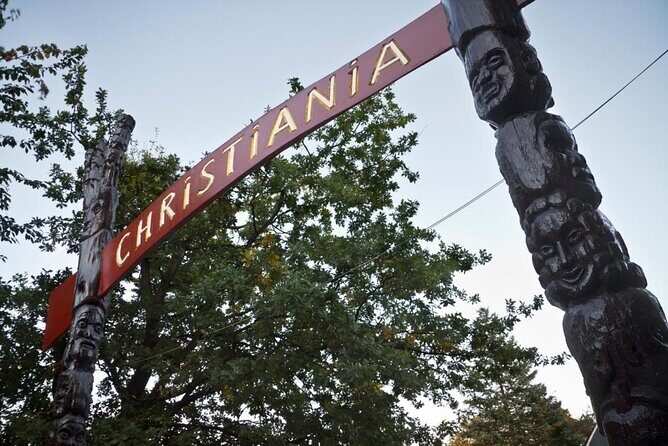
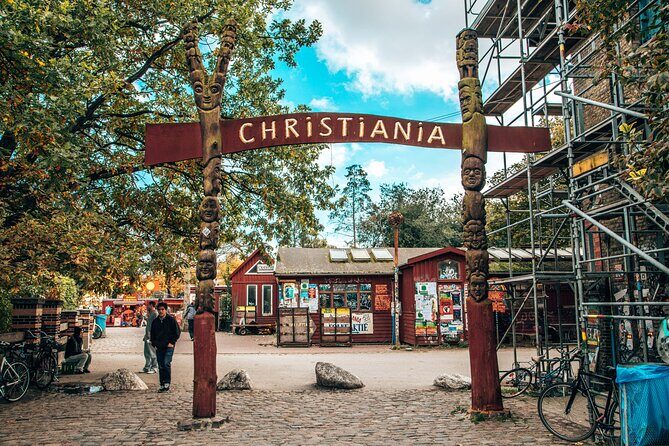
- Stop 5: Freetown Christiania (Scrap Metal Sculpture clue)
- Stop 6: Moon Fisher (Månefiskeren Cafe)
- Stop 7: Christiania Art Gallery
- Stop 8: Stupa (Kids’ Zone finish)
- What makes this self-guided format fun (not just convenient)
- Photography and etiquette: your best way to avoid problems
- Getting the most out of it: how to pace your day
- Who should book this adventure
- Should you book Copenhagen Christiania Hidden Stories?
- FAQ
- How long does the Christiania hidden stories adventure take?
- Do I need to meet a guide?
- Is it offered in English?
- Where does the adventure start and end?
- Can I take breaks or start whenever I want?
- Is there a mobile ticket or code I need?
- Is free cancellation available?
Key things to know before you go
- Smartphone-only play means no equipment pickup and less hassle at the start.
- 12 puzzle challenges spread across 8 stops, so you get both story and real sightseeing.
- Start anytime with no time limit, plus you can pause and resume.
- Free admission at each stop keeps the cost focused on the activity itself.
- Respect the area rules, including photo limits in parts of Christiania.
- Plan for extra time if you shop, snack, or linger (it can run longer than you expect).
How this Christiania adventure really works (and why it’s worth it)
This isn’t a “listen to a guide and look at a plaque” kind of outing. It’s a self-guided escape-game format. You begin outside Christianshavn Metro Station and you’ll get a clue right away. Solve it, and you’re pointed toward the next location and the next part of the story.
The design matters for your day. Because you’re not tied to a group schedule, you can move at your pace. Want a quick look and a photo at one spot? Do that. Want to slow down and read carefully? You can. Want to take a breather in a café? Perfect—this format assumes you’ll need pauses.
And since it’s a mobile ticket with access code, the activity is built around your phone. If your battery is low or your signal is unreliable, it can turn from fun to finicky. That’s the one practical catch with any phone-based experience in a city: bring a charging plan, and don’t treat your phone like it’s guaranteed to last forever.
Other Christiania and Christianshavn tours we've reviewed in Copenhagen


Pricing and time: is $7.21 good value?
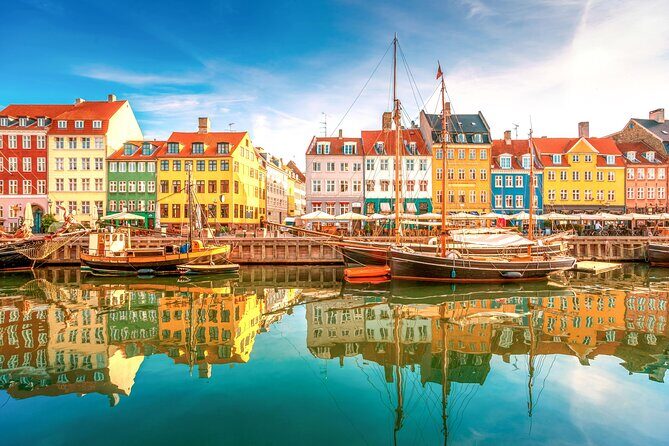
At $7.21 per person, the value is mostly about what you get for that price: a full storyline + 12 puzzle challenges that guide you across multiple sights. Each stop also notes admission as free, which keeps you from paying extra just to enter viewpoints or areas along the route.
Duration is listed as 40 minutes to 1 hour 10 minutes, but you should treat that as a “go-go-go” estimate. In practice, this kind of adventure naturally invites distractions—especially in Christiania, where shopping, chatting, and stopping to look around can eat time quickly. A good rule: if you want a smooth hour, plan an hour. If you want the real experience—slow, curious, and a bit indulgent—plan closer to 2–3 hours.
Your 8-stop route: what to expect at each location
You’ll tackle the adventure in eight parts, each one tied to a clue and a checkpoint. The stops are shown as short segments, but the key detail is that you can stay as long as you like at each location before continuing.
Stop 1: Christianshavn (start outside Christianshavn Metro Station)
You start outside Christianshavn Metro Station. The first clue is the on-ramp. It kicks off the storyline and points you to the next stop. This is a good place to settle in—get oriented, check that your phone is ready, and make sure you understand what you need to do before you start moving deeper into the route.
Potential snag: the early navigation can feel like you’re learning the rules in real time. If your directions are harder than expected, don’t panic—just slow down and match the clue directions carefully.
Stop 2: Church of Our Saviour
The next clue pulls you to Church of Our Saviour. Here, you’ll solve something to unlock the direction to the next checkpoint, then you can keep exploring at your own pace.
What I like about this kind of stop: it mixes “big landmark energy” with small puzzle tasks. You get to see something real in Copenhagen’s cityscape, not just move from one hidden corner to another.
Consideration: this is still part of a walking game, so don’t plan to spend your whole afternoon here. Short on time? Do the puzzle, take your bearings, then head onward.
Other self-guided audio tours we've reviewed in Copenhagen




Stop 3: Green George af Thomas Dambo – Trold nr. 50
Next comes Green George af Thomas Dambo – Trold nr. 50 (The troll). This is where the adventure starts feeling more playful. You’ll get a new clue, solve it, and move on—while also getting a chance to notice the creativity in the surroundings.
This stop is also a good example of why the self-guided format works: the puzzle gives you a reason to look closely, not just walk by. If you like street art and oddball sculptures, this part will likely be a highlight.
Stop 4: Den Grå Hal (The Grey Hall)
At Den Grå Hal, you’ll get another clue and continue your story progression. Like the earlier checkpoints, you can stop as long as you want before moving on.
This part of the route is a nice mid-adventure rhythm reset: you’re not constantly sprinting; you’re still walking, but you can pause and take in the atmosphere.
Watch your pace: the longer you linger, the more likely you’ll go past the “estimated” duration. That’s not a problem—just be ready for a longer day.
Stop 5: Freetown Christiania (Scrap Metal Sculpture clue)
Now you’re in Freetown Christiania, a key area of the experience. The clue you’ll solve is tied to the Scrap Metal Sculpture, and it directs you onward.
This is where the adventure becomes more than “points on a map.” Christiania has a strong identity, and the puzzle structure nudges you to pay attention to what’s around you. It also fits the theme of hidden stories: you’re learning as you walk.
Important respect note: you’ll need to be mindful about rules in residential or sensitive areas. Some areas have photo limits, and you should treat living spaces with care.
Stop 6: Moon Fisher (Månefiskeren Cafe)
Next is Moon Fisher, linked to Månefiskeren Cafe. You’ll receive a clue connected to this spot and solve it to get directions to the next stop.
This is a smart checkpoint because it naturally invites a break. If you want coffee, a snack, or just to cool down, this is the kind of stop where it makes sense to do it.
Practical tip: since you’re playing on your phone, a café stop can also be a chance to top up your battery if needed.
Stop 7: Christiania Art Gallery
At Christiania Art Gallery, you’ll solve another clue. Again, the format keeps you flexible: puzzle first, but time to explore at your pace after.
I like art-gallery stops inside walking adventures because they slow the whole day down a bit. You’re not only covering ground—you’re seeing interpretation and local creativity. Even if you don’t spend ages inside, it adds texture.
Stop 8: Stupa (Kids’ Zone finish)
You finish at Stupa / Kids’ Zone. This is where both the story and the city exploration game ends.
This ending point is useful: you’re not left wandering in uncertainty about where the activity concludes. You also have a built-in sense of “we’re done,” which helps you plan your next move—whether that’s heading back to transit or extending your own Christiania stroll.
What makes this self-guided format fun (not just convenient)
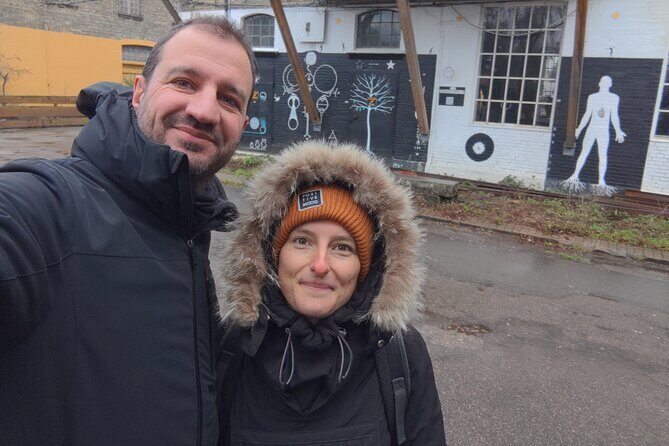
A guided tour can be great, but a self-guided escape game changes how you experience a neighborhood.
First, the puzzles give you a reason to pay attention. Your brain stays busy, but it’s not work. It feels like a game you can control, and the city becomes part of the story.
Second, it’s a stress reducer. There’s no guide to manage, no group to wait for, and no equipment pickup. When you’re in a place like Christiania, that independence matters.
Finally, it’s flexible. The experience explicitly allows you to pause and resume anytime, and you can choose your start time. That’s a real advantage in a city trip where your day can shift—weather changes, crowds change, and your energy changes.
Photography and etiquette: your best way to avoid problems
Christiania is a place with residents, not just a theme park. The experience itself signals that you should be respectful, and the practical reality is that some areas have photo restrictions.
So here’s the approach I recommend:
- Follow local boundaries and behave like you’re in someone’s neighborhood, not a street set.
- If you can’t take photos in a spot, don’t argue with it—move on and enjoy the view in other ways.
- Keep your voice calm and your walking pace thoughtful around residential areas.
If you treat the area with respect, the whole adventure gets easier. You’ll spend more time enjoying, less time worrying.
Getting the most out of it: how to pace your day
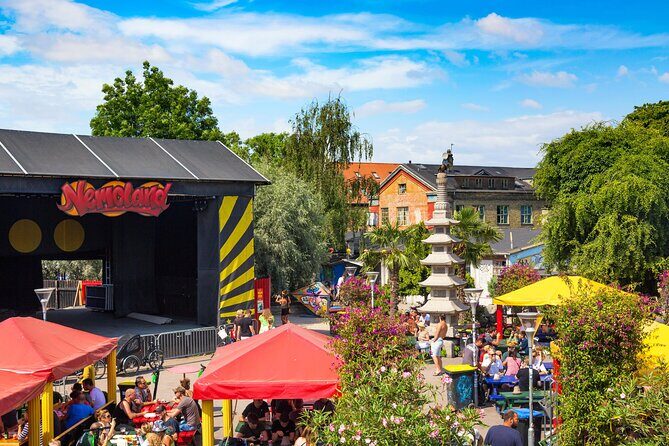
Because the experience is self-guided and flexible, your main job is pacing.
If you want the “40 minutes to 1 hour 10 minutes” version:
- Start promptly from the metro area
- Solve each clue quickly
- Limit extra shopping stops and keep photos brief
If you want the “actually fun Christiania day” version:
- Expect to linger
- Plan for browsing at the small spots along the way
- Build in time for a café pause around Månefiskeren Cafe
- Accept that the adventure can stretch beyond the estimate
One review tip that lines up with how this game feels: directions can be challenging at times. That doesn’t mean it’s hard forever. It just means you should not rush. Take a minute, re-check what the clue says, and then move.
Who should book this adventure

This is best for you if:
- You want a light, fun walking activity with a story layer.
- You like solving small puzzles on your phone.
- You don’t need a live guide, and you enjoy exploring on your own terms.
- You’re traveling in a small group (it’s private to your group).
It’s also a good match for families, since it ends at Kids’ Zone and the pace is flexible. And since most travelers can participate and service animals are allowed, it’s broadly approachable.
If you’re the type who hates navigation, hates phone use, or needs a strict schedule, you might find the self-guided puzzle format a bit annoying. But if you’re curious and okay with a little wandering, it’s a great fit.
Should you book Copenhagen Christiania Hidden Stories?
If your idea of a great Copenhagen day includes real neighborhoods, local creativity, and a bit of game-like exploration, I’d book it. At $7.21, you’re not taking a huge financial risk, and you get a full storyline with 12 challenges plus multiple sights—without paying extra for entry.
The decision comes down to your style. If you enjoy pacing yourself, solving on the go, and respecting the rules of a living community, this is a smart way to see Christiania beyond the obvious postcard stops. If you want a guided lecture or a perfectly frictionless route, you may prefer a traditional tour.
FAQ
How long does the Christiania hidden stories adventure take?
It’s listed at about 40 minutes to 1 hour 10 minutes, but the experience allows you to pause and stay as long as you like at each stop.
Do I need to meet a guide?
No. This is a self-guided activity, and a tour guide is not included.
Is it offered in English?
Yes, it’s offered in English.
Where does the adventure start and end?
It starts outside Christianshavn (Christianshavn 1400 Copenhagen) and ends at Stupa / Kids’ Zone (Mælkebøtten 162B, 1440 København).
Can I take breaks or start whenever I want?
Yes. The experience has flexibility to pause/resume anytime, and there are no time limitations listed for starting and continuing.
Is there a mobile ticket or code I need?
Yes. You use a mobile access code to access the adventure on your smartphone.
Is free cancellation available?
Yes, there is free cancellation up to 24 hours in advance for a full refund.
If you tell me your travel dates and whether you prefer a quick route or a slow, shopping-and-café day, I can suggest a realistic time window for your schedule.