REVIEW · COPENHAGEN
Copenhagen Alternative Private Tour: Vesterbro & Christianshavn
Book on Viator →Operated by Local CoolTour · Bookable on Viator
A different Copenhagen starts with a walk. This private tour connects Vesterbro and Christianshavn through working neighborhoods, fortification leftovers, and wartime cover stories—then ends at street life around Freetown Christiania. I like tours that show you the city as people actually live it, and this one spends its time where the details matter.
What I really like is the way the guide ties small street corners to big turns in Danish life—like how a moat became a street, and how loudspeaker radio became resistance. I also like the pacing: you get a 3.5–4 hour private walk that doesn’t race, with time built in at major stops and a real tasting stop (optional lunch if you pick the full option).
One thing to keep in mind: your guide will not go inside Christiania, so you’ll experience it from the outside and then explore on your own.
In This Review
- Key highlights to look for
- Why Vesterbro & Christianshavn feel like the real Copenhagen
- Starting at Viktoriagade: where fortifications became a street
- Det Ny Teater: a theater built with a passage in mind
- Værnedamsvej and Saxogade: beer gardens, butchers, and housing protest
- Skydemuren and Istedgade: the bullet-trap wall and resistance slogans
- Istedgade 31 and Stjerne Radio: BBC in the streets
- Meatpacking District and Oksnehallen: old markets, new energy
- Halmtorvet: Copenhagen’s haymarket and how trade moved
- Men’s Home and Maria Church: support systems you can actually see
- The Full Option: where lunch fits and why København H is worth your time
- Crossing to Christianshavn: Knippelsbro and a German congregation church
- B&W’s start at Strandgade 4 and trade power at Asiatisk Plads
- St. Annae Kirke and Wildersgade: old houses, defensive zones, and quiet streets
- Church of Our Saviour and Freetown Christiania: views, then reality
- Price and logistics: what $147.96 buys you
- Should you book this Vesterbro & Christianshavn alternative tour?
- FAQ
- How long is the Copenhagen Alternative Private Tour: Vesterbro & Christianshavn?
- What is the price per person?
- Where does the tour start and where does it end?
- Is the tour private?
- What language is the tour offered in?
- Does the guide go into Freetown Christiania with you?
- What’s included in the tour?
- Is cancellation free, and what happens in rain?
Key highlights to look for
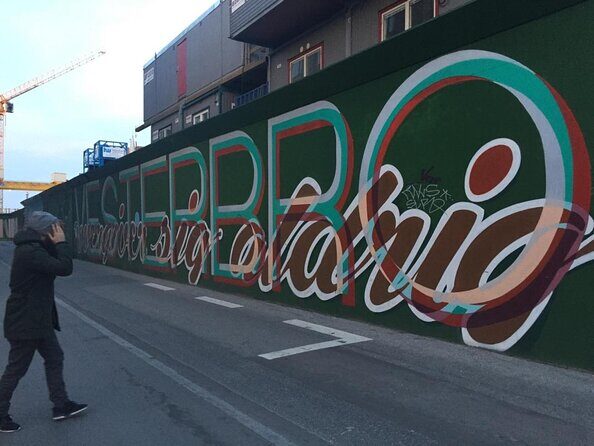
- Vesterbro’s WWII layer on Istedgade, including the resistance broadcast story at Istedgade 31
- Moat-to-street history at Viktoriagade, tied to Christian IV’s fortifications
- Skydemuren’s bullet-trap wall and why Istedgade’s street layout matters
- Meatpacking District origins, including Oksnehallen’s old cattle-market footprint
- Twisted-spire views at Church of Our Saviour, plus what makes the surrounding area tick
- Alternative city life at Freetown Christiania—with a practical note about access
Why Vesterbro & Christianshavn feel like the real Copenhagen
Copenhagen has two habits: it loves design and it loves reinvention. This tour leans into both, but it does it on foot through neighborhoods where the buildings and streets were shaped by very human needs—housing, work, survival, and community.
If you’re tired of only “top sights,” this format helps you get your bearings fast. You start in Vesterbro, where the city absorbed waves of workers and later reinvented older industrial areas, then you cross to Christianshavn for calmer streets and landmark views—without skipping the social context that makes those places make sense.
And because it’s private, you’re not stuck in a big group rhythm. That matters in Copenhagen, where the best conversations often happen when you can pause at the right corner and ask one more question.
Other Christiania and Christianshavn tours we've reviewed in Copenhagen

Starting at Viktoriagade: where fortifications became a street

Your first stop is Viktoriagade, and it opens with a satisfying “how did this happen?” moment. Long ago, this area held fortifications created by Christian IV in 1600, protected by a moat. Later redevelopment changed the moat’s condition so dramatically that it no longer worked like a moat, and the street that became famous was placed over the old moat.
From there, you shift from military planning to everyday civic life. Land along the street was sold in lots starting in 1856, and many buildings that went up were dedicated to charity, including buildings for officers’ widows. You’ll also see listed mid-1800s buildings at numbers 8, 10, and 12—small proof that Copenhagen preserves its older urban fabric instead of pretending history didn’t happen.
If you like cities that show layers rather than glossy facades, you’ll enjoy this start. It’s also a good warm-up for walking: you’re learning the “Copenhagen method” before the tour gets into heavier WWII territory.
Det Ny Teater: a theater built with a passage in mind
Next comes Det Ny Teater, opened in September 1908. This isn’t just a theater stop; it’s a story about how planners used buildings to shape movement in the city.
The concept was to create a large theater while also opening a passage between Gammel Kongevej and the new Vesterbro Passage (now part of Vesterbrogade). That means the theater fits into the neighborhood as a connector, not an isolated destination.
You’ll get a quick look, and the time here is efficient. Since you’re walking, the payoff is learning how the city’s “big public buildings” often had practical goals—flow, access, and urban structure.
Værnedamsvej and Saxogade: beer gardens, butchers, and housing protest
Værnedamsvej ties a street name to a real person: Werner Dam, a beer collector who acquired land in the 1700s and opened a popular beer garden there. It’s a reminder that Copenhagen wasn’t just built by royalty and architects; it was also shaped by operators who made social spaces work.
This street also carried the identity of Slagtergaden, literally Butchers’ Street, because of the number of butchers there. That’s the kind of detail that makes you see the neighborhood differently once you know its former purpose.
Then you shift to Saxogade, where the theme turns from commerce to conflict. In the early 1950s, residents sent a major letter of protest after living with miserable housing conditions. Families often lived in overcrowded, small one-room apartments where sleeping space could cover up to 10 people.
This is one of the stops that can feel emotionally heavier, but it’s also one of the most important. You start connecting the physical streets you’re seeing to the living conditions people fought for. It also helps you understand why “alternative Copenhagen” isn’t only a lifestyle choice—it grew from real pressure.
Skydemuren and Istedgade: the bullet-trap wall and resistance slogans
At Skydemuren, you’re looking at a castle-like wall that functioned as a bullet trap. It was built between Skydebanehaven and Istedgade to protect traffic along the then new street, Istedgade, from projectiles from the Royal Danish Army at Skydebane (the shooting range). The wall then becomes a kind of stage backdrop—acting as a point of view for Skydebanegade with its uniform, richly decorated houses.
Why this matters: Copenhagen’s street layouts aren’t random. When you understand these defensive and planning details, the neighborhood reads like a design puzzle built around safety.
Then comes Istedgade, one of Vesterbro’s most important streets. The name remembers the 1850 Battle of Isted in the First Schleswig War. Later, the street also became known for WWII refugee and resistance activity, plus it’s historically known as a drug-hit area and for being Scandinavia’s largest red light district.
During WWII, Istedgade served as a refuge for Danish resistance, and there’s a well-known slogan tied to it: They can take Rome, they can take Paris, but Istedgade will never fall. You don’t just hear the slogan—you see the street that made it meaningful.
Other Vesterbro neighborhood tours we've reviewed in Copenhagen


Istedgade 31 and Stjerne Radio: BBC in the streets
Your next stop is Istedgade 31, where Stjerne Radio opened in September 1942, run by Carl Munck and J.K. Søndergård. This is the kind of stop that turns history into something practical.
Instead of only thinking about battles, you focus on communication. The group started transmitting English broadcasts from BBC radio through loudspeakers, which became essential for resistance coordination and morale.
What you’ll likely feel here is the contrast between the street’s later reputations and the urgent role it played in daily survival. It’s also a moment where good guiding makes a difference—because the point isn’t just the facts, it’s why the facts mattered.
Meatpacking District and Oksnehallen: old markets, new energy
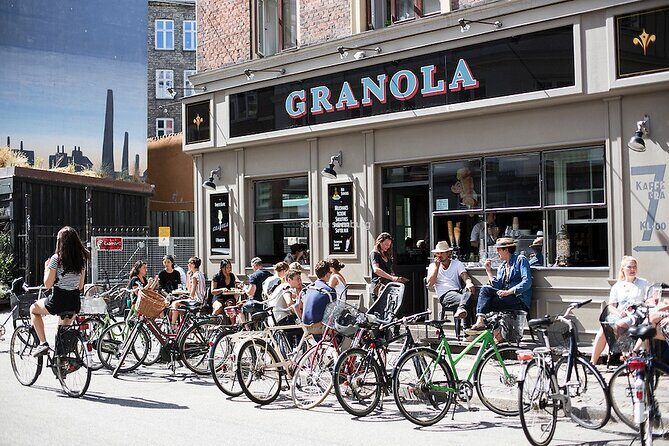
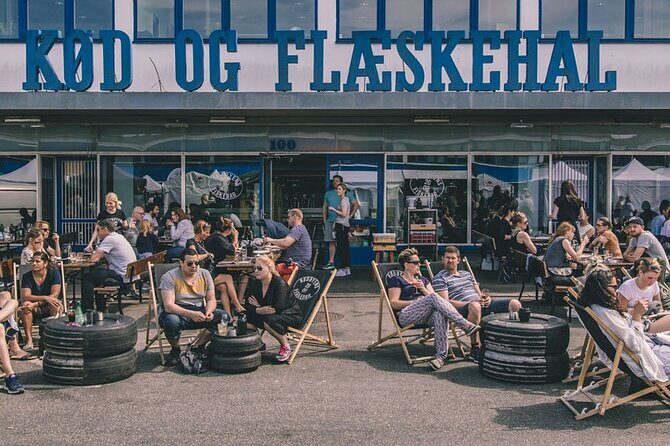
After the WWII core, the tour shifts to a more modern Copenhagen rhythm: the Meatpacking District. You’ll see how this revitalized industrial area now connects to trendy dining and nightlife. Even if you don’t stop for food, it helps to understand what kind of land got re-used to create today’s scene.
Then you hit Oksnehallen, an exhibition space inside an old market building. It was built in 1891 to house merchant offices and had a capacity for 1,600 cattle. The market stayed in use until the White Zone opened in the 1959s.
This is a smart pairing: you learn how a place built for animals and trade later becomes a cultural building. Copenhagen does a lot of that kind of transformation, and this gives you a concrete example.
Halmtorvet: Copenhagen’s haymarket and how trade moved
Halmtorvet is your next stop, and it’s an underrated kind of city history: logistics. Copenhagen’s haymarket originally sat just inside the Western City Gate where today’s City Hall Square is. It closed on 1 January 1888 and moved to the area outside the new Livestock Market, opened in 1879.
Market days were Wednesday and Saturday, and hundreds of loads of hay and straw were traded, distributed to cattle and horse stables across the city. You might not think about hay and straw when you plan a trip, but this stop is a reminder: cities run on systems, not just monuments.
If you like details that make daily life feel real, you’ll appreciate this. It’s also a nice pace change before the tour moves into social services and churches.
Men’s Home and Maria Church: support systems you can actually see
Next are two stops tied to vulnerable people and support. Men’s Home for homeless was established in 1910. It’s a private organization subsidized by the Danish state, aiming to help homeless and vulnerable people recognize and use their own resources to build a good life and contribute to a diverse society.
Then there’s Maria Church, a small church opened in 1909. Today it serves as a shelter for homeless people, families in need, and socially marginalized groups. It provides daily care for people seeking both spiritual and economic support, including vulnerable groups like illegal immigrants, drug addicts, prostitutes, and people whose lives are criminalized.
These stops aren’t “tourist spotlight” locations in the usual way. But they’re important because they show Copenhagen’s approach: social structures exist, and buildings in the neighborhood keep doing real work.
The Full Option: where lunch fits and why København H is worth your time
If you choose the Full Option, you’ll get lunch time in a classic Danish restaurant. The tour gives you about 45 minutes for this break. If you’re thinking, this is a walking tour, why add lunch? The answer is simple: it lets you keep walking energy up without turning the day into a frantic food hunt.
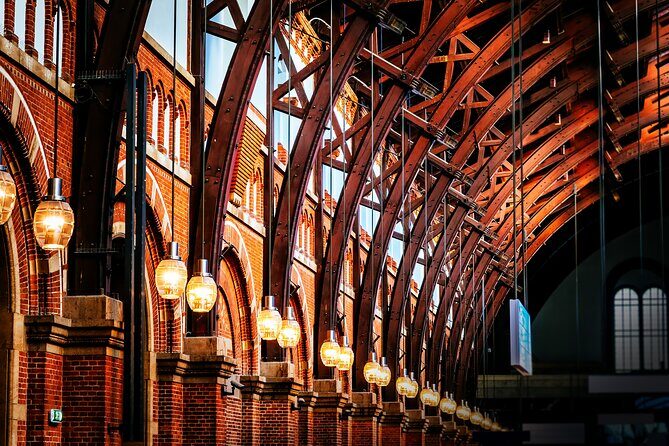
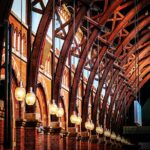
Even if you don’t pick the Full Option, the tour includes a stop at København H, the large railway station. Built in 1911 and inspired by the architectural style of the town hall building, it’s Denmark’s largest railway station, with seven platforms and 13 tracks.
This is one of those stops where you learn something practical. Rail stations are where daily Copenhagen happens. Seeing it through the tour lens helps you understand why the city feels “connected” even when you’re walking between very different neighborhoods.
Crossing to Christianshavn: Knippelsbro and a German congregation church
Now the tour shifts to Christianshavn. You cross via Knippelsbro, a 115-meter drawbridge built in 1937, linking Copenhagen with the island neighborhood. The name comes from Hans Knip, who operated the bridge and collected tolls in 1641, living with his family on the bridge itself.
From there, you reach Christians Kirke, a rococo church built between 1754 and 1759. Originally it was called Frederik’s German Church, named for Frederick V, and for years served Copenhagen’s German-speaking congregation.
This pairing works well because it shows how Christianshavn wasn’t just local Danish life. It included immigrant communities, trade connections, and religious needs—all reflected in buildings and street functions.
B&W’s start at Strandgade 4 and trade power at Asiatisk Plads
At Strandgade 4, you learn about industrial roots connected to B&W (now MAN Energy Solutions). The building dates to the 1780s and until recently housed the DieselHouse Museum (moved to København SV). The story stretches back to 1843, starting from a one-man smithing workshop, before B&W grew into one of Denmark’s largest workplaces.
Then you go to Asiatisk Plads, the former base of the Danish Asia Company (1732–1843), and today home to the Ministry of Foreign Affairs and a convention center. It’s another “city engine” story: Copenhagen’s worldview was shaped by trade, ships, and global reach.
If you’re the type who likes your architecture tied to jobs and money, these stops land well. They keep the tour from becoming only about social conflict or only about war.
St. Annae Kirke and Wildersgade: old houses, defensive zones, and quiet streets
Sankt Annae Kirke shows you listed buildings from the 1600s to 1700s, including a row of houses 8–22 with remains from some of the oldest houses in Copenhagen, built around 1650. House number 14 is noted as the best preserved.
Then you walk Wildersgade, dating from 1617–22 when Christianshavn was founded. Today it’s a quiet residential street with cobblestones, mansions, and older houses and warehouses from the 1700s–1800s.
You also get the feeling of defense and planning in the area. There’s mention of a defense zone created in Christian IV’s time to close the ring of protection of the capital and prevent Swedish attacks.
Finally, the tour brings you to Wilders Plads, a place that used to be a market square but now feels designed for relaxing by the water. You’ll also see Wilders Plads 10, a beautiful two-story timber-framed house built in 1736 as a sailmaker’s workshop and housing. And there’s a big yellow neoclassical building from 1754–56, later used as a naval hospice and then for the Danish Naval Museum/Orlogsmuseet until 2016.
These are the moments where you slow down without being bored. The streets and river edge help your brain file the information in order.
Church of Our Saviour and Freetown Christiania: views, then reality
The big landmark here is Church of Our Saviour. It’s a baroque church famous for its twisted spire and an external spiral staircase you can climb to reach the top. It’s also an active parish church serving about 8,000 people.
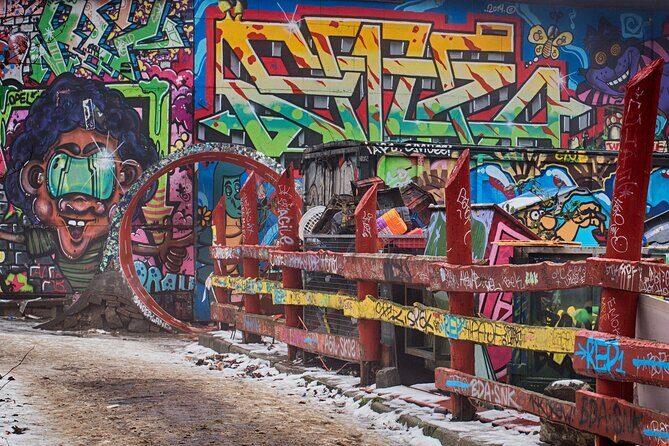
From there you reach Freetown Christiania, a partially self-governed neighborhood of about 1,000 residents created in 1971 by hippies protesting the lack of housing on military land abandoned by the Danish army. The community covers about 34 hectares and is said to be the second most visited sight in Copenhagen after Tivoli, with about half a million tourists visiting per year.
Practical note: your guide will not go with you into Christiania. That’s not a dealbreaker—it just means you’ll want to plan to walk through on your own for your full understanding of the place.
This final segment is where the tour’s theme locks in: Copenhagen isn’t only a museum. It’s also a living negotiation between rules and community space, between old defense land and modern identity.
Price and logistics: what $147.96 buys you
At $147.96 per person, you’re paying for a private guided walk with a local who can connect street-level details across two neighborhoods. The duration is about 3 hours 30 minutes to 4 hours, and the tour is offered in English.
I think the best value here is the mix: you get history-heavy stops (Viktoriagade’s moat-to-street story, Istedgade’s resistance radio broadcasts) plus neighborhood context (housing protest, old markets like Oksnehallen, and the social role of Men’s Home and Maria Church). It’s harder to piece that together on your own without turning your day into a research project.
Also, metro tickets are included, and admission is noted as free at the listed stops. Depending on your option, you may get a local tasting and a drink in a traditional restaurant as part of the Full Option, plus lunch.
One more real-world factor: the tour typically gets booked around 8 days in advance on average. If you have a tight schedule, don’t wait for the last minute.
Should you book this Vesterbro & Christianshavn alternative tour?
Book it if you want Copenhagen that’s less postcard and more street truth: social history, how neighborhoods evolved, and a guide who connects the dots. It’s especially good for first-timers who already know they want more than Nyhavn and Tivoli, but still want a structured route.
Skip it (or adjust expectations) if you’re mainly after classic sightseeing highlights or if you think this is a food-tour. There is a tasting stop in the Full Option, but the tour focus is history and neighborhood life, not eating your way through Copenhagen.
FAQ
How long is the Copenhagen Alternative Private Tour: Vesterbro & Christianshavn?
It runs about 3 hours 30 minutes to 4 hours.
What is the price per person?
The price is $147.96 per person.
Where does the tour start and where does it end?
It starts at Viktoriagade 8, 1620 København, Denmark, and it ends at Freetown Christiania, Copenhagen Municipality, Denmark.
Is the tour private?
Yes. It is a private tour/activity, and only your group participates.
What language is the tour offered in?
The tour is offered in English.
Does the guide go into Freetown Christiania with you?
No. The guide will not go with you into Christiania.
What’s included in the tour?
The tour includes a private tour with a local guide (3:30 to 4 hours), metro tickets, and a tasting and drink in a traditional restaurant only in the Full Option. An admission ticket is included for København H.
Is cancellation free, and what happens in rain?
Free cancellation is available, and the tour will not be cancelled in case of rain.