REVIEW · COPENHAGEN
The Philosopher’s Last Walk: An audio tour on the life of Søren Kierkegaard
Book on Viator →Operated by VoiceMap Audio Tours · Bookable on Viator
A philosopher, a GPS walk, and Copenhagen streets. The Philosopher’s Last Walk uses a self-guided route to connect Søren Kierkegaard’s life to real, walkable places around the city. I like that it’s written to keep things lively, with an informative and witty tone that doesn’t bury you in dry details.
What I also like is that the tour is built for your pace. You get offline audio, maps, and geodata in the VoiceMap app, so you can keep moving without hunting for signal. A small consideration: you’ll need to bring your own smartphone and headphones, and because it’s self-guided, there’s no live person to ask questions.
In This Review
- Key things to know before you go
- A 1-hour Kierkegaard walk that turns landmarks into a story
- Price and value: $9.99 for lifetime access
- Before you start: VoiceMap, offline navigation, and what to bring
- Route overview: from Nytorv to the Søren Kierkegaard burial place
- Stop 1: Søren Kierkegaard’s family house—your starting point for the whole story
- Stop 2: The church stop—how the route changes the mood
- Stop 3: Rundetårn—famous Copenhagen in the middle of the timeline
- Stop 4: Copenhagen University—linking people and institutions
- Stop 5: The Cathedral—big architecture, clear listening focus
- Stop 6: The bridge—transition from city sights toward calmer space
- Stop 7: The lakes—when the city slows down
- Stop 8: Assistens Cemetery—where the tour’s ending makes emotional sense
- Stop 9: The burial place—finish with a clear endpoint
- Timing in real life: when to do this and how to fit it
- Practical value for different kinds of travelers
- Should you book The Philosopher’s Last Walk?
- FAQ
- How much does The Philosopher’s Last Walk cost?
- How long is the walking tour?
- Is the audio available in English?
- Does the tour work offline?
- What equipment do I need to bring?
- Where does the tour start and end?
- Is this tour private?
- Is there free cancellation?
Key things to know before you go

- Witty, well-delivered audio that makes Kierkegaard easier to follow
- Offline VoiceMap access for audio, maps, and geodata
- A tight route that runs about 1 hour to 1 hour 15 minutes
- 19th-century setting through landmarks, not just facts
- Ends at the burial place in Assistens Cemetery, giving the walk a clear finish
A 1-hour Kierkegaard walk that turns landmarks into a story
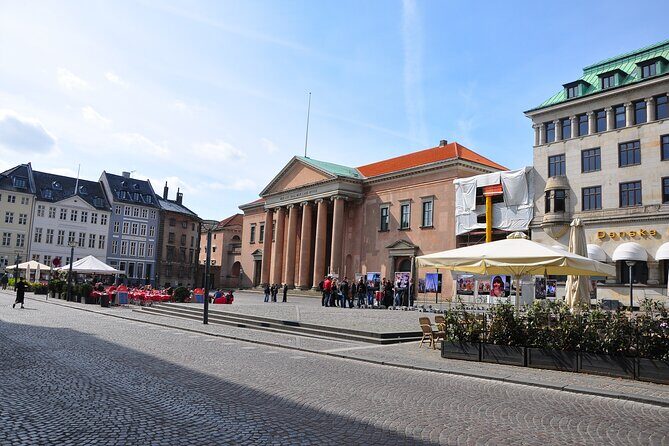
This is the kind of experience that works well in a city like Copenhagen: you move on foot, the streets change, and the meaning shifts with each new stop. The audio tour traces Søren Kierkegaard’s life by sending you from one recognizable place to the next, from family beginnings to his final resting place.
I love that the route is designed around the city itself. Instead of treating Kierkegaard as a distant “big idea,” the tour links him to physical locations you can see, walk past, and return to in your mind as you keep going. If you enjoy city walking that feels purposeful, this is a strong fit.
The length matters too. At about 1 hour to 1 hour 15 minutes, you can do it without turning your day into a half-day project. That’s a big part of the value for a $9.99 ticket: it’s not just content—it’s a compact way to experience a lot of central Copenhagen.
Other self-guided audio tours we've reviewed in Copenhagen



Price and value: $9.99 for lifetime access

At $9.99 per person, this audio tour is priced like an easy add-on—and it can stay that way if you’re the type who revisits things. You get lifetime access, meaning you’re not just paying for one ride; you can repeat it on a future trip or on a later walk through the same neighborhoods.
That lifetime access changes the math. If you’re visiting Copenhagen once and you want a quick, guided-feeling route without paying for a full live tour, this looks like good value. If you’re the sort of traveler who likes to learn while walking and then re-listen when you return home, it’s even better.
One more practical angle: the tour is English and self-paced. That reduces the friction of group schedules and makes it easier to fit into an already-packed itinerary.
Before you start: VoiceMap, offline navigation, and what to bring
This experience runs through the VoiceMap Audio Tours app, and it includes offline access to audio, maps, and geodata. That’s useful in Copenhagen, because you may pass through spots where your phone signal isn’t consistent, especially if you’re moving quickly.
You’ll want to arrive ready. Bring:
- Your smartphone
- Headphones
- A charged battery
- Any app login details you need (so you don’t waste time at the start)
The tour also includes directions to the starting point, which matters because your first job is simply to get positioned. The meeting point is at Nytorv 2, 1450 København. From there, you follow the GPS-driven prompts as you go.
Also note the tour is listed as private for your group. That doesn’t mean you’ll have the streets to yourself, but it does suggest you won’t be blended into a big shared guided group.
Route overview: from Nytorv to the Søren Kierkegaard burial place
The walk is structured like a guided storyline, but you control the tempo. You’ll start at Nytorv 2 and finish at Søren Kierkegaard Gravesite, Kapelvej 2, 2200 København.
Along the way, you’ll pass through a sequence of meaningful sites: Kierkegaard’s family house, a church, Rundetårn, Copenhagen University, the Cathedral, a bridge, lakes, and then Assistens Cemetery, where the tour ends at his burial place.
That mix is exactly why this tour works. You’re not only seeing famous architecture—you’re moving through settings that help you picture how a life could unfold across a whole city.
Stop 1: Søren Kierkegaard’s family house—your starting point for the whole story
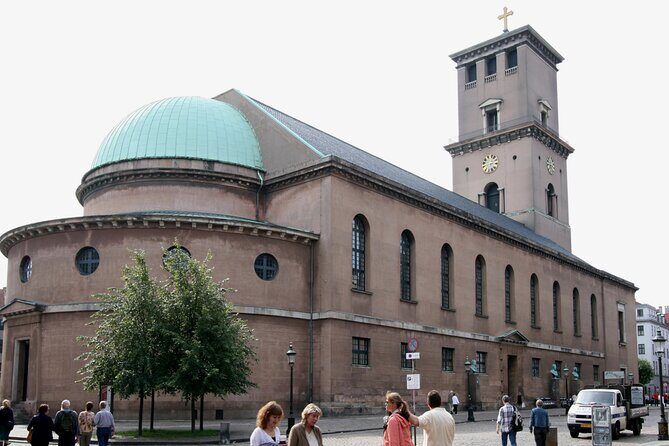
The tour begins at Søren Kierkegaard’s family house. Starting here is a smart design choice because it gives you a “home base” for what you’ll hear later. Even if you don’t know much about him before you go, the audio starts by grounding you in a specific place.
The practical benefit is simple: you can orient yourself at the beginning. You’ll know what you’re trying to do—follow a personal timeline as it moves outward from a point of origin—so you’re not just reacting to random sights.
If you prefer learning in context, this is where you’ll feel the tour start clicking.
Other Jewish and cultural heritage tours we've reviewed in Copenhagen






Stop 2: The church stop—how the route changes the mood
Next, the tour passes by a church. Churches tend to shift how you experience a city walk, even before you know anything about the person you’re following. Expect the audio to keep moving the narrative forward while the surroundings add a different tone—more formal, more reflective, more rooted in public life.
A drawback here is also possible: if you’re traveling with little patience for walking, this kind of “pass-by” stop can feel quick. The tour flows, so you’ll want to be ready to listen while you move, not stop and read for long.
Stop 3: Rundetårn—famous Copenhagen in the middle of the timeline
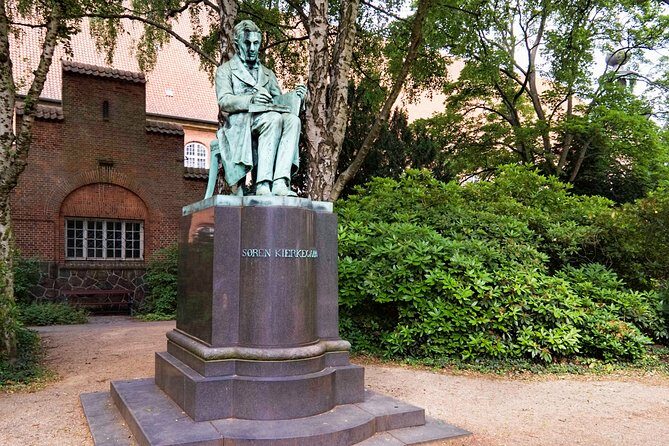
The route passes by Rundetårn. This is one of those places that most people recognize in Copenhagen, which helps your brain. Even if you remember it from photos, the audio tour gives it a new function: it’s not just a sight, it’s a waypoint in the story.
This kind of stop works well for two reasons:
- You get visual anchors while listening.
- It breaks the walk into sections, so the story feels paced.
If you like the feeling of “I’m moving through the book pages,” Rundetårn helps.
Stop 4: Copenhagen University—linking people and institutions
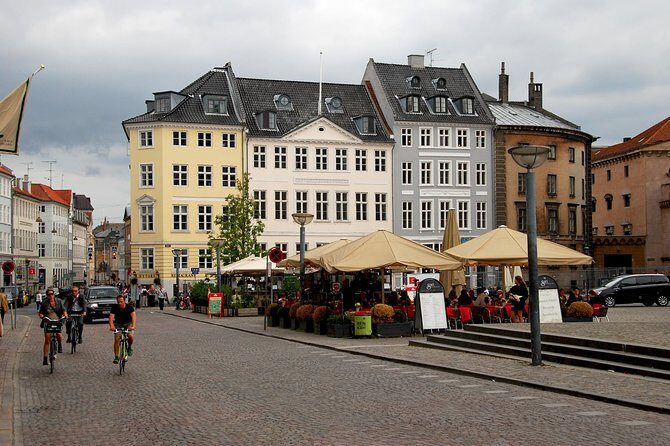
Then you pass by Copenhagen University. A stop like this can help you understand how a person’s world might connect to institutions—without turning the audio into a lecture. You’ll likely get the feeling of the city as a network, not just a set of buildings.
Practical tip: wear comfortable shoes here. This part of the route is in the heart of the city, and you’ll likely walk more smoothly if your legs feel good.
Stop 5: The Cathedral—big architecture, clear listening focus
The tour passes by the Cathedral. When you hit a major religious building, the scale usually makes people slow down naturally. The audio gives you a reason to pay attention beyond the obvious architecture.
At this point, you’ll probably appreciate the self-guided format. You can decide how long you look around while staying roughly on track. The route is designed to keep moving, but you’re not forced to sprint.
Stop 6: The bridge—transition from city sights toward calmer space
Next comes a bridge. This is the kind of transit stop that can feel like a narrative “hinge,” even if you don’t know the deeper background. Bridges change your view, and the soundscape shifts too—often more open, sometimes quieter depending on the direction you’re facing.
When an audio tour includes these in-between moments, it helps you avoid fatigue. Your brain gets a visual reset, so the story doesn’t blur into one long block of listening.
Stop 7: The lakes—when the city slows down
The route continues along the lakes. This is where the walk often becomes more pleasant for your body and your ears. Even if you’re busy with the audio, the surroundings tend to make it easier to maintain calm attention.
This part is also where you might notice how well the tour respects your pace. Offline audio lets you keep listening while you walk without worrying about data or buffering. If you’re the type who likes to take photos, this is a good area to pause briefly and then resume.
Stop 8: Assistens Cemetery—where the tour’s ending makes emotional sense
Then you go into Assistens Cemetery. Ending a life-story walk inside a cemetery is never casual. It forces the experience to land in a slower key.
This is also where the tour’s final design shows itself. The route doesn’t just drop you near a random point—it aims you toward the conclusion of the narrative. Expect the audio to guide you through the cemetery approach so you understand what you’re looking for as you move.
One consideration: cemeteries can be quiet and reflective places, but they’re still outdoors. Dress for the weather and bring a small layer if you run cold easily.
Stop 9: The burial place—finish with a clear endpoint
Finally, the tour ends at Søren Kierkegaard’s burial place at Kapelvej 2, 2200 København. Ending at the actual site gives the walk a satisfying closure. You don’t just stop listening and drift away; you reach a destination that feels like the final period of the story.
If you like your city walks to have a beginning, middle, and end, this is a strong match. You’ll likely leave with a better sense of how his life is mapped across Copenhagen rather than only remembered as a name.
Timing in real life: when to do this and how to fit it
Because the tour runs about 1 hour to 1 hour 15 minutes, it’s easiest to slot it into a lighter portion of your day. I like doing it when I’m fresh—early afternoon often works, or any time you don’t already have a heavy museum list planned.
You’ll also be walking in central areas, and the route includes multiple major landmarks plus cemetery time. That combo is great for a compact “learning walk,” but it can be a bit much if you’re already carrying fatigue.
So here’s a simple plan that tends to work:
- Do it when you can stay present for the full hour.
- Take quick pauses only if they help you hear and see clearly.
- If the weather turns, use your judgment and shorten photo stops.
Practical value for different kinds of travelers
This tour is a good match if you want a guided-feeling experience without booking a live guide. It also suits travelers who:
- like learning while walking
- don’t want strict group timing
- can handle self-guided navigation on a phone
It may not be ideal if you prefer a real-time conversation, since the audio format doesn’t include back-and-forth with a person. Also, if you forget headphones, you’ll feel the limitation fast—smartphone audio alone isn’t usually a comfortable solution in a city.
Should you book The Philosopher’s Last Walk?
Yes, if you want a low-cost, well-written audio walk that connects Søren Kierkegaard to recognizable Copenhagen places. The standout in the feedback is the way the tour comes across as informative and witty, with solid delivery and lots of detail, so it’s not just a bland narration.
Book it if you like compact routes that you can finish in about an hour, then move on to something else without feeling behind schedule. The offline VoiceMap setup and lifetime access make it a smart purchase for repeat listening on future visits.
Skip it if you hate using your phone while walking or you don’t like self-guided experiences. In that case, you’ll miss the convenience of a live guide who can adjust on the spot.
FAQ
How much does The Philosopher’s Last Walk cost?
It costs $9.99 per person.
How long is the walking tour?
The duration is approximately 1 hour to 1 hour 15 minutes.
Is the audio available in English?
Yes, the tour is offered in English.
Does the tour work offline?
Yes. It includes offline access to audio, maps, and geodata in the VoiceMap app.
What equipment do I need to bring?
The tour does not include a smartphone or headphones, so you’ll need to bring both.
Where does the tour start and end?
It starts at Nytorv 2, 1450 København, Denmark and ends at Søren Kierkegaard Gravesite, Kapelvej 2, 2200 København, Denmark.
Is this tour private?
Yes. It’s listed as a private tour/activity, with only your group participating.
Is there free cancellation?
Yes. You can cancel for a full refund up to 24 hours in advance of the experience’s start time.