REVIEW · COPENHAGEN
Copenhagen: City Sightseeing Hop-On Hop-Off Bus Tour
Book on GetYourGuide →Operated by City Sightseeing Europe · Bookable on GetYourGuide
A bus pass can get you bearings fast. This one makes Copenhagen feel manageable with hop-on hop-off routes that hit the big sights, plus an onboard audio guide in multiple languages. I especially like the heated, comfortable ride in winter, and the fact you can switch between routes at key stops to stretch your time.
If you’re trying to cram in late-day plans, the main thing to watch is timing. The Classic circuit, for example, has a defined last departure window, so you’ll want to build your day around the bus schedule instead of treating it as a casual stroll.
In This Review
- Key points to know before you ride
- Why a Copenhagen hop-on hop-off works so well
- Tickets, routes, and how to pick the right mix
- Classic Copenhagen Route: from Ved Stranden to the Little Mermaid
- Ved Stranden (Stop 1) and Stroget energy
- Nyhavn (Stop 2): waterfront views and bar-hopping potential
- Amalienborg Palace (Stop 3) and Gefion Fountain (Stop 4)
- The Little Mermaid (Stop 5): iconic, crowded, worth the quick visit
- Langelinie stretch (Stops 6–8)
- Rosenborg Castle (Stop 9) and historic-square breaks (Stops 10–11)
- Tivoli and the big transfer hub (Stop 12, plus Stop 13)
- Black Diamond (Stop 15) and modern waterline stops (Stop 14)
- Classic Route timing and pacing (important for your schedule)
- Home of Carlsberg Route: Planetarium, gardens, Frederiksberg, Zoo, and more
- It starts from Tivoli and then fans out (Stop 12 to Stops 23–24)
- Planetarium and University horticultural gardens (Stops 21 and 23)
- Frederiksberg stops for shopping and civic sights (Stops 22–26)
- Copenhagen Zoo / Cisternerne (Stop 27)
- De Sma Haver, Carlsberg, Bakkehuset (Stop 28)
- Frederiksberg Garden and the Meatpacking District (Stops 29–30)
- Colourful Copenhagen Route: canals, Christiania, Opera, Reffen, and Islands Brygge
- Ved Stranden / Stroget (Stop 1)
- Christianshavn (Stop 31): canalside feel
- Christiania Freetown (Stop 32): a notable area to see
- Opera (Stop 33) and Street Food / Reffen (Stop 34)
- Islands Brygge / Casino Copenhagen (Stop 35)
- Comfort, audio, and what the on-board extras actually mean for you
- Timing, last buses, and using the route map without stress
- A simple day-by-day plan for 24, 48, and 72 hours
- If you have 24 hours
- If you have 48 hours
- If you have 72 hours
- What this tour is best for (and where it might not fit)
- Should you book this Copenhagen hop-on hop-off bus?
- FAQ
- What is included with the Copenhagen hop-on hop-off bus ticket?
- How long is the Classic Copenhagen Route?
- How long is the Home of Carlsberg Route?
- How long is the Colourful Copenhagen Route?
- Where can I start and end the tour?
- Is an audio guide included, and what languages are available?
- Are attraction entrance fees included?
- Can I use a mobile or paper voucher?
- What are the first and last departures on the Classic Route?
- Is the tour wheelchair accessible, and are pets allowed?
Key points to know before you ride
- Multiple routes for different neighborhoods let you tailor the day instead of doing one generic loop.
- Switching routes at the Tivoli area (Stop 12) is a smart time-saver when you have only 1–3 days.
- On-board audio in 6 languages plus headphones makes the bus tour feel like a guided history walk with views.
- Frequent Classic departures (about every 35 minutes) give you flexibility to hop off and return.
- Comfort matters: the ride is consistently described as warm and easy, even when it’s bitter outside.
Why a Copenhagen hop-on hop-off works so well
Copenhagen’s charm is easy to understand, but it’s not always easy to plan. Sight lines spread out, neighborhoods feel different from block to block, and daylight (or weather) can change your pace fast. A hop-on hop-off bus pass solves that by letting you decide what to slow down for and what to skip today.
The best part here is that the pass isn’t just “see the highlights.” You’re given a way to move between major areas with minimal transit stress—while still getting commentary and a clear view of where you are. When you can recognize landmarks from the top deck, you spend less time studying maps and more time enjoying streets, waterfronts, and parks.
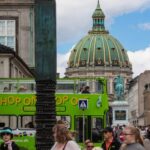
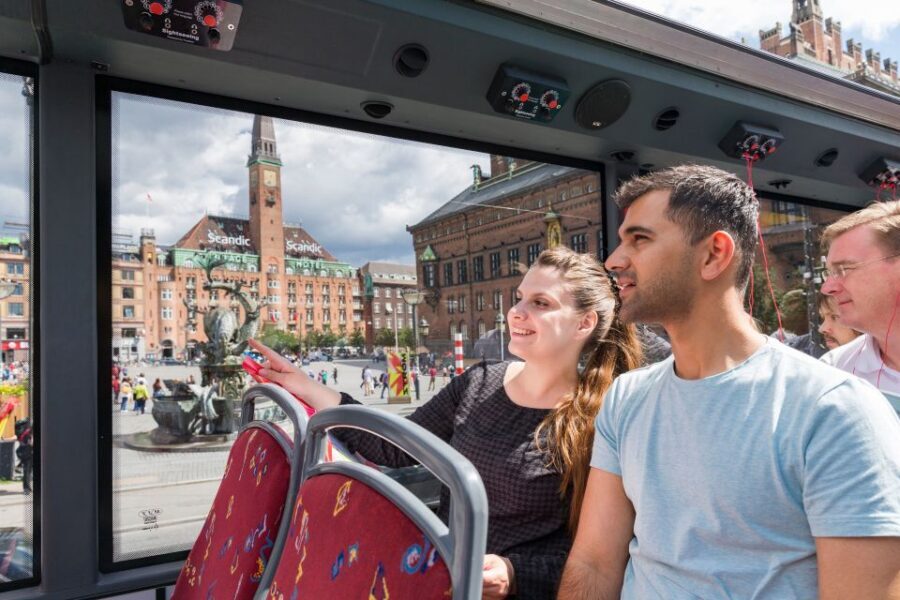
And yes, it helps that the bus setup is designed for real sightseeing. You’ll get panoramic views from a double-decker, and you can hop off for up-close exploring—like the waterfront at Nyhavn or the amusement-fun energy around Tivoli Gardens—then come back when you’re ready.
Other hop-on hop-off bus tours we've reviewed in Copenhagen

Tickets, routes, and how to pick the right mix
Your pass is valid for 24, 48, or 72 hours, which is great because Copenhagen doesn’t fit one-day thinking. With a 24-hour ticket, you’ll focus on one or two “anchor zones.” With 48–72 hours, you can layer neighborhoods and still have backup time if the weather changes.
There are three routes built for different interests:
- Classic Copenhagen Route: the core sights in central areas.
- Home of Carlsberg Route: more of the Frederiksberg side plus zoo/gardens and the Carlsberg-adjacent theme.
- Colourful Copenhagen Route: the mix of canalside areas, the Opera zone, and stops tied to street food.
One practical reason this works: you don’t have to commit to a single loop. The route network is designed so you can return to a central transfer area (notably around Stop 12/Tivoli) and branch out.
If you’re wondering about value: the listed price is $44 per person. That can feel high if you only plan to see one main site. It feels much more reasonable if you actually use the freedom—hop off multiple times, do at least two routes if your schedule allows, and rely on the included audio guide instead of building your own research plan from scratch.
Classic Copenhagen Route: from Ved Stranden to the Little Mermaid
This is the route I’d point most first-time visitors to. It’s built around Copenhagen’s most recognizable sights in a logical order, and it moves with enough frequency that you can treat it as a flexible backbone rather than a strict timetable.
Ved Stranden (Stop 1) and Stroget energy
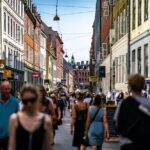
Starting at Ved Stranden (Stop 1) puts you close to the main pedestrian streets and the city’s shopping-and-stroll mood. It’s a good place to begin if you want to warm up with the central feel of Copenhagen before you zoom toward the waterfront.
Nyhavn (Stop 2): waterfront views and bar-hopping potential
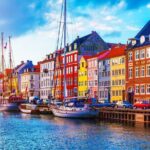
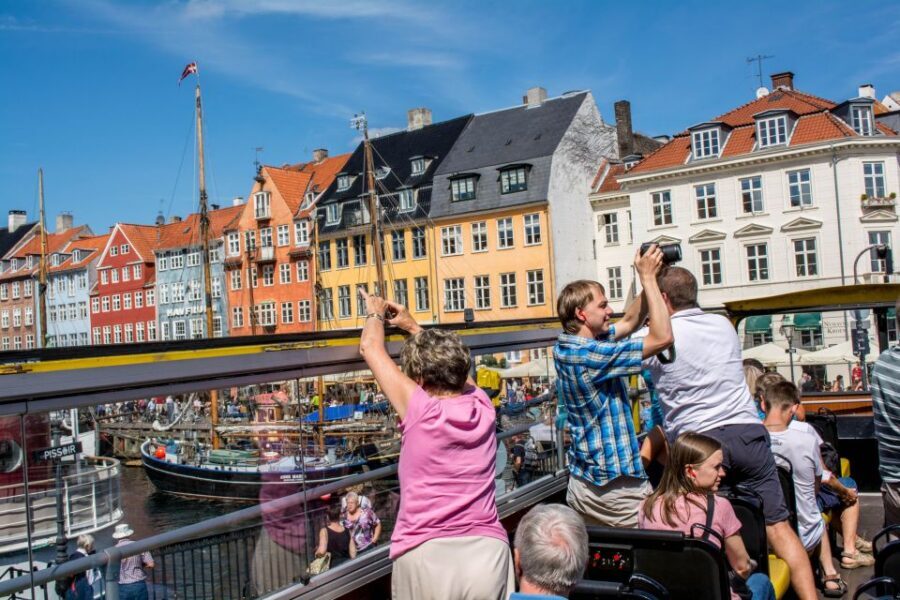
Next is Nyhavn (Stop 2). This is one of those stops where the bus window gives you the “wow,” but hopping off gives you the real experience: the colorful harborfront, canal-side atmosphere, and the easy rhythm of people grabbing food and drinks nearby. The highlights call out the idea of pairing this area with a beer stop—exactly the kind of low-effort, high-reward moment a hop-on pass is good at.
Other city tours we've reviewed in Copenhagen




Amalienborg Palace (Stop 3) and Gefion Fountain (Stop 4)
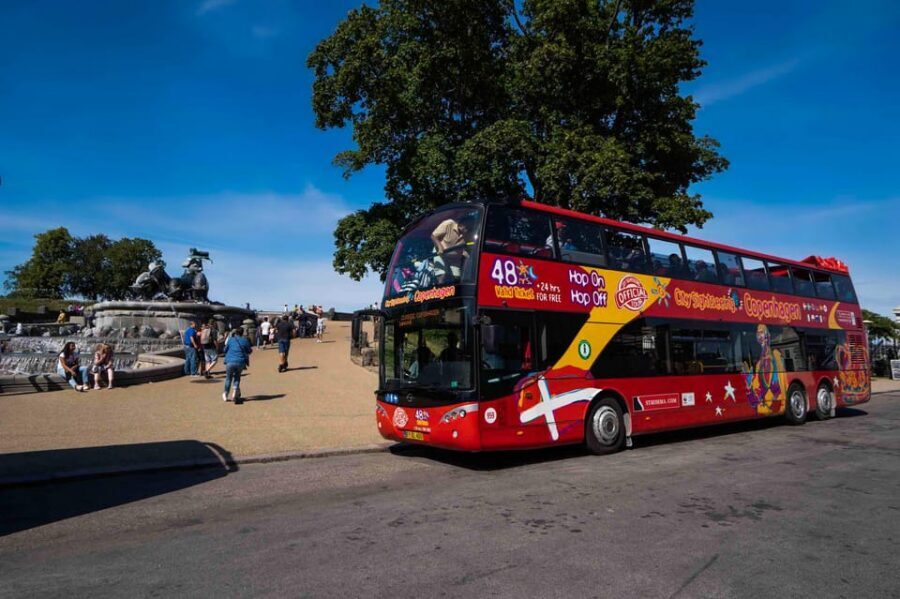
Then you’ll see Amalienborg Palace (Stop 3) and Gefion Fountain (Stop 4). These are perfect for short hops: you get a quick look, then you can decide if you want to linger. If you don’t want to pay time-price for attractions, these are still worth the photo-and-orientation stop.
The Little Mermaid (Stop 5): iconic, crowded, worth the quick visit
You’ll reach The Little Mermaid (Stop 5), one of Copenhagen’s headline monuments. Expect it to be a magnet. Even if you only do a brief stop, it’s a key waypoint for understanding why this city looks the way it does along the waterfront.
Langelinie stretch (Stops 6–8)
After the Mermaid, the route tracks along Langelinie at multiple stops (Langelinie N, M, and S). This is useful because the area is best appreciated by moving along it slowly. You don’t have to commit to one spot; you can hop where the view looks best or where you want a waterfront walk.
Rosenborg Castle (Stop 9) and historic-square breaks (Stops 10–11)
Rosenborg Castle (Stop 9) is an easy “yes” if you like royal-era architecture. Then you get Gammel Torv (Stop 10) and City Hall Square (Stop 11)—both good for snapping photos and soaking in public-space energy without planning an all-day commitment.
Tivoli and the big transfer hub (Stop 12, plus Stop 13)
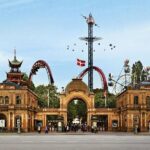
Stop 12 is a powerhouse: it’s listed as Radisson Royal Hotel/Tivoli and also appears as a starting point for other routes. That means your bus plans can stay flexible. If you want fun-fair time, Tivoli Gardens is right here. Stop 13 adds the nearby Tivoli Hotel/Fisketorvet area, which is handy if you want a mix of theme-park energy and shopping.
Black Diamond (Stop 15) and modern waterline stops (Stop 14)
Later you’ll hit Marriott Hotel/Kalvebod Waves (Stop 14) and The Black Diamond (Stop 15). This is where the trip stops feeling only “tourist photo run” and starts feeling like modern Copenhagen too—especially around the waterline and cultural architecture zones.
Classic Route timing and pacing (important for your schedule)
The Classic circuit runs for 90 minutes, with service roughly every 35 minutes. The first departure from Stop 1 (Ved Stranden) is 10:00am, with the last at 4:30pm. At Stop 12 (Tivoli), the first departure is 9:30am, and the last is 4:10pm. That last part matters: plan your major hops earlier if you don’t want to scramble.
Home of Carlsberg Route: Planetarium, gardens, Frederiksberg, Zoo, and more
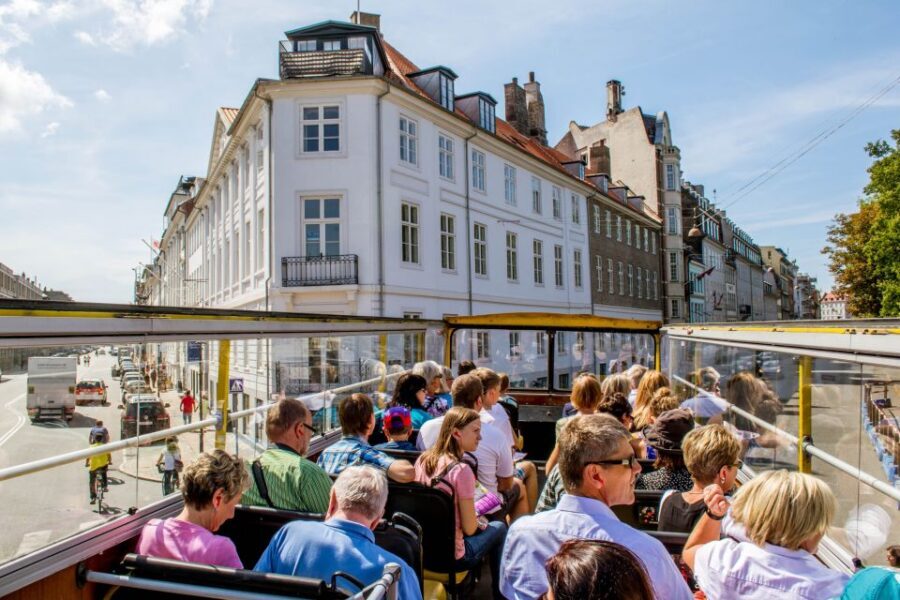
This route is shorter—45 minutes—but it gives you access to areas that feel more local and park-filled. It’s especially appealing if you want Copenhagen beyond the postcard center: horticultural gardens, zoo time, and the Carlsberg-themed zone in the mix.
It starts from Tivoli and then fans out (Stop 12 to Stops 23–24)
Home of Carlsberg departs from Stop 12 (Tivoli) at 11:15am, 1:15pm, and 3:15pm. It also lists approximate departures from Stop 23 (Copenhagen Zoo / horticultural area) and Stop 24 (Home of Carlsberg) windows close to 11:25am, 1:25pm, and 3:25pm. In plain terms: you can use Tivoli as your staging point, then ride this as a dedicated “one-block region” jump.
Planetarium and University horticultural gardens (Stops 21 and 23)
You’ll see Planetarium (Stop 21) and then the University of Copenhagen Horticultural Gardens (Stop 23). If you like quiet outdoor time, this is where it pays off. Even if you don’t buy tickets inside attractions, the bus gives you a sense of spacing—how Copenhagen hides green space between districts.
Frederiksberg stops for shopping and civic sights (Stops 22–26)
The route includes Gammel Kongevej (Stop 22), Frederiksberg Shopping Mall (Stop 24), Frederiksberg City Hall (Stop 25), and Royal Copenhagen Outlet (Stop 26). That mix is practical: it’s both sightseeing and errands. If you want a souvenir route that doesn’t feel like a trap, this is a smart area to glance at.
Copenhagen Zoo / Cisternerne (Stop 27)
Copenhagen Zoo / Cisternerne (Stop 27) is a major reason to choose this route. The zoo stop is self-explanatory. The Cisternerne name suggests a specific attraction tied to water/storage—worth treating as an “if your interests match” hop-off.
De Sma Haver, Carlsberg, Bakkehuset (Stop 28)
One highlight here is De Sma Haver / Carlsberg / Bakkehuset (Stop 28). This is the stop that connects the tour idea to the Carlsberg theme. If your goal is to pair sightseeing with a beer moment, this is the neighborhood to build around.
Frederiksberg Garden and the Meatpacking District (Stops 29–30)
Finally, you’ll reach Frederiksberg Garden / Frederiksberg Alle (Stop 29) and then the Meatpacking District / Scandic Kodbyen (Stop 30). That’s a nice late-route combo: green space first, then the modern, designy vibe of the Meatpacking District. With a short loop, you’re still controlling how long you spend at each stop.
Colourful Copenhagen Route: canals, Christiania, Opera, Reffen, and Islands Brygge
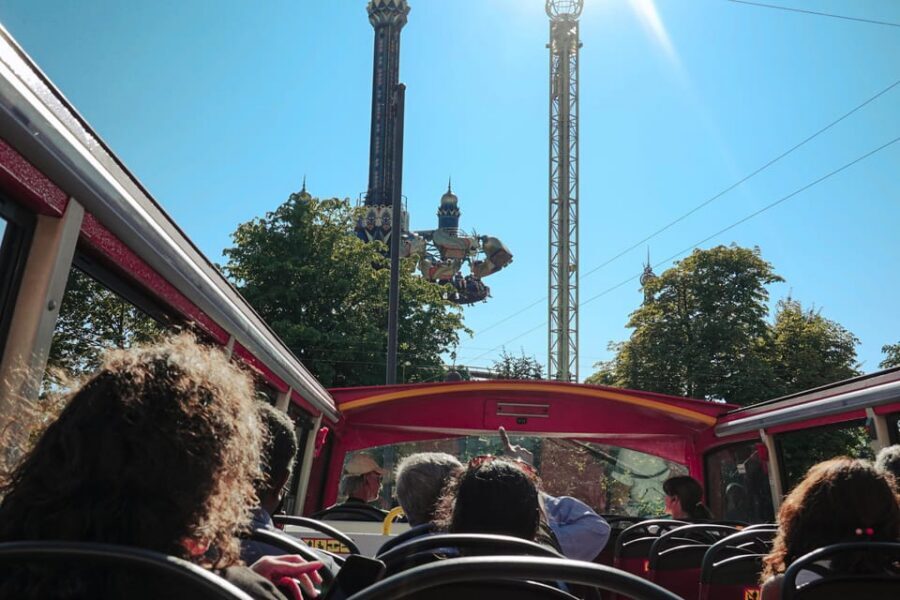
This route leans more “neighborhood and atmosphere” than “top 10 monuments.” It runs for 55 minutes, and departures are timed from Tivoli (Stop 12) at 12pm, 2pm, and 4pm and from Ved Stranden (Stop 1) at 12:15pm, 2:15pm, and 4:15pm.
So if you like late-morning plans, keep that timing in mind. If you want street-level time, this route is a good pick for your afternoon rhythm.
Ved Stranden / Stroget (Stop 1)
You start in central Copenhagen again at Ved Stranden / Stroget (Stop 1). That makes it easy to combine with an earlier Classic ride or a morning stroll.
Christianshavn (Stop 31): canalside feel
Next is Christianshavn (Stop 31). The name alone hints at canals and a different vibe than the palace-and-city-hall zone. It’s a great place to hop off and walk if you like water views that feel more local than staged.
Christiania Freetown (Stop 32): a notable area to see
Then comes Christiania Freetown (Stop 32). This is a famous part of Copenhagen’s identity, and the bus gives you a way to position yourself without committing to a long detour. Since your tour data doesn’t describe it in detail, the best move is simple: use this stop to decide on-the-spot whether it fits your interests.
Opera (Stop 33) and Street Food / Reffen (Stop 34)
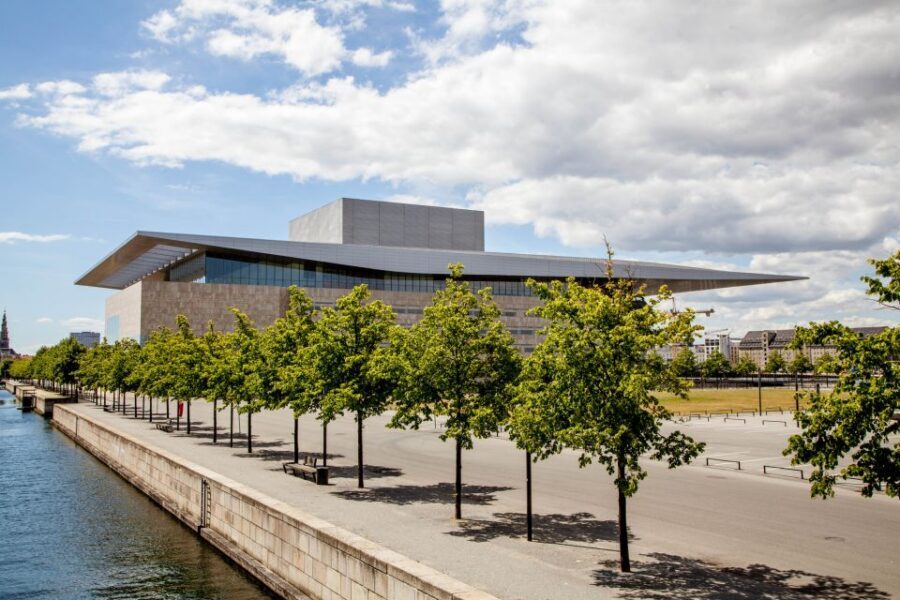
The Opera (Stop 33) is a good short photo stop if you like modern architecture and waterfront edges. Then you’ll hit Street Food / Reffen (Stop 34), which is one of the most fun practical stops on the route. If you want a casual meal without hunting for a sit-down restaurant, this kind of food-focused area pairs well with the bus-tour rhythm.
Islands Brygge / Casino Copenhagen (Stop 35)
Finally, Islands Brygge / Casino Copenhagen (Stop 35). Even if you don’t step into the casino itself, the Islands Brygge area is useful for an end-of-day shift—less central postcard, more “evening in Copenhagen” energy.
Comfort, audio, and what the on-board extras actually mean for you
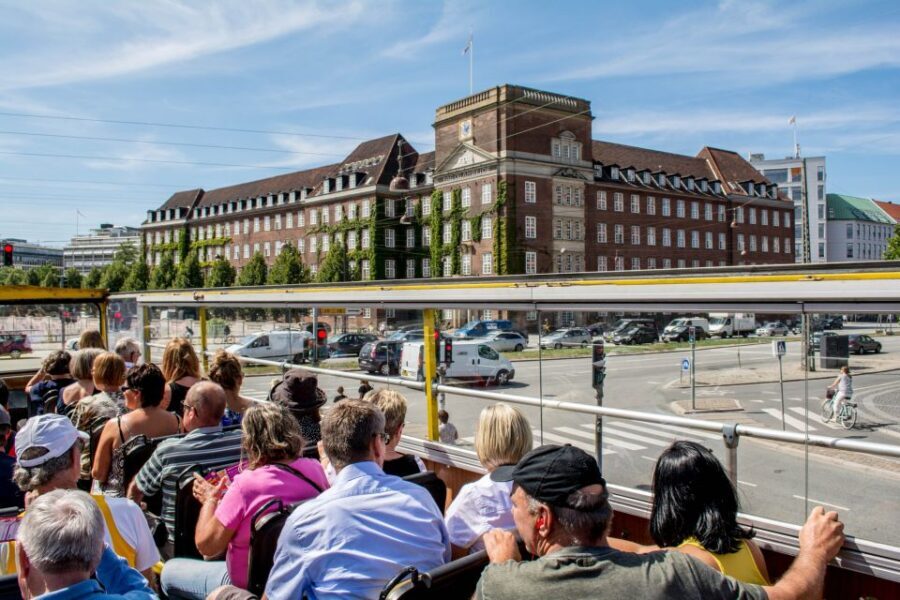
This pass includes headphones and an audio guide with commentary in English, German, Danish, Spanish, French, and Italian. That matters more than people think. If you’re walking, you’ll only catch fragments of what you’re seeing; on the bus, you can match the story to the view without constantly checking your phone.
Wi-Fi and a map are included too. That combination is handy if you want to confirm where you are before you hop off at the next stop, or if you’re planning how to connect between routes at that key transfer area around Tivoli.
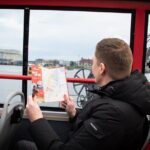
Comfort is another big factor. In colder months, you’ll appreciate that the experience is designed for real outdoor-to-indoor movement. From the feedback, the bus heating is repeatedly mentioned as a highlight, and drivers also get credit for being courteous and helpful—especially when people are trying to figure out which stop to use as their pivot point.
The one balanced caution: the audio quality isn’t uniformly loved. A few people felt the commentary was light or less detailed than hoped. My advice: treat the audio as an easy baseline, not as your only source. If you care about deep detail, pair it with a quick pre-read on the few stops you’re most excited about—especially Little Mermaid and Tivoli.
Timing, last buses, and using the route map without stress
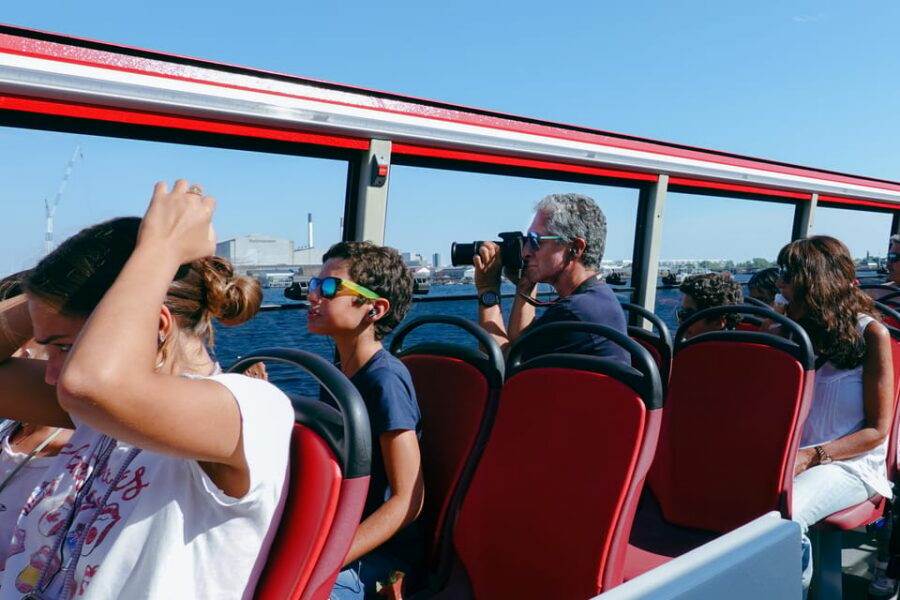
A hop-on hop-off works best when you stop thinking of it like a subway and start thinking of it like timed service. The schedules matter.
For Classic:
- 90 minutes
- about every 35 minutes
- last departure from Stop 1 (Ved Stranden) is 4:30pm
- last departure from Stop 12 (Tivoli) is 4:10pm
For Home of Carlsberg:
- 45 minutes
- departures from Stop 12 at 11:15am, 1:15pm, 3:15pm
For Colourful:
- 55 minutes
- departures from Stop 12 at 12pm, 2pm, 4pm
- departures from Stop 1 at 12:15pm, 2:15pm, 4:15pm
One more practical tip: the system can look confusing if multiple bus operators use similar colors in the street. To avoid that hassle, use the official GPS map link provided by the operator and follow the stop names/numbers on your pass. If you like real-time tracking, use the QR code on the map if it’s offered to you—this is where you can get a clearer sense of wait times rather than guessing.
Finally, remember that you can start and end at any allocated stop. That’s a big deal for planning. You don’t have to force your day to a single boarding location. If you find a stop you love, build around it.
A simple day-by-day plan for 24, 48, and 72 hours
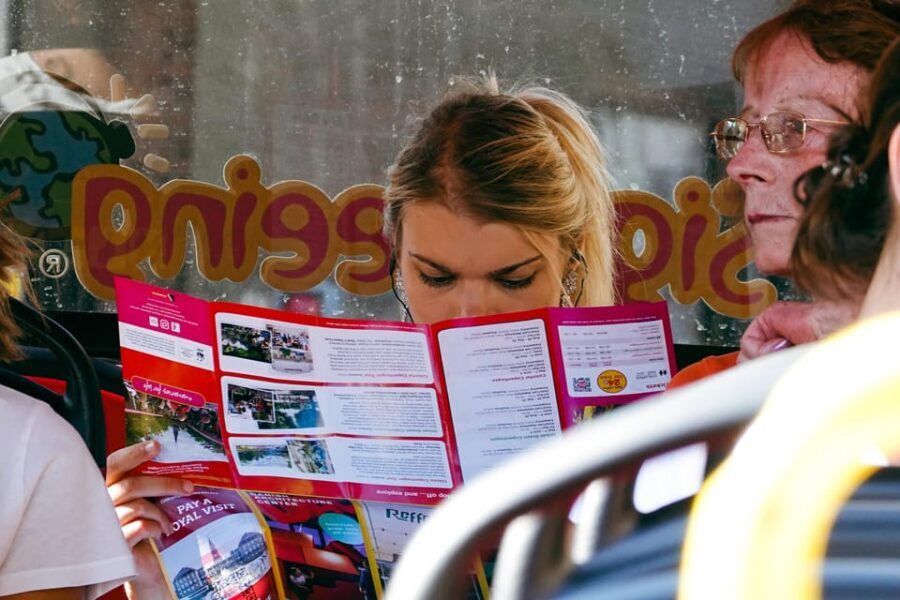
Here’s how I’d structure your time using what this system is built to do.
If you have 24 hours
Go Classic first, because it anchors the essentials: Nyhavn, Amalienborg, the Little Mermaid area, and the central squares. Then add one “upgrade” moment from another route if it fits your timing. The best move is to use Stop 12/Tivoli as your strategic pivot.
If you have 48 hours
Do Classic across one day at a relaxed pace. On day two, add Home of Carlsberg if you want parks, gardens, and zoo time without transit stress. If you’d rather eat and walk in neighborhoods, do Colourful instead, using Reffen as your meal anchor.
If you have 72 hours
Now you can layer. I’d run Classic on day one, then do the other two routes over days two and three depending on weather and your energy level. Since Home of Carlsberg and Colourful have set departure times, treat those as your schedule anchors, and fill the gaps with hop-offs you can repeat.
What this tour is best for (and where it might not fit)
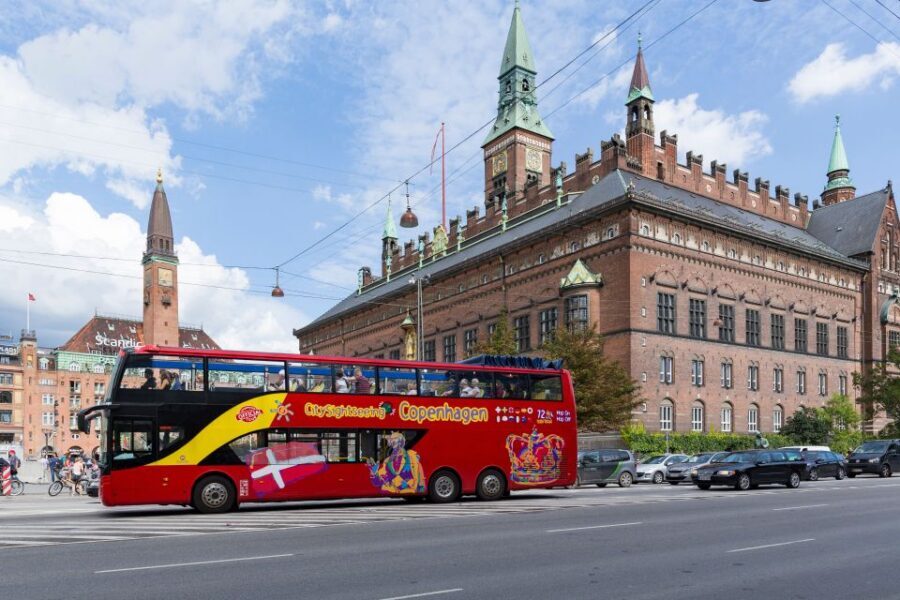
This is best for you if:
- you want a fast way to see major landmarks without wrestling transit maps
- you like the idea of guided commentary in multiple languages
- you’re traveling with mixed interests, so everyone can hop off when they want
- you want a comfortable ride that still feels like sightseeing, not just transit
It might not be the perfect fit if:
- you plan to stay out very late and expect buses to run continuously into the night (the last departures are set)
- you only want one attraction and nothing else, since you won’t fully use the 1–3 day value
- you expect deep, highly detailed commentary at every stop (some people found it lacking)
Also note: there’s no entrance fees included. You’ll still need to decide which stops are worth paying for, like Tivoli Gardens if you want the rides and attractions.
Should you book this Copenhagen hop-on hop-off bus?
I’d book it if your goal is simple: get oriented quickly and build a flexible sightseeing plan across neighborhoods. The combination of multiple routes, hop-on hop-off stops near major attractions, and an audio guide in six languages makes it a strong “first pass” ticket for Copenhagen.
If you’re cautious about timing, start earlier than you think you need to. Use Tivoli (Stop 12) as your planning hub, and don’t ignore the last-departure windows on the Classic route. Do that, and this pass becomes a stress reducer—letting you spend more time walking the city and less time figuring out how to get between it.
FAQ
What is included with the Copenhagen hop-on hop-off bus ticket?
The pass includes a 24, 48, or 72-hour hop-on hop-off ticket, an audio guide with commentary in multiple languages, headphones, Wi-Fi, a map, and access to three routes.
How long is the Classic Copenhagen Route?
The Classic route takes 90 minutes, and buses run about every 35 minutes.
How long is the Home of Carlsberg Route?
The Home of Carlsberg Route takes 45 minutes.
How long is the Colourful Copenhagen Route?
The Colourful Copenhagen Route takes 55 minutes.
Where can I start and end the tour?
You can start and end at any of the allocated stops on the routes.
Is an audio guide included, and what languages are available?
Yes. The audio guide is included and available in English, German, Danish, Spanish, French, and Italian.
Are attraction entrance fees included?
No. Entrance fees to attractions are not included.
Can I use a mobile or paper voucher?
Yes. Both mobile and paper vouchers are accepted, and you can redeem them at stops along the route(s).
What are the first and last departures on the Classic Route?
From Stop 1 (Ved Stranden), the first departure is 10:00am and the last is 4:30pm. From Stop 12 (Tivoli), the first departure is 9:30am and the last is 4:10pm.
Is the tour wheelchair accessible, and are pets allowed?
It is wheelchair accessible. Pets are not allowed.