REVIEW · COPENHAGEN
Copenhagen: Harbor Architecture Private Walking Tour
Book on GetYourGuide →Operated by Walk and Tour Copenhagen · Bookable on GetYourGuide
Copenhagen’s harbor reads like a design textbook. This 2-hour private walk around the water shows why Copenhagen is named World Capital of Architecture 2023 through the buildings you can actually see. One catch: it’s a lot of steady walking on streets and bridges, so it’s not suitable for wheelchair users or people with mobility impairments.
What I really like is the way the route connects architecture to real life—port life in old districts, then the repurposed industrial areas and today’s cultural landmarks. And if you’re lucky enough to have a guide with real story energy (Dalit is one example), the tour turns photos into something you’ll remember, not just images on your phone.
You’ll also get a private-group pace that makes sense for a short visit. With only up to 2 people, questions don’t feel like an interruption, and you have time to stop at the water for views and details.
In This Review
- Key highlights you’ll feel on this walk
- Copenhagen harbor architecture: why this route makes sense
- Where you start at Ofelia Plads (and how not to waste time)
- Ofelia Plads: the quick “orientation” moment
- Nyhavn’s colorful waterfront: old port life with a story behind it
- Krøyers Plads: a harbor stop that helps you read the city
- Papiroen: from paper mill to modern harbor life
- Operaen (and the idea that the waterfront shapes design)
- Cirkelbroen: a pedestrian bridge that turns design into a walkable experience
- Royal Library photo stop: pause, frame, then move
- Danish Architecture Centre: the “make it click” stop
- Price and value: $394 for up to 2 people in 2 hours
- Who should book (and who should skip this style of walk)
- Tips to get the most from your 2 hours (photos included)
- Should you book this Copenhagen harbor architecture private tour?
- FAQ
- How long is the Copenhagen harbor architecture private walking tour?
- What’s the meeting point for the tour?
- Where does the tour finish?
- What languages are offered for the live guide?
- Does the tour run in bad weather?
- Is food included during the tour?
- Is the tour suitable for wheelchair users?
Key highlights you’ll feel on this walk
- A short, focused route that links old waterfront port scenes to new landmarks in one compact 2-hour loop
- Nyhavn (17th-century waterfront) with a guide-led look at how artists and writers shaped the area’s character
- Papiroen’s paper-mill-to-market transformation, designed to preserve industrial heritage while adding new public life
- Operaen and Cirkelbroen, including Operaen’s 2005 completion and a bridge design inspired by circles of life
- Photo stops plus guided time at key architecture stops like the Royal Library area and the Danish Architecture Centre
- English or Spanish private guide, so you can match the tour to your comfort level
Copenhagen harbor architecture: why this route makes sense
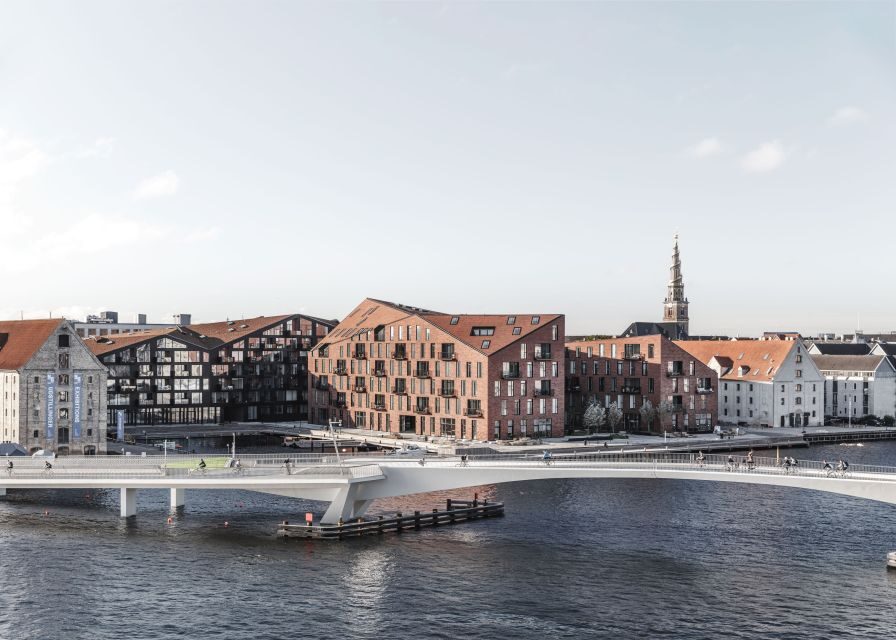
Copenhagen’s waterfront is a master class in using space well. You can see it in the way older districts still look intentional and cared for, while newer structures feel like they belong to the same shoreline conversation. This tour is built to show that contrast fast, without wasting time on a long transit shuffle.
What’s especially useful for you is that the guide isn’t only pointing at buildings. They connect form to function: how a harbor neighborhood worked in the past, what changed as the city grew, and how Copenhagen treats architecture as part of everyday life.
And because it’s private (up to 2 people), you’ll experience it at a human pace. This matters if you like photos, small details, or you simply want time to ask a follow-up question without feeling rushed.
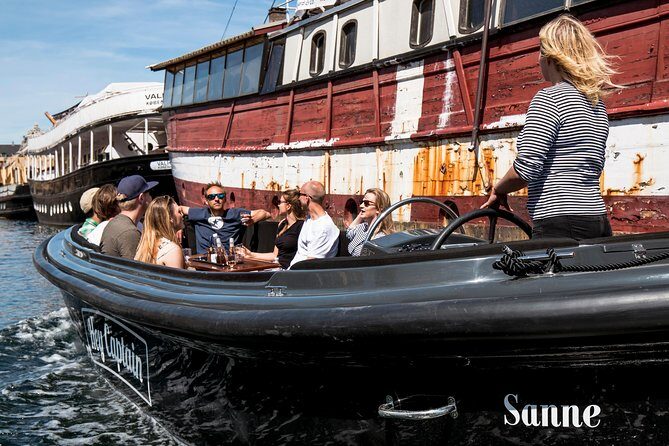
Other canal and harbor boat tours we've reviewed in Copenhagen

Where you start at Ofelia Plads (and how not to waste time)
You’ll meet at the Scandic Hotel right on Ofelia Plads, with the tour start also tied to the area around Sankt Annæ Pl. 21. Plan to arrive a few minutes early, because the whole point of a 2-hour architecture walk is that you start moving on time.
From the beginning, the tour is easy to understand: you’re walking along the water, then weaving through key waterfront points, ending on Islands Brygge 4. That end point is handy because it keeps you on the harbor side for more strolling or a quick meal after the tour.
Since the tour runs rain or shine, your best friend is simple gear: comfortable shoes and a water bottle. (The route is short, but it still counts as real walking.)
Ofelia Plads: the quick “orientation” moment
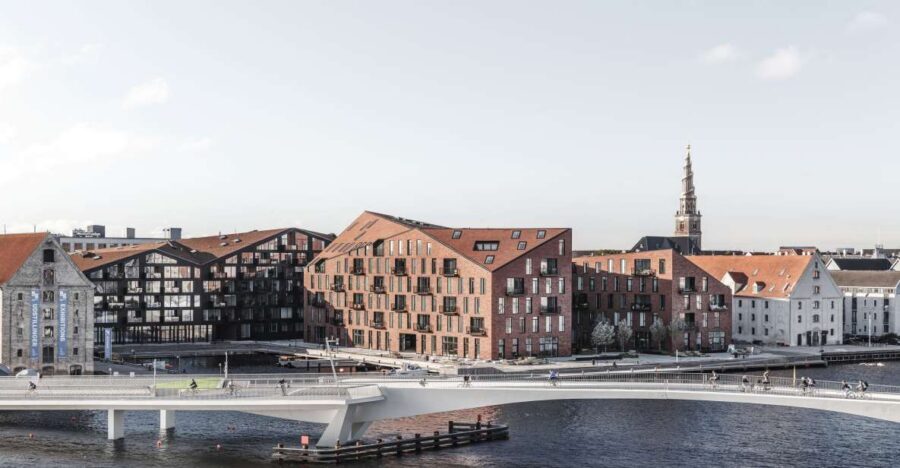
The first guided stretch is about 15 minutes at Ofelia Plads. This is where you get your bearings—both literally and architecturally. You’ll be positioned to understand how the harbor’s layout shapes views and building placement.
It’s also a useful warm-up if you’re new to Copenhagen. Even without knowing the city, you can quickly see patterns: waterfront edges that invite people in, and newer landmarks that aim for visibility. This is the kind of framing that makes the next stops click.
Nyhavn’s colorful waterfront: old port life with a story behind it
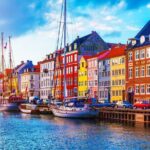
Nyhavn is one of those Copenhagen names you’ve probably heard, but this tour treats it like more than a postcard. You’ll spend about 15 minutes here with a guided look at the 17th-century waterfront district—the colorful houses, the canal-side atmosphere, and the way the harbor once functioned as a working port.
The guide focuses on the area’s origins and also shares stories about famous artists and writers who called Nyhavn home. For you, that’s the difference between seeing old buildings and understanding why the neighborhood feels the way it does. Architecture here isn’t just background—it’s part of the social history of people who lived, worked, and created nearby.
One practical note: Nyhavn can get crowded on certain days. A private guide helps you choose good spots for viewing and photos without playing the “where should we stand” game for too long.
Krøyers Plads: a harbor stop that helps you read the city
You’ll pass through Krøyers Plads for another 15-minute guided stop. The tour doesn’t treat this as filler. Instead, it’s a viewpoint-style moment—helpful for understanding how the harbor connects across different edges and elevations.
This is where you start to notice that Copenhagen’s architecture planning isn’t only about single famous buildings. It’s about spacing, sightlines, and how people move along the water. When the tour later reaches the modern structures, you’ll recognize the planning logic behind what you’re seeing.
If you’re the type who likes to “learn the map” while walking, this stop is one of the reasons the route works.
Other architecture and sustainability tours we've reviewed in Copenhagen



Papiroen: from paper mill to modern harbor life
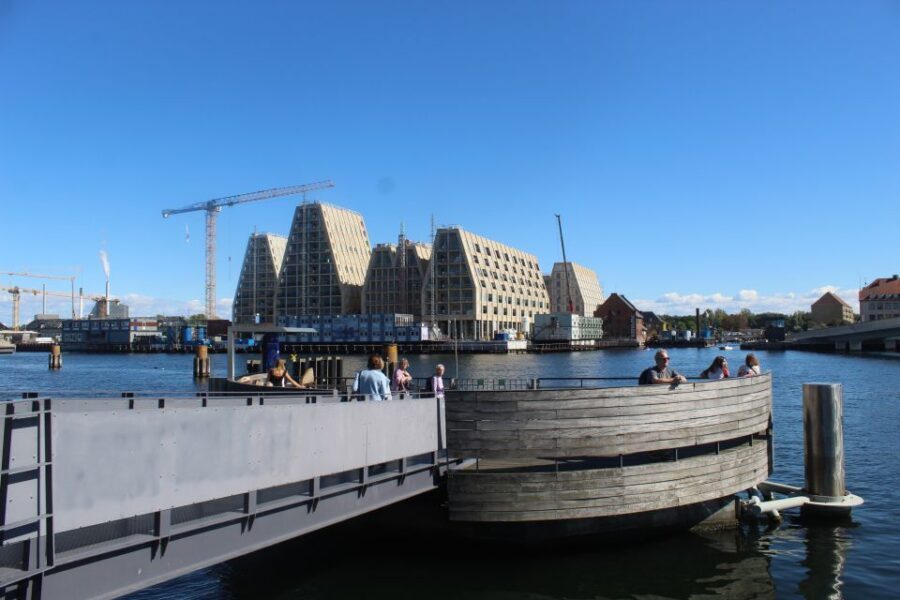
Next comes Papiroen, also about 15 minutes. This area used to be a paper mill, and the big story is how it was transformed into a neighborhood space that still respects its industrial roots.
The most satisfying part of Papiroen on this tour is the contrast: you get to see how preservation and modernization can coexist. The guide points out the architecture of the market buildings and shares views over the harbor so you can connect what you’re seeing up close with the larger shoreline.
For you, this stop is worth it even if you’re not an architecture nerd. Repurposed industrial spaces are often where you see how a city balances old identity with present needs. And in Copenhagen, that balance tends to feel intentional rather than forced.
Operaen (and the idea that the waterfront shapes design)
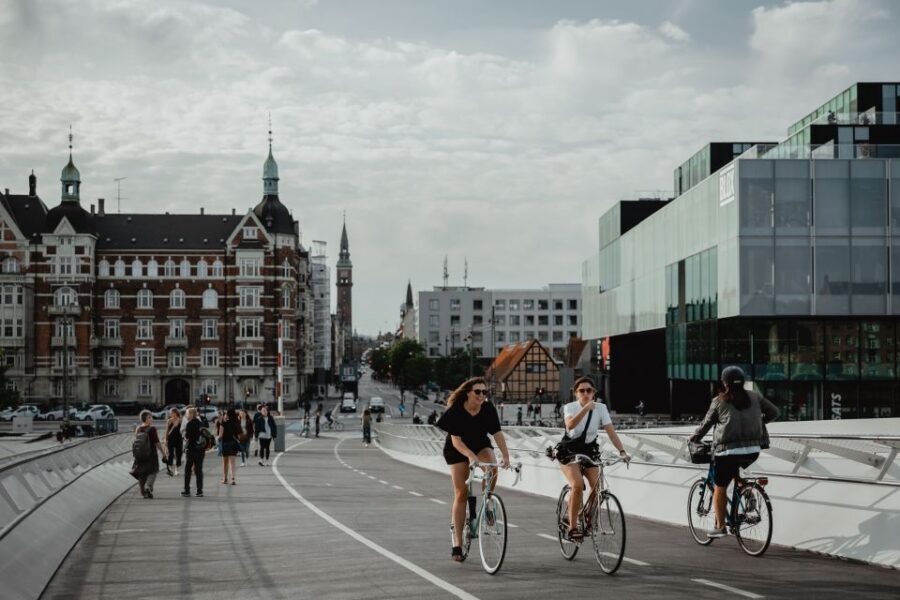
After Papiroen, you’ll head toward the view of Operaen, Copenhagen’s waterfront landmark. You’ll get around 15 minutes here, with the guide sharing the building’s story and design inspiration.
Operaen was completed in 2005, and the design is described as being inspired by the surrounding harbor and Denmark’s cultural heritage. Even if you don’t know the building style names, you can still read what the guide is pointing to: how the structure looks like it belongs to the shoreline conversation rather than acting like an isolated monument.
If you’re visiting for a short time, this stop gives you a modern anchor. Before you reach the bridge, it helps you understand what “new architecture” looks like when it’s designed in relationship to water, movement, and public culture.
Cirkelbroen: a pedestrian bridge that turns design into a walkable experience
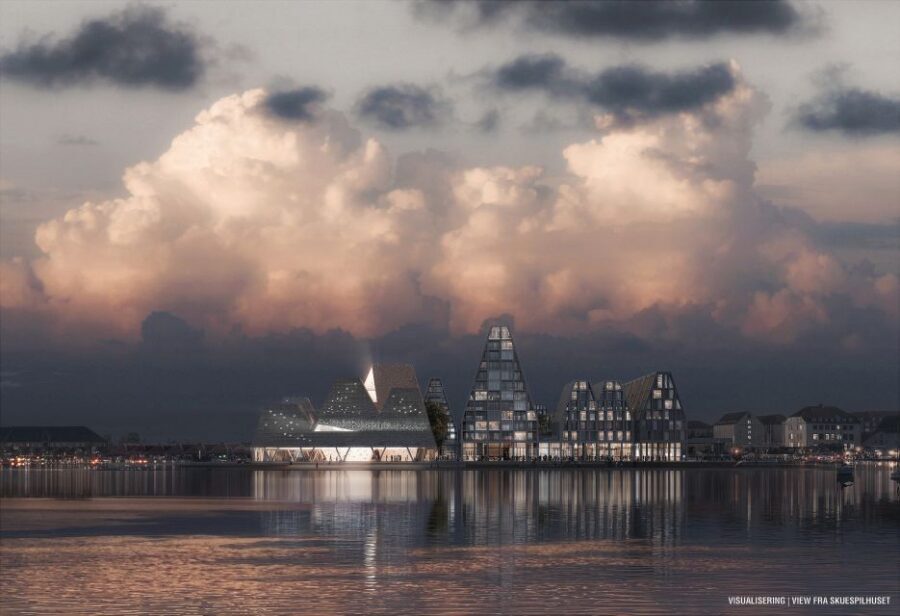
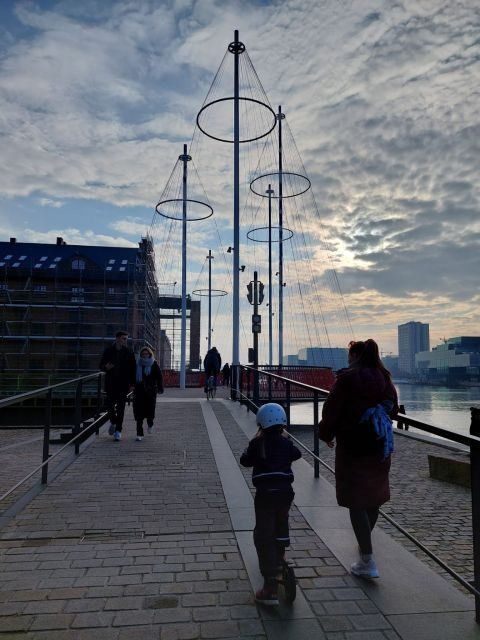
One of the best “wow, I get it now” moments is Cirkelbroen. You’ll spend about 15 minutes there with guided time.
This is a pedestrian bridge with an innovative design inspired by the circles of life. The reason it works on a tour like this is simple: you don’t just look at it—you experience it by moving across it. The bridge also connects the harbor’s sides, which makes it practical, not just decorative.
For your photos, it helps that you’re positioned to get both framing and perspective. A bridge is naturally a viewpoint, and this one is designed to be noticed.
Royal Library photo stop: pause, frame, then move
The tour includes a 15-minute photo stop at the Royal Library of Denmark. Even if you’re not going inside (the time here is for viewing), this stop is helpful for tying together the day’s theme.
By the time you reach this point, you’ve seen a full arc: old port district → repurposed industrial area → major modern cultural landmark → a design-forward pedestrian link. The Royal Library stop gives you another piece of Copenhagen’s architecture approach—one more building that you can place into the city’s larger story.
Use the time to step back and frame your shot. Don’t rush. A photo stop can feel quick, but a good frame matters more than collecting ten hurried images.
Danish Architecture Centre: the “make it click” stop
The final guided stop is the Danish Architecture Centre, again for about 15 minutes. This is where your understanding gets sharper, because you’re not only seeing architecture—you’re getting guided context.
In a short tour, you don’t want a museum experience that eats your whole day. This works because it adds meaning to what you just walked through. You’ll likely leave with a better sense of what Copenhagen tries to do with space: plan for people, treat design as public value, and keep development connected to the city’s identity.
Even if you only have two hours, this kind of closing stop helps you remember. You’re not just passing by landmarks—you’re learning the thread that ties them together.
Price and value: $394 for up to 2 people in 2 hours
The price is $394 per group up to 2, for a 2-hour private walking tour. That can feel like a lot at first glance, but it’s actually reasonable if you compare it to the value of time, pacing, and personalization.
Here’s the math: if you’re booking for two people, that’s about $197 per person for a guided architecture route. For a short stay, that can beat piecing together multiple sights on your own, because you get a structured route and a guide to interpret what you’re seeing.
Private also matters. This isn’t a crowded group where you have to follow the slowest person. It’s a setting where your guide can slow down at the spots you care about most—whether that’s Nyhavn’s storytelling, Papiroen’s transformation, or the design details around Cirkelbroen.
And because you’re focused on a harbor-based architecture theme, you’re getting a curated walk rather than a random shoreline stroll.
Who should book (and who should skip this style of walk)
This tour fits you if you:
- want a tight 2-hour harbor-focused architecture experience
- like learning the story behind landmarks you recognize (Nyhavn, Operaen, Cirkelbroen)
- value a private pace where you can take photos without feeling rushed
- prefer an English or Spanish guide so you can ask questions and stay comfortable
Skip it—or at least reconsider—if you need wheelchair access or have mobility limitations. The tour is not suitable for wheelchair users and people with mobility impairments, since it involves walking along streets and bridges.
Also, if you’re the type who dislikes any outdoor walking in weather, remember it runs rain or shine. The route is short, but you’ll still want proper shoes and a plan for wet conditions.
Tips to get the most from your 2 hours (photos included)
A short harbor tour rewards preparation. Wear comfortable clothes and bring water. You’ll be moving for about two hours, plus stops, so don’t show up hungry and thirsty.
For photos, treat it like a mini route plan:
- Take your wide shots at the scenic viewing points (Ofelia Plads, water edges near modern landmarks).
- Save your close-detail shots for stops where you’re stationary (Cirkelbroen, and the architectural viewing points around Operaen and the Royal Library photo stop).
- If it’s raining, you’ll still get great contrast with wet surfaces—just use a lens hood or basic protection and wipe your camera quickly between stops.
And don’t try to do extra sightseeing right before. One of the underrated benefits of a guided 2-hour architecture walk is that it gives your brain something structured to work with. You’ll enjoy the second half more if you’re not already drained.
Should you book this Copenhagen harbor architecture private tour?
If your goal is to see Copenhagen’s harbor architecture with meaning—old port life, repurposed industrial spaces, and standout modern landmarks—this is a smart booking. The route is compact, the guide does more than point, and the private format gives you breathing room for questions and photos.
Book it if you’re on a short trip and want the waterfront story in one clean sweep. Skip or look for another option if walking comfort is an issue, because this one is built around an on-foot route and includes a bridge crossing.
Bottom line: this tour is best for people who want architecture you can read with your feet, not just buildings you pass by on a list.
FAQ
How long is the Copenhagen harbor architecture private walking tour?
The tour lasts 2 hours.
What’s the meeting point for the tour?
You’ll meet in front of the Scandic Hotel, right on Ofelia Plads.
Where does the tour finish?
The tour finishes at Islands Brygge 4, 2300 København, Denmark.
What languages are offered for the live guide?
The live guide is available in English and Spanish.
Does the tour run in bad weather?
Yes. The tour takes place rain or shine.
Is food included during the tour?
No. Food and drinks are not included.
Is the tour suitable for wheelchair users?
No. It is not suitable for people with mobility impairments or wheelchair users.