REVIEW · COPENHAGEN
e-Scavenger hunt Copenhagen: Explore the city at your own pace
Book on Viator →Operated by Qula · Bookable on Viator
Copenhagen can be a lot. This turns it into a game you control. You follow prompts on your phone and wander to major sights at your own rhythm, with a simple start/stop/pause setup that works for both quick city breaks and slower afternoons.
What I like most is the smartphone app game format. It nudges you past big-name spots like Nyhavn, Tivoli, and the Church of Our Saviour, but it also asks questions and sends you to specific corners you’d miss if you were just doing a photo walk.
The one thing to keep in mind: some clues depend on you finding the right information in the real world, and GPS can be a bit off at times. If your phone’s location is temperamental, don’t let that wreck your mood—use the map view and keep walking with confidence.
In This Review
- Key takeaways before you start
- Why this Copenhagen scavenger hunt works better than a checklist
- How the app keeps the timing in your hands
- Nyhavn to Tivoli: canals, color, and classic fun
- Nyhavn waterfront: the 17th-century postcard you can actually walk
- Tivoli Gardens: history plus amusement energy
- Spiral stairs, palaces, and the city’s power base
- The Church of Our Saviour: climb the spiral staircase outside
- Christiansborg Palace: where government and history overlap
- Round Tower: built in 1642, made for views
- Museums and markets you can do in bite-size chunks
- Urban covered marketplace: food without a long detour
- Glyptoteket: art tied to Carlsberg roots
- National Museum of Denmark: cultural history at full scale
- Royal Copenhagen: palaces, City Hall, and the long shopping street
- Amalienborg Palace: royal life that still lives here
- Copenhagen City Hall: the municipal council headquarters
- The long pedestrian shopping street: walkable city center energy
- Modern opera house: big design, big price tag
- Christiania: the controversial side of Copenhagen
- Price and value for groups up to 6
- Practical tips: your phone, GPS drift, and staying warm
- Who this scavenger hunt suits best
- Should you book e-Scavenger hunt Copenhagen?
- FAQ
- How long is the e-Scavenger hunt in Copenhagen?
- Is this a guided tour with a person?
- What language is the app game offered in?
- How much does it cost?
- Where does the hunt start?
- Do I need to bring a smartphone?
- Can I pause or stop the tour?
- Is it private for my group only?
- What’s the refund policy if I cancel?
Key takeaways before you start

- Self-guided with a flexible pace: you can start, stop, and pause whenever your day needs it
- Interactive questions and tasks: the city becomes the answer key, not a passive checklist
- Big Copenhagen hits included: Nyhavn, Tivoli, the spiral staircase church, and more
- Good group value (up to 6): pricing is per group, not per person
- You choose your breaks: stop for coffee or hop between viewpoints as you like
Why this Copenhagen scavenger hunt works better than a checklist

This isn’t a sit-there-and-listen tour. It’s a city walk with prompts. You’re not just trying to “see” Copenhagen—you’re solving little tasks that force you to look up, slow down, and notice details in the places you reach.
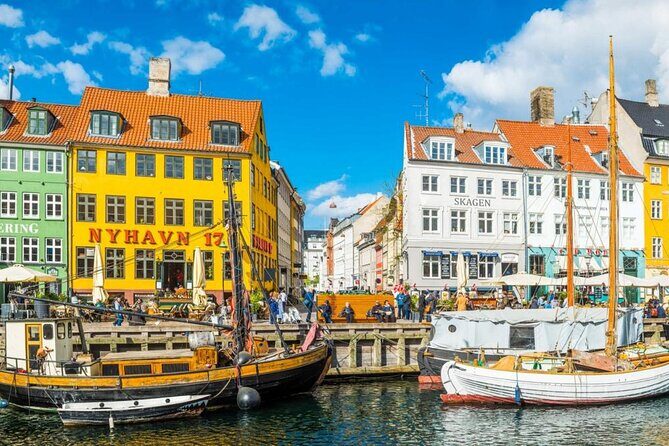
That matters in Copenhagen, where the architecture rewards attention. The canals at Nyhavn look postcard-perfect, but the charm comes from what you notice while you’re walking—boats, facades, and the way the street life moves around the water.
It also helps that you get a mobile ticket and play through an online app on your phone. Language is English, so you’re not stuck translating your own tour.
Other escape rooms and mystery games we've reviewed in Copenhagen



How the app keeps the timing in your hands
The hunt runs about 2 to 4 hours. That range is realistic because you control how long you linger at stops. If you want a brisk route, you’ll finish closer to 2 hours. If you stop for photos, a warm drink, or a slow look inside, it stretches toward the 4-hour mark.
The big practical win is that you can start, stop, and pause. Copenhagen days often come with interruptions—rain, detours, or just the sudden desire for pastry. This format keeps you from feeling like you’re late for a guided group.
Also, it’s private for your group (up to 6). That means the whole experience feels like your own wandering plan, not a herd shuffle.
Nyhavn to Tivoli: canals, color, and classic fun
Nyhavn waterfront: the 17th-century postcard you can actually walk
You’ll spend time around Nyhavn, a 17th-century waterfront canal and entertainment district. It runs from Kongens Nytorv toward the harbor area just south of the Royal Playhouse, so it’s an easy “central Copenhagen” base for a good walk.
This stop is great for two reasons. First, it’s scenic without being complicated—you can take in the water views in minutes and still have time to explore nearby streets. Second, because this is an entertainment zone, the place feels alive even if you’re not going to attractions.
A small reality check: if the weather is cold, Nyhavn can feel extra exposed along the canal. That’s why I’d keep a layer handy and treat this as a warm-up segment before you tackle more indoor time later.
Tivoli Gardens: history plus amusement energy
Next comes Tivoli (Tivoli Gardens), the famous amusement park and pleasure garden that opened 15 August 1843. Even if you don’t go on rides, it’s a strong cultural stop—Tivoli isn’t just entertainment. It’s part of Copenhagen’s public life.
This is one of the better sections for families and mixed-age groups, because everyone can choose their level of participation: wander the grounds, peek into the atmosphere, or take a break before continuing the hunt.
Other city tours we've reviewed in Copenhagen






Spiral stairs, palaces, and the city’s power base

The Church of Our Saviour: climb the spiral staircase outside
The Church of Our Saviour is known for its external spiral winding staircase, and the climb is the star attraction. The church itself is baroque in style, but it’s the exterior stair you’ll remember—especially as you work your way upward and get a different angle on the surrounding city.
If you like viewpoints and “vertical sightseeing,” this stop is one of the most fun in the whole route. If stairs aren’t your thing, you can still enjoy the church area and nearby streets while you work on the app prompts.
Christiansborg Palace: where government and history overlap
You’ll also reach Christiansborg Palace, a palace and government building on Slotsholmen. This area is a great reminder that Copenhagen history isn’t frozen behind museum glass. It’s tied to how the city runs today.
In a scavenger hunt format, this stop works well because the surroundings feel structured—hard edges, ceremonial spaces, and a clear sense of place. You don’t need to “know” anything beforehand to enjoy it. You just need to slow down enough to look at what’s in front of you.
Round Tower: built in 1642, made for views
The Round Tower is one of the most visited landmarks in Copenhagen, built by King Christian IV and dating from 1642. The tower has that classic “why did they build this?” feeling until you reach the purpose: it’s built for reaching views and understanding the city from above.
This is a strong stop if you want one reliable payoff that doesn’t require a long museum visit. Even if you don’t go inside for any long stay, the tower area gives you a clear landmark to orient by, which helps when your phone’s GPS decides to be dramatic.
Museums and markets you can do in bite-size chunks
Urban covered marketplace: food without a long detour
The route includes an Urban covered marketplace, a hall with stalls for local produce, gourmet foods, beverages, and desserts. This is a smart addition to a game because it gives you an easy “refuel checkpoint” without forcing you to plan a full meal around museum timing.
The best move here is to grab something light. Think snack-sized, so you don’t feel heavy when you keep walking. And if the app has you solving tasks at nearby points, this market section helps you recharge while you stay on course.
Glyptoteket: art tied to Carlsberg roots
Glyptoteket is an art museum connected to a private collection tied to the son of the founder of the Carlsberg Breweries. That connection gives the museum a personal story angle—less “random grand museum,” more “this collection had a reason to exist.”
Even if you’re not an art expert, it’s a good stop for people who like learning one or two concrete facts and seeing them in context. Because it’s a guided-by-questions experience, you’re more likely to notice what matters than just wander with no anchor.
National Museum of Denmark: cultural history at full scale
The National Museum of Denmark (Nationalmuseet) is Denmark’s largest museum of cultural history. “Largest” can sound intimidating, but the scavenger hunt format helps you treat it like a targeted visit instead of a day-long project.
If you’re short on time and worried you’ll feel lost, the best strategy is to treat the museum as a point-to-point stop: focus on what the app asks, look for the related pieces, and then decide whether you want to keep exploring on your own.
Royal Copenhagen: palaces, City Hall, and the long shopping street
Amalienborg Palace: royal life that still lives here
Amalienborg Palace is a must if you care about royal history and the fact that Denmark’s royal family still resides there. This isn’t just a “take a picture and leave” spot; it has the feeling of ceremony and continuity.
In this hunt format, you’ll naturally slow down here. Prompts make you look for clues in the building and surroundings, and that turns Amalienborg into more than a background landmark.
Copenhagen City Hall: the municipal council headquarters
You’ll also pass Copenhagen City Hall, headquarters of the municipal council and the Lord mayor’s office. That’s a good reminder that a city is more than tourists. It’s also public administration and everyday governance.
It’s a solid stop for photo lovers because formal civic architecture tends to create clean lines and strong angles for quick shots.
The long pedestrian shopping street: walkable city center energy
The route includes a pedestrian, car-free shopping area—one of the longest in Europe. Even if you’re not shopping, this section is useful because it keeps you in the flow of Copenhagen’s city-center rhythms.
The key is to treat this as a moving “spine” of the walk. Don’t rush it. Let the shops and streetscapes do their job while you solve the app prompts.
Modern opera house: big design, big price tag
You’ll reach an opera house known for being among the most modern in the world—and also among the most expensive opera houses ever built. That combination is part of the point. It’s not old-world and it’s not modest. It’s a statement.
If you’re the type who likes architecture that makes you pause, this is worth your time. Even if you don’t go inside, the exterior presence fits well with a question-based scavenger hunt because the prompts can anchor what you’re seeing.
Christiania: the controversial side of Copenhagen
No visit to Copenhagen feels complete without a stop at Freetown Christiania. It’s been controversial since it began in a squatted military area in 1971, and it remains one of Denmark’s most popular tourist attractions.
This is one of those places where the experience is less about a single landmark and more about the atmosphere: the sense that the city has room for real-world alternatives. In a hunt format, it works because the app can steer you to the parts you’re meant to notice, instead of you trying to guess what’s important.
Just keep it respectful. Christiania’s story is complicated, and the vibe is part of the lesson.
Price and value for groups up to 6
The price is $36.67 per group (up to 6). That’s the part that makes this good value. Split across friends, you’re likely paying only a small amount per person for a self-guided route that covers a lot of major Copenhagen highlights.
It’s also a good “risk-managed” way to tour. You aren’t locked into one fixed group pace like with a guided tour. If you’re tired, you can pause. If you want a break, you can take it. If you want a slower look at one stop, you can spend extra time there without feeling like you’re dragging anyone behind you.
Practical tips: your phone, GPS drift, and staying warm
This experience is not included with a smartphone or data. You’ll need your own phone and internet access. So plan like you would for any city app day: battery charged, brightness set reasonably, and a quick check that your map access is working.
GPS can be a weak point. When it’s inaccurate, you might walk past a spot while you chase the marker. My advice: if your phone seems confused, use the app map view and keep walking with street-level clues. Copenhagen streets are often easy to follow visually, and the landmarks are obvious enough to re-orient.
Timing matters in Copenhagen. One review noted starting at noon and still dealing with cold weather. I’d treat it as a “layer day” even if the sun is out—especially near open waterfront areas like Nyhavn.
Also, keep your expectations clear. If a question asks for something you can’t easily spot on a building, you’ll have to either use what you see around you, think it through, or look it up quickly. If you want a totally effortless experience with zero searching, this might not feel perfect. But if you like playful walking and learning by looking, it’s a fun way to do it.
Who this scavenger hunt suits best
This fits well if you want:
- A self-guided city walk that still points you to major sights
- A game element that helps kids and adults stay engaged
- A format that works for short stays, since it takes only 2–4 hours
It can also be a good solo option if you like puzzles and city wandering. But if you tend to get frustrated by missing info and you’d rather just read a sign than hunt for an answer, you might find it slightly more annoying than you want. Going with a group can make the problem-solving feel more fun and less stressful.
Should you book e-Scavenger hunt Copenhagen?
I’d book it if you want Copenhagen in motion: waterfront, palaces, museums, and street scenes—without feeling stuck to a tour schedule. The start/stop/pause flexibility and the fact it’s priced per group up to 6 make it a strong value play.
I’d skip it (or at least adjust expectations) if you need rock-solid GPS accuracy or if you only want questions that have obvious answers right in front of you. Bring a map habit, charge your phone, and you’ll be fine.
If you do book, treat it like a guided day that you control. That’s the sweet spot.
FAQ
How long is the e-Scavenger hunt in Copenhagen?
The tour takes about 2 to 4 hours.
Is this a guided tour with a person?
No. It’s a self-guided scavenger hunt using a smartphone app and a mobile ticket.
What language is the app game offered in?
It’s offered in English.
How much does it cost?
The price is $36.67 per group (up to 6).
Where does the hunt start?
It starts at Landemærket 29, 1119 København, Denmark.
Do I need to bring a smartphone?
Yes. The smartphone and data are not included, so you’ll need your own phone with data access.
Can I pause or stop the tour?
Yes. The experience lets you start, stop, and pause to match your schedule.
Is it private for my group only?
Yes. It’s listed as a private tour/activity, and only your group will participate.
What’s the refund policy if I cancel?
You can cancel for a full refund if you cancel at least 24 hours before the experience start time. If you cancel less than 24 hours before, you don’t get a refund.