REVIEW · COPENHAGEN
E-Scooter “Stand Up Kick Bike” 2 Hour Guided Copenhagen Tour
Book on Viator →Operated by Segway & Bike Tours Copenhagen · Bookable on Viator
Copenhagen clicks fast when you ride electric. What I like most is the ease of step-up kick bikes, which helps you move through the city without wrestling with balance. Add a guide who can explain the big stories in plain language, and the whole loop feels like a smooth intro to Copenhagen, not a chore.
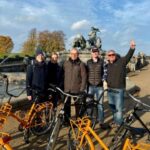
My second favorite part is how much you cover in just over two hours, while still getting context at each stop. With small groups (max 8) and guides like Peter, Albert, and Jonas, the pace stays friendly and questions get answered without rushing you.
One thing to plan for: you may ride in rain and strong wind depending on the day. The tour still runs, but you’ll enjoy it more with a light rain layer and grippy shoes.
In This Review
- Key highlights worth your time
- Copenhagen E-Scooter Tour: What the Ride Feels Like in Real Life
- Starting Point at Nikolaj Plads 34: Easy to Find, Easy to Return To
- Christiansborg Slot to the Harbour Libraries: Power, Politics, and a Quiet Garden
- Amalienborg and Kastellet: Royal Square Views and Fortress Energy
- From the Little Mermaid to Nyhavn: Icons, Waterfront Views, and Real Streets
- Copenhagen’s Theatre and Royal Square Corridor: Architecture You’ll Recognize Later
- Nordre Toldbod, Absalon, and Gammel Strand: Canal-Edge Details Most People Miss
- Frederiks Kirke (Marmorkirken) and the Opera House Loop Finish: Marble Church Energy
- Price and Value: Is $68.84 Worth It?
- Who This Tour Fits Best (and Who Might Skip It)
- Should You Book This Copenhagen E-Scooter Tour?
- FAQ
- How long is the E-Scooter guided tour?
- What does the tour cost?
- What language is the tour offered in?
- Where do I meet for the tour?
- How big is the group?
- Do the stops require paid admissions?
- Is the tour a loop that returns to the start?
- What is the cancellation policy?
Key highlights worth your time
- Beginner-friendly step-up ride that’s easier than learning a balance-heavy scooter right from minute one
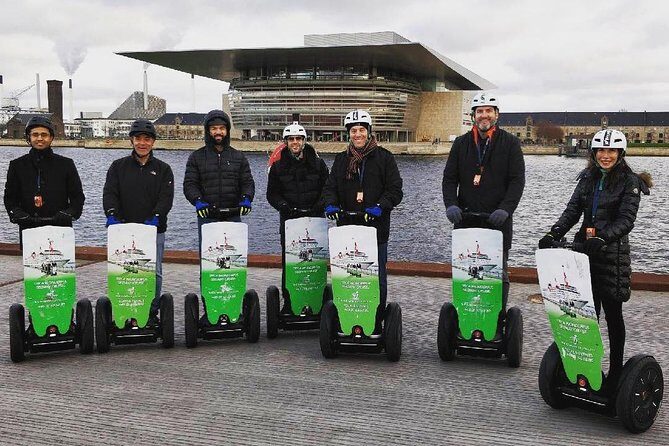
- Small group feel (up to 8 people), so you can actually hear the guide and ask questions
- Major sights in a smart loop, from Christiansborg and Amalienborg to Nyhavn and the theatre district
- Quick orientation for a first visit, so you know where to return later on foot or by transit
- Many free photo stops, so you can focus on seeing instead of buying tickets
Copenhagen E-Scooter Tour: What the Ride Feels Like in Real Life
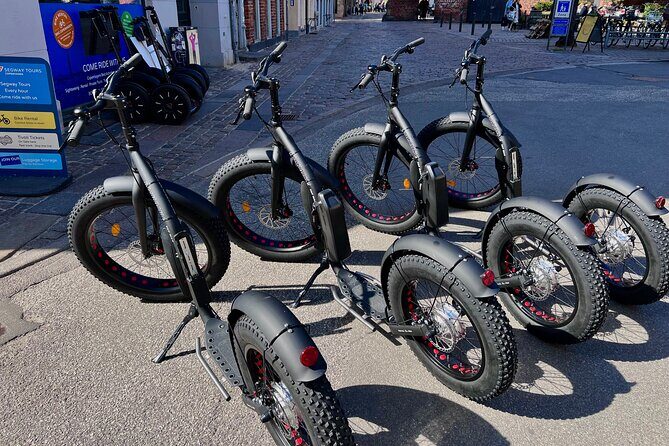
This is a guided 2-hour 15-minute circuit on a stand-up electric kick bike, built for getting around faster while still seeing landmarks up close. If you’ve ever felt stuck in a Copenhagen plan that’s all “museum one, museum two” with no breathing room, this kind of tour is a nice alternative. You get movement, fresh air, and stops that are made for quick learning moments.
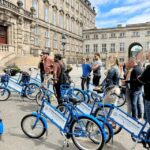
The big advantage is that the bikes are made for short learning curves. Instead of spending your energy worrying about balance, you can pay attention to streets, canals, architecture, and how neighborhoods connect. And because the group stays small, you’re not stuck far behind or squeezed in tight.
If you’re traveling solo, this can also help you feel less disconnected from the city. You’ll start to recognize key areas—like where the main harbour views are, where the palace zone sits, and where the theatre and opera precinct begins. That’s the kind of orientation you can use for the rest of your trip.
Other e-scooter and kick-bike tours we've reviewed in Copenhagen

Starting Point at Nikolaj Plads 34: Easy to Find, Easy to Return To
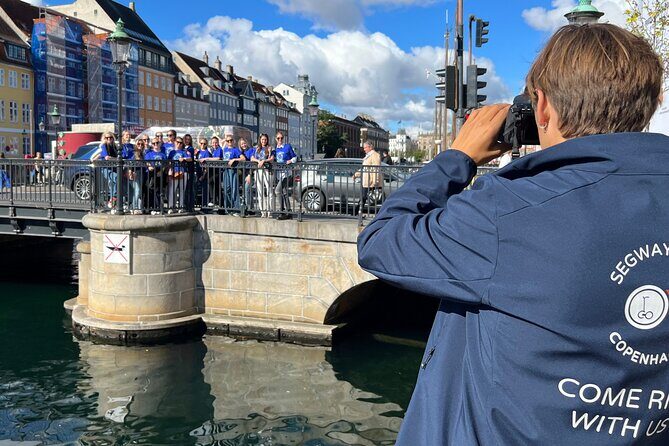
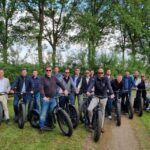
You meet at Nikolaj Plads 34, 1067 København, and the tour ends back near the same meeting area. That loop design matters. It means you’re not spending the rest of your evening figuring out a new drop-off point, which is helpful if you’re heading to dinner reservations or catching public transport afterward.
The start is also near public transportation, which is handy if your schedule is tight. You’ll receive a mobile ticket at booking, so you don’t need to hunt for paper confirmation.
One more practical note: because this is a kick-bike tour, your comfort depends a lot on footwear and weather. Copenhagen days can shift quickly, so wear shoes with good grip and bring a light outer layer.
Christiansborg Slot to the Harbour Libraries: Power, Politics, and a Quiet Garden

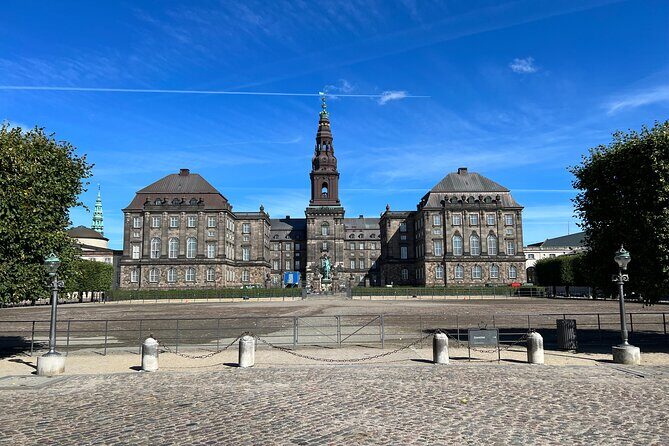
The first stop is Christiansborg Slot area. It’s tied to Denmark’s parliament and it also connects to a royal castle tradition that dates back to 1167. Even if you don’t go inside, the guide’s explanation helps you understand why this spot matters. You get a sense of how government and royalty have long shared this geography.
Next comes Det Kongelige Biblioteks Have. This is where the tour shows off a softer side of the city: a small garden setting with sculptures and flowers. You’ll hear it described as a place that once related to a harbour of war from the 16th century, now turned into a calm member-friendly space. It’s the kind of stop that works well on a bike tour because it’s short, peaceful, and visually rewarding without demanding a long walk.
Then you reach the Copenhagen Stock Exchange area. The renaissance-style building dates to 1619, and it’s framed by nearby historic structures including the Royal Library building and the Tax department building from 1736. The value here is timing: you’re not just looking at buildings, you’re learning how different institutions cluster across centuries.
If you want to “read” Copenhagen like a story, these first stops set the theme: old power structures, how the city traded and governed, and how spaces evolved.
Amalienborg and Kastellet: Royal Square Views and Fortress Energy
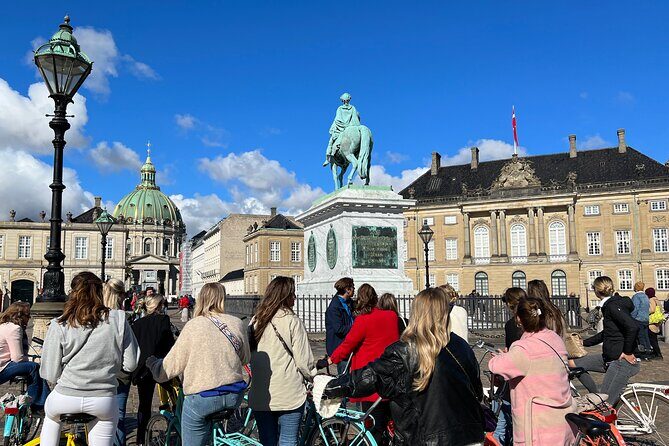
Amalienborg Palace is one of the stops that makes the tour feel instantly cinematic. You’ll see the Baroque-style buildings and learn it’s been the royal residence since 1794, with the current royal household at home there. The best part of a guided ride here is that you notice details faster—symmetry, layout, and the way the buildings frame the public square area.
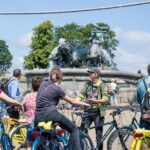
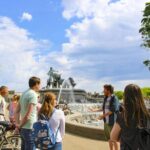
Right after that, the tour shifts to Kastellet, a fortress dating to 1663. This is a different vibe from palaces: more military structure, more open space, and a chance to notice how Copenhagen planned defense while still keeping the city functional. You’ll also see mentions of the Gefion Fountain area and the English St. Alban Church nearby.
Then the big visual contrast: you’re back toward the waterfront, where Copenhagen starts showing its “postcard” identity. That change of scenery is why I like bike tours for this route—rather than walking a long straight line, you ride between zones with distinct moods.
From the Little Mermaid to Nyhavn: Icons, Waterfront Views, and Real Streets
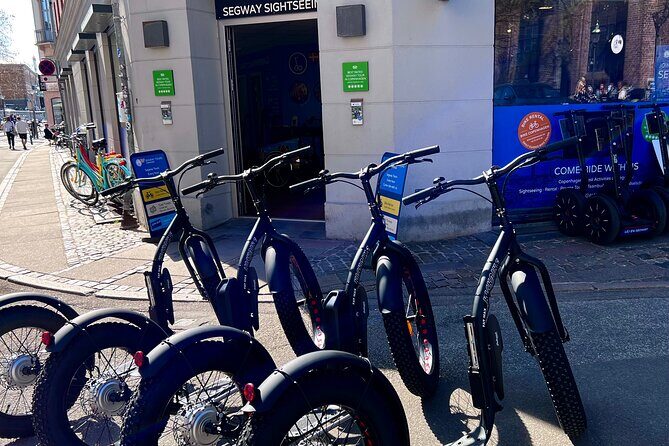
At The Little Mermaid area, you’re in that world-famous zone where the views are only half the story. You’ll also get pointers to what you can see around the harbour, including Copenhill in the distance and Reffen Street Food area. Whether you already know the myth or you’re just there for photos, the guide helps connect the icon to the larger harbour scene.
This stop is also practical for first-time visitors because it anchors you geographically. When you see it from the water-and-street angle, you understand why Copenhagen’s waterfront is a central “spine” of the city.
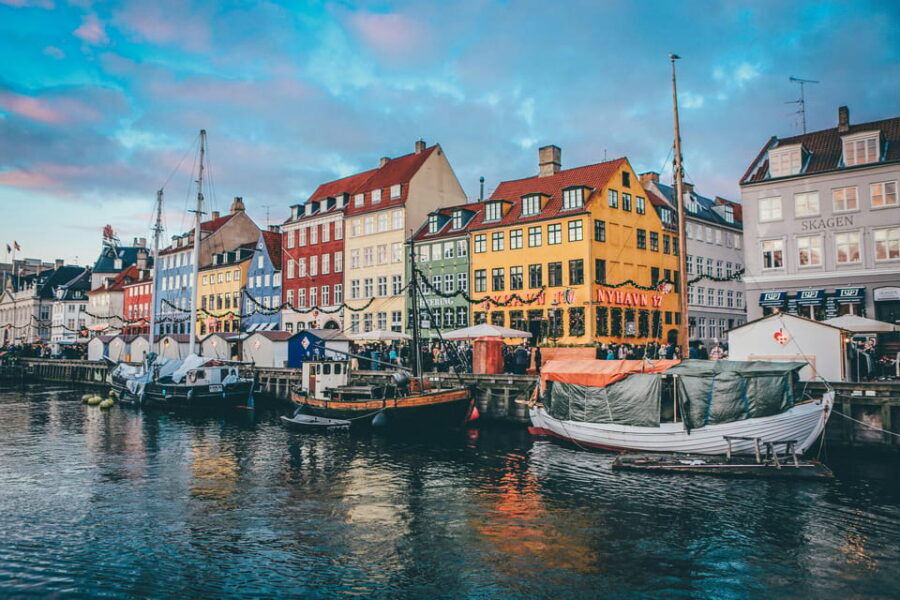
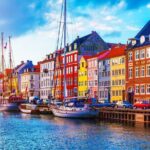
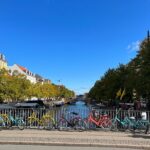
Then you roll into Nyhavn, a harbour area dating back to 1671 with old houses lining the water. Nyhavn is closely linked to Hans Christian Andersen, and the guide’s direction helps you see past the tourist crowd and notice the actual shape of the place—how the canal and harbour pull people in from multiple directions.
In terms of ride enjoyment, this stretch tends to feel fun because you’re moving past recognizable scenery without having to walk every step. And because this is a guided tour, you get context while you’re still energized.
Other cycling tours in Copenhagen

Copenhagen’s Theatre and Royal Square Corridor: Architecture You’ll Recognize Later
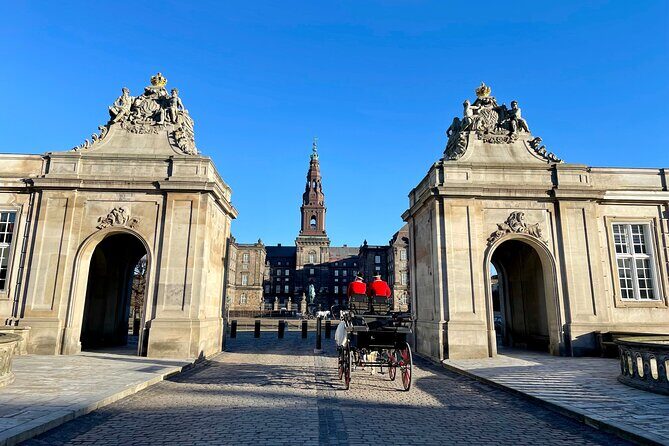
From Copenhagen King’s New Square you’ll get the jump from harbour to city center style. This area connects the harbour zone with major parts of Copenhagen. It’s also close to cultural and institutional buildings, including the Royal Danish Ballet and notable hotels and embassies, plus Charlottenborg Art Museum nearby.
After that, you pass the Royal Danish Theater (Kongelige Teater), dating to 1748. Then the route continues to the Copenhagen Opera House area. The Opera House is a modern landmark from 2004 and tied to a Danish corporate gift story involving Mearsk Shipping Company. Even when you’re only stopping briefly, you’ll get the sense that Copenhagen can do old and new without choosing one side.
These quick theatre stops work best on a bike tour because you can absorb the overall “district feel.” Walking would take longer and you’d likely have less time for the harbour and palace sections. On a kick-bike loop, you get to register the architecture as you go, so later, when you pass these buildings again, you’ll know what you’re looking at.
Nordre Toldbod, Absalon, and Gammel Strand: Canal-Edge Details Most People Miss
One of my favorite parts of this route is how it keeps moving along historic edges—things that are easy to overlook if you’re just wandering without a plan.
At Nordre Toldbod23, you’ll see royal pavilion area references, the Queens yacht reference, and Sixtus bastion. It’s a stop that gives you a sense of how Copenhagen’s harbour has been used for state and display, not only commerce.
Then you’ll reach Rytterstatue af Absalon, a statue of Bishop and warrior Absalon, associated with the founding of Copenhagen in 1167. The statue faces toward the old royal castle area, which is a neat way to “link the map” while you’re riding. It turns the city into something you can navigate with landmarks, not just addresses.
Finally, Gammel Strand (“old beach”) marks the canal-side downtown area where fish were sold for centuries. Even if you don’t stop for long, this kind of fact changes how you view the water. The canal system surrounding key historic areas isn’t just pretty—it’s part of how Copenhagen functioned.
Frederiks Kirke (Marmorkirken) and the Opera House Loop Finish: Marble Church Energy
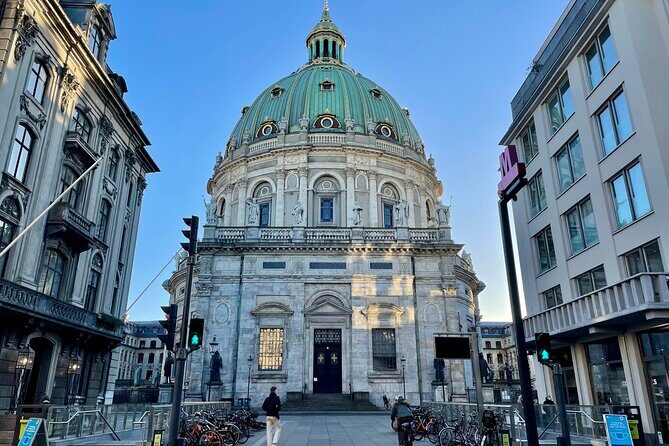
The route ends with a major visual payoff: Frederiks Kirke, also called Marmorkirken. It’s an impressive cathedral project begun in 1749 and finished in 1894, named after King Frederik V and often referred to as the Marble Church for obvious reasons. When you see a big church from outside while you’re moving, it has a different effect than when you’re inside. You notice how it dominates the skyline and anchors the surrounding streets.
From there, the tour returns toward the earlier opera district focus, giving you a final set of harbour-city contrasts before you roll back to the meeting point.
Even though the tour is short, it covers enough ground that it helps you decide what to revisit later. You may leave with a shopping list of “things I want to see closer” like the palace areas, the theatre zone, or one extra canal walk.
Price and Value: Is $68.84 Worth It?
At about $68.84 per person for roughly 2 hours and 15 minutes, this tour sits in a mid-range zone for guided activity. What justifies the price is the combination of:
- Guiding plus transportation (you don’t just hear facts, you ride between stops)
- A tight itinerary of major sights, including Christiansborg, Amalienborg, Nyhavn, the Opera area, and Frederiks Kirke
- Free admission at stops as provided for this itinerary, so you’re not paying extra to access the viewpoints
If you’re visiting for the first time and you want a city orientation that feels fun—not classroom-like—this can be good value. It also helps if your legs are tired after museums or walking.
If you already know Copenhagen well and you mostly want to roam at your own pace, you might decide you don’t need a guided loop. In that case, you could plan a self-guided walk and use transit or bike rentals to connect points. But if you want the fastest way to understand where everything sits, the price starts to make sense.
Who This Tour Fits Best (and Who Might Skip It)
This tour is a strong match if you:
- are visiting Copenhagen for the first time and want to get your bearings fast
- like the idea of moving between landmark areas without tiring yourself out
- prefer a guide who can keep the group organized and calm while you learn
- want a group tour with a maximum of 8 people, not a big crowd
It may not be ideal if you:
- hate riding in wet or windy weather and don’t want to dress for it
- need long free time at each location (this is built for quick stop-and-learn moments)
A small, practical tip: bring layers. Even if it looks fine at the start, Copenhagen’s wind can change the feel of an outdoor ride fast.
Should You Book This Copenhagen E-Scooter Tour?
I’d book it if you want a smart first-pass through Copenhagen that blends icons with city logic. The route covers the palace and government zones, the fortress stop, the harbour hits like Nyhavn and the Little Mermaid area, and then it moves into theatre and opera architecture before finishing at Frederiks Kirke. That mix is exactly what helps you plan the rest of your trip.
Skip it if you already have a detailed city map and prefer unstructured time, or if weather comfort is a deal-breaker for you. Otherwise, for a first visit, it’s one of the easier ways to convert “I’ve seen the photos” into “I understand where everything is.”
FAQ
How long is the E-Scooter guided tour?
The tour lasts about 2 hours 15 minutes.
What does the tour cost?
It costs $68.84 per person.
What language is the tour offered in?
The tour is offered in English.
Where do I meet for the tour?
The meeting point is Nikolaj Plads 34, 1067 København, Denmark.
How big is the group?
The maximum group size is 8 travelers.
Do the stops require paid admissions?
The itinerary lists admission tickets as free for the listed stops.
Is the tour a loop that returns to the start?
Yes, the activity ends back at the meeting point.
What is the cancellation policy?
You can cancel for a full refund up to 24 hours in advance of the experience start time. If you cancel less than 24 hours before, the amount paid will not be refunded.