Copenhagen can feel like a list of stops. This walk turns it into stories you can actually remember—plus humor that keeps you from drifting into lecture mode. I like that the route covers major sights quickly (you get bearings fast), and I also like the focus on why Danes talk the way they do, from democracy to happiness. One drawback to note: the tour is short, so you’re mostly there to look and listen, not to spend long hours going deep inside museums or attractions.
You’ll start near Gammel Strand and end by City Hall and Strøget, with a gentle end-to-start walk you can choose to do yourself. The vibe is casual and “let’s make sense of this city,” and the private setup means you can ask questions without shouting over a crowd. Since the tour runs about 1 hour 30 minutes and admission isn’t included, plan to view interiors as optional extras rather than part of the core experience.
In This Review
- Key things that make this tour a better use of your time
- Why this 90-minute walk feels different from normal Copenhagen tours
- Price and value for a private group (up to 1)
- Your route: from Christiansborg Slot to Strøget in one smooth arc
- Stop 1: Christiansborg Slot and Danish democracy in plain language
- Stop 2: Tivoli Gardens as a lesson in public joy
- Stop 3: Ny Carlsberg Glyptotek for a fast art-and-portrait moment
- Stop 4: Det Kgl. Bibliotek and the philosophy talk in the Royal Garden
- Jewish museum and Viking artifacts: two quick cultural context stops
- Ending at City Hall and the Stock Exchange: symbols you can actually spot
- What the guide style means for you (and why Troels shows up in praise)
- Practical tips so you get the most from the walk
- Who this tour suits best (and who might prefer to walk on your own)
- Should you book this Copenhagen walking tour?
- FAQ
- FAQ
- How long is the Politically Incorrect Private Copenhagen walking tour?
- Where does the tour start and end?
- Is the tour private?
- Is admission included for the sights?
- Does the tour offer pickup?
- What language is the tour in?
- What is the cancellation policy?
Key things that make this tour a better use of your time
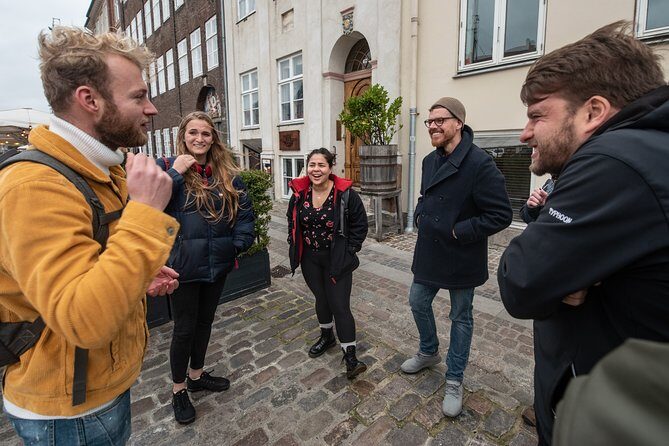
- Humor-first storytelling that doesn’t waste your energy on dry facts.
- Big landmarks in small doses, so you leave with a clear mental map.
- Danish democracy and happiness explained in everyday language.
- Royal Garden stop(s) with philosophy talk that feels unexpected and worth it.
- Art and culture quick hits like Ny Carlsberg Glyptotek—no long museum slog.
- A finish at City Hall near Tivoli and Strøget, so you can keep exploring right away.
Why this 90-minute walk feels different from normal Copenhagen tours
This tour works because it doesn’t try to be a complete history course. It’s built like a guided “conversation walk,” where each stop is short, but the meaning is the point. You get the big visual cues of Copenhagen—then you get the human reasons behind them.
I also like the pacing. With about 90 minutes total, it’s easier to stay focused than on longer tours where you end up sprinting from one photo spot to the next. And because it’s private, your guide isn’t forced to repeat everything for a big group.
The “politically incorrect” angle here is best understood as style: candid, playful, and not overly precious. If you like tours that are confident enough to be funny while still being informative, this one fits that taste.
Other Politically Incorrect tours we've reviewed in Copenhagen



Price and value for a private group (up to 1)

At $374.49 per group (up to 1), this isn’t a budget option. It’s priced like a private guide experience. The value depends on you.
If you’re traveling solo or you want a guide who can tailor questions and pacing to your interests, the price can start to make sense fast. You’re paying for a focused route, an English-speaking guide, and a private format where the conversation can stay personal.
If you’re cost-sensitive and your travel style is more “wander on my own,” a free-form walking day might beat the price. But if you want a shortcut to context—especially on politics, culture, and the stories behind landmarks—this tour is basically buying that time and interpretation.
Your route: from Christiansborg Slot to Strøget in one smooth arc
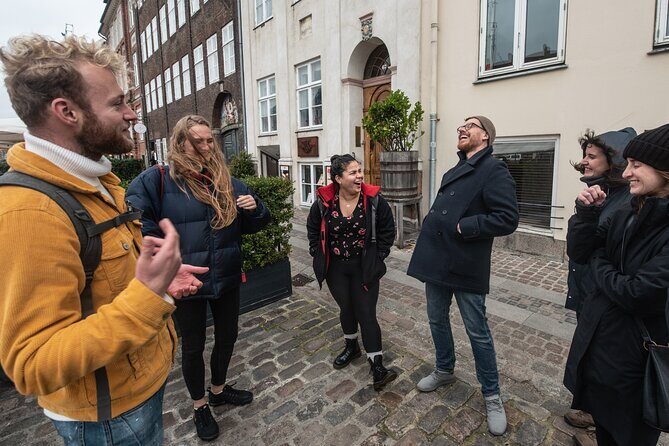
The tour is a straight line through central Copenhagen, starting at Gammel Strand and ending at Rådhuspladsen. You’ll finish at the entrance area that lands you near the main shopping street, Strøget. After the tour, you can walk about 15 minutes back to the starting area.
Along the way, the route links a smart set of themes:
- Power and governance (Christiansborg Slot)
- Play and public culture (Tivoli Gardens)
- Art and thinking (Ny Carlsberg Glyptotek and the royal library garden area)
- City institutions and symbols (City Hall and the Stock Exchange area)
Because it’s a private tour, you don’t have to worry about finding your place in a crowd. You follow your guide’s rhythm and you keep moving.
Also, there’s pickup offered, but it’s done on foot, not by vehicle. That matters if you’re sensitive to walking distance at the start or between stops.
Stop 1: Christiansborg Slot and Danish democracy in plain language

You’ll spend about 30 minutes at Christiansborg Slot, and this is where the tour earns its “why Denmark works” reputation. The focus isn’t just architecture. It’s Danish parliament and Danish democracy, starting from the Viking-age thread and moving forward.
What I’d expect you to get here:
- Clear context on how governance is tied to national identity
- A story-driven approach rather than a list of dates
- A sense of Denmark’s public values, not just its political structure
The practical thing to note: there’s no admission ticket included. So if you want to go inside certain areas, you’ll need to plan for that separately. If your goal is orientation and meaning, you can still enjoy this stop without turning it into a ticketed attraction.
This stop is also a good “anchor” for the whole tour. Once you understand the political framework, the later jokes and observations about happiness and social life land better.
Stop 2: Tivoli Gardens as a lesson in public joy
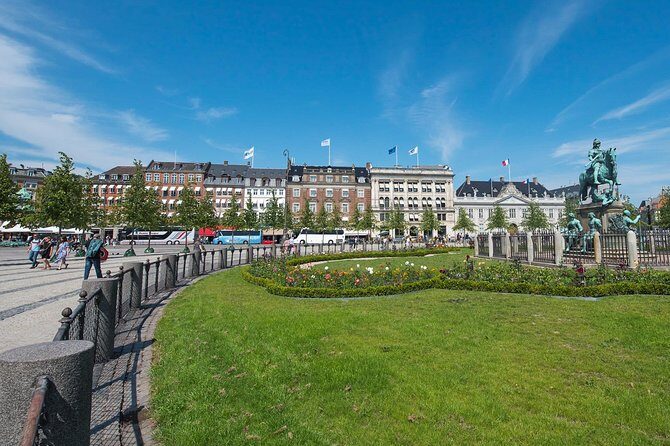
Next up is Tivoli Gardens for about 10 minutes. Yes, it’s an amusement park. But on this walk, it’s not treated as just rides and tickets. The tour covers Tivoli’s history and how it fits into Copenhagen’s idea of public culture.
This is a smart choice for a short tour. Tivoli gives you a recognizable landmark, and the guide can connect it to bigger themes—how a city makes room for pleasure, tradition, and community life.
Again, admission isn’t included. That doesn’t automatically mean you won’t enter anything, but it does mean the core time is meant for viewing and context. If you want to actually ride things, plan that as your own add-on after the tour.
Other hidden gems and off-the-beaten-track tours we've reviewed in Copenhagen




Stop 3: Ny Carlsberg Glyptotek for a fast art-and-portrait moment
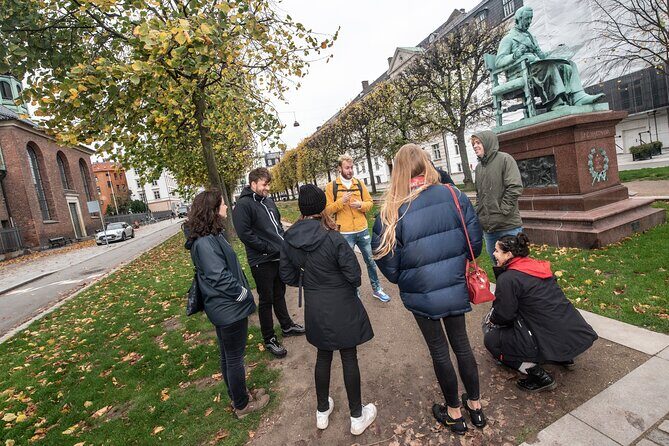
You get about 5 minutes at Ny Carlsberg Glyptotek, the Carlsberg art museum. This is a quick stop, so the goal isn’t to “do the museum.” Instead, it’s more like a taste: a chance to understand why this collection matters, and where it sits in Copenhagen’s cultural map.
The upside of a short museum stop:
- You learn what to look for later if you return
- You don’t burn half a day indoors
- You stay energized for the philosophy and institutions ahead
The downside is obvious: if you love museums and want time to browse at your own speed, 5 minutes won’t be enough. But as part of a compact orientation walk, it works.
Admission isn’t included here either, so treat this as your setup for later if you want more.
Stop 4: Det Kgl. Bibliotek and the philosophy talk in the Royal Garden
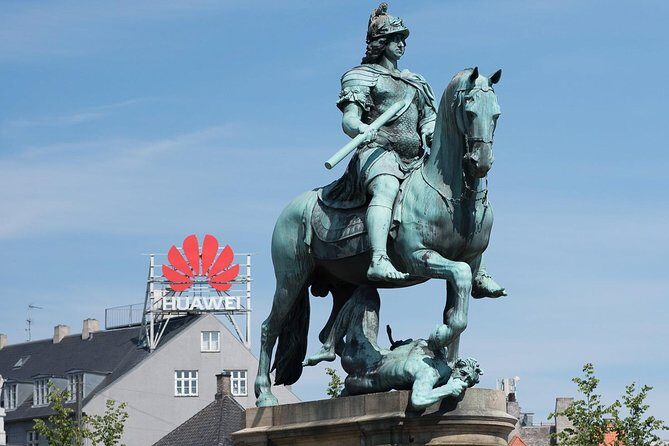
One of the most memorable elements for me is when a city’s “thinking spaces” become part of the itinerary. Here, you’ll visit Det Kgl. Bibliotek and spend about 5 minutes, with a focus on Kierkegaard and philosophy in the Royal Garden area.
That kind of stop can easily feel like filler on some tours. On this one, it’s positioned as a contrast: Denmark’s big public institutions aren’t only about power. They’re also about how people process life, morality, and meaning.
Practical note: there’s no admission ticket included. So again, if you want deeper access inside, you’d handle that separately.
If you’re the type of traveler who likes at least one “thinking” moment each day, this stop is a win. It’s also the kind of place where the guide’s tone can make the difference between information overload and a calm, memorable pause.
Jewish museum and Viking artifacts: two quick cultural context stops

After the library garden area, the tour includes a brief walk past the Jewish museum connected to the Royal Garden area. Then there’s another quick introduction to the museum most famous for Viking artifacts.
These moments are short, so they’re not meant to replace a full museum visit. They’re meant to give you names, themes, and the “why you should care.” In practice, that means you’ll likely walk away knowing what you want to look up or visit on a later day.
The key advantage here is coverage without exhaustion. In a compact tour, you can’t spend an hour inside every institution. But a quick, well-framed pass helps you spot patterns in the city: layers of identity, different eras showing up side by side, and institutions that shaped what Copenhagen became.
Because the itinerary doesn’t list admission for these museum references, you’ll want to treat them as orientation stops unless you’re already planning museum time later.
Ending at City Hall and the Stock Exchange: symbols you can actually spot
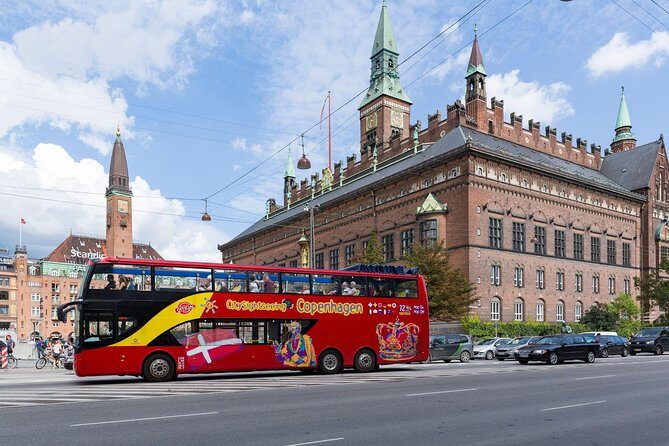
You wrap up at Copenhagen City Hall, right by Tivoli Gardens, then move on to Copenhagen Stock Exchange for another short look. City Hall gets about 5 minutes, and the Stock Exchange stop is about 5 minutes too.
What you learn here is how leaders and institutions shaped the city’s physical look. The Stock Exchange segment includes Christian IV and his development, including the old stock exchange. That’s a nice payoff: after democracy at Christiansborg and culture at Tivoli, you end with the city’s evolving infrastructure—who built what, and why it mattered.
A helpful real-world detail: the tour ends near the start/end axis of the main shopping street. That makes it easy to keep your day moving. You don’t need to find a new meeting point or figure out a complicated return plan right away.
What the guide style means for you (and why Troels shows up in praise)
This is a guide-led tour, and the guide’s personality is part of the product. The tour is described as entertaining and humorous, and one praised example is Troels, noted for personal discussions and commentary that makes the sites feel connected rather than isolated.
Here’s what that style usually does well for you:
- It turns the city from a photo checklist into a chain of cause-and-effect stories
- It helps you connect Danish “happiness” talk to actual places and institutions
- It keeps questions on the table, which is perfect in a private setting
Just remember: it’s still a short walk. Even a great guide can’t slow time. If you want long Q&A or lots of museum wandering, plan extra independent time after the tour.
Practical tips so you get the most from the walk
A few things that matter on this specific route:
- Wear shoes you can stand in. The stops are spread through central Copenhagen, and the tour is built around walking between them.
- Bring a curious mindset. The “politically incorrect” feel is more about tone than shock value. If you come ready to laugh and learn, you’ll get more from the short time.
- Budget for optional tickets. Christiansborg Slot, Tivoli Gardens, and the museums you pass are explicitly not bundled with admission.
- Plan your day flow. Because you finish near Strøget and City Hall, it’s smart to schedule your next stop soon—coffee, a shop browse, or another museum visit.
Who this tour suits best (and who might prefer to walk on your own)
This tour fits you if:
- You want a fast orientation in Copenhagen, not a full-day deep dive
- You like humor with context
- You prefer private, ask-questions-anytime guiding
- You’re interested in Denmark as a functioning society—democracy, ideas, culture—not only buildings
You might skip this tour if:
- You hate walking for an hour-plus even with short stops
- You want lots of museum time inside ticketed spaces
- You’re traveling as a big group and private pricing doesn’t feel right
Should you book this Copenhagen walking tour?
Book it if you want a short, guided “meaning map” of Copenhagen. The price is high for a single group, but the private format, the humor, and the variety of themes—politics, happiness, art, philosophy, and city institutions—make it a strong value for the time you’re actually spending.
Don’t book it if you want a ticket-and-entry museum marathon. This is built for seeing, listening, and walking with context. You’ll probably want to return later to places that spark your interest.
FAQ
FAQ
How long is the Politically Incorrect Private Copenhagen walking tour?
It runs for about 1 hour 30 minutes.
Where does the tour start and end?
It starts at Gammel Strand, København, Denmark and ends at Rådhuspladsen, København, Denmark. It finishes near the main shopping street (Strøget).
Is the tour private?
Yes. It’s a private tour/activity, and only your group participates.
Is admission included for the sights?
No. Admission tickets are not included for the stops listed (including Christiansborg Slot, Tivoli Gardens, and the museums).
Does the tour offer pickup?
Pickup is offered on foot.
What language is the tour in?
The tour is offered in English.
What is the cancellation policy?
You can cancel for a full refund up to 24 hours in advance of the experience start time.