REVIEW · COPENHAGEN
Copenhagen: The Six Forgotten Giants Hunt and Nature Walk
Book on GetYourGuide →Operated by Milad Shekhzada · Bookable on GetYourGuide
Forget the city for a troll hunt. This Copenhagen-area outing leads you to Thomas Dambo’s recycled “forgotten” giants tucked into woods, hillsides, and a surprise spot under a bridge, plus an actual treasure-hunt feeling as you search for each one. I love how it turns Copenhagen into fresh air and slow looking, not rush-and-snap sightseeing.
I also like the human touch: Milad runs this as a small group experience, keeping the pace comfortable, answering questions as you go, and helping with photos at the stops. You’re not just dropped off and left to figure it out.
The only drawback is that it involves moderate walking, so if you have mobility limits, you’ll want to think hard before committing.
In This Review
- Key highlights worth planning for
- The Six Forgotten Giants: an easy day trip with a real story
- Milad’s meet-up point and the 25-minute shift out of the city
- How the 4-hour flow works (and why the timing feels right)
- Sleeping Louis, Hilltop Trine, and Oscar Under The Bridge
- Sleeping Louis: a laid-back start
- Hilltop Trine: the view-focused moment
- Oscar Under The Bridge: the surprise stop
- The coffee break reset in the countryside
- Thomas on the Mountain and the joy of finding height
- Little Tilde and the charm of the smaller find
- Teddy Friendly: the wrap-up giant that lands on a smile
- Photo spots, wildlife, and why the hunt feels better than a checklist
- What to bring: shoes and rain gear will save your day
- Price and value: why $137 feels fair for a 4-hour art walk
- Who should book this, and who should skip it
- Should you book the hunt for the Six Forgotten Giants?
- FAQ
- How long does the Six Forgotten Giants Hunt and Nature Walk take?
- What group size is this tour?
- Where do I meet the tour?
- What’s included in the price, and is lunch provided?
- What language is the tour guide?
- What should I bring for the tour in Denmark?
- Is the tour suitable for everyone?
- Can I cancel or pay later?
Key highlights worth planning for
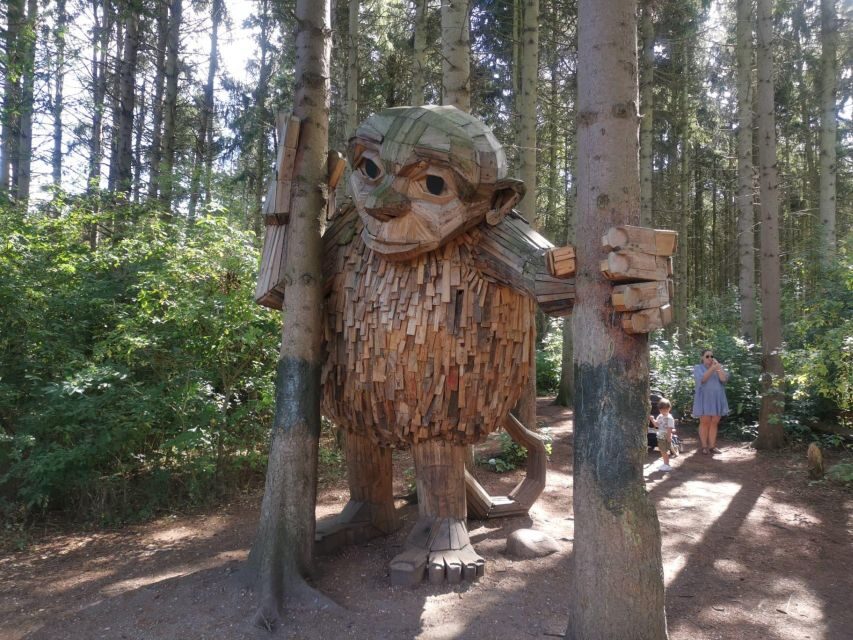
- Six giants, six moods: sleeping, hilltop-view, under-bridge surprise, mountain-height, pint-size charm, and a cuddly friend.
- Short walks between big photo moments: the hike pieces are manageable, even though you’ll be on your feet the whole time.
- Recycled-material art in real nature settings: you’re seeing sculptures where they belong—trees, slopes, and open sky included.
- Coffee break reset: a pause to warm up, regroup, and keep your energy steady for the remaining giants.
- A guide who actively manages the flow: Milad keeps groups together, pace even, and questions welcome.
The Six Forgotten Giants: an easy day trip with a real story
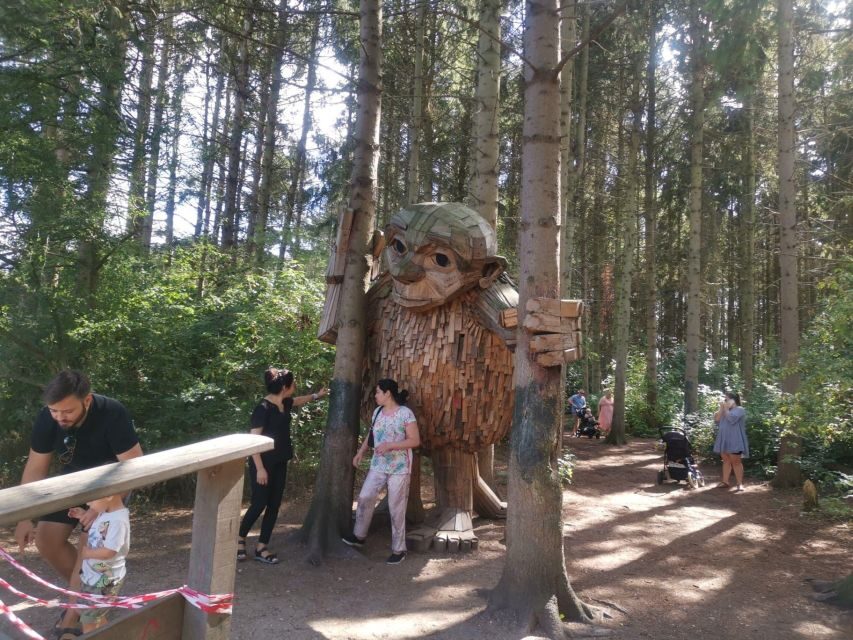
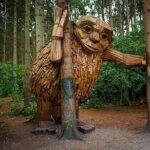
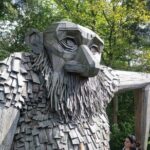
Copenhagen is great, but it’s also easy to get stuck in the “top sights checklist” mode. This tour gives you something different: Thomas Dambo’s six wooden giants made from reused materials, planted across the countryside around Copenhagen like playful characters with hiding spots.
What makes it feel special is how the art and the outdoors work together. Each giant is in a specific setting, so you’re not only admiring the sculpture—you’re reading the place. One is meant for a slow look from above, another turns a bridge into a stage, and others feel tucked into the in-between spaces of trees and hills.
And since it’s a hunt with a route, you’re guided toward the spots that can be hard to find on your own. That matters because these giants aren’t in the middle of a town square. They’re out where you’d need local knowledge and patience to keep track.
Other Mons Klint and Forest Tower day trips we've reviewed in Copenhagen


Milad’s meet-up point and the 25-minute shift out of the city
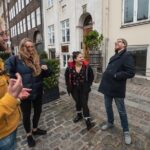
You start outside the YMCA Interpoint Hostel, and you’ll meet Milad and the small group there. From the jump, the tour has that friendly, host-like energy instead of a rigid “line up here” vibe.
Then you ride out in private transportation for about 25 minutes. That ride is more than just transit time. It’s your mental switch from city pace to outdoor time—less noise, more room for looking out the window, and you can feel the weather and daylight changing as you get farther from central Copenhagen.
This is also where the small group size quietly helps. With limited participants (up to 6), you’re not fighting the crowd for the best side of a viewpoint or the best angle for a photo.
How the 4-hour flow works (and why the timing feels right)
The whole experience runs about 4 hours. That’s long enough to feel like a “thing” you did, but not so long that it becomes a grind.
The structure is simple:
- You do the first set of giant stops by walking short stretches between them.
- You take a coffee break partway through.
- Then you continue to the remaining giants with more walking and plenty of photo chances.
In real life, that means you’re not doing one huge marathon hike. The walks are described as moderate and not strenuous, and the route keeps you moving while still giving moments to stop, look, and take your time.
If you’re the type who likes to wander slowly, you’ll appreciate that the tour isn’t just “see it, move on.” It’s built around locating each giant’s spot and enjoying the setting long enough to capture it well.
Sleeping Louis, Hilltop Trine, and Oscar Under The Bridge
The route starts with giants that lean into personality and surprise—exactly the kind of variety that makes the hunt fun instead of repetitive.
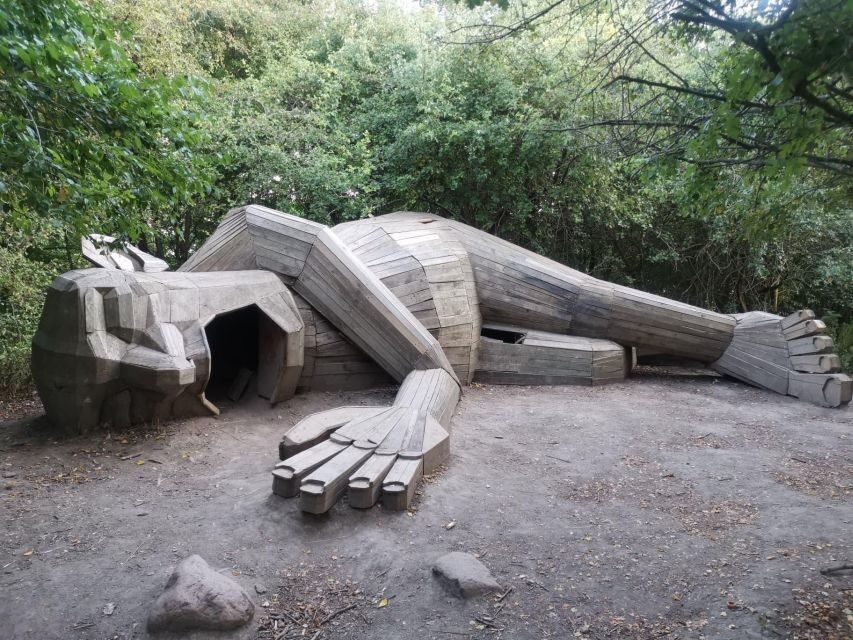
Sleeping Louis: a laid-back start
Sleeping Louis is the obvious attention-grabber because he’s literally meant to be found in a resting pose. I like starting with a giant like this because it sets the tone: you’re hunting for something playful, not just “a landmark.”
Expect the setting to encourage slow looking. You’ll be outside, on uneven natural ground, so take your time and watch your footing. Good shoes matter here.
Other walking tours we've reviewed in Copenhagen



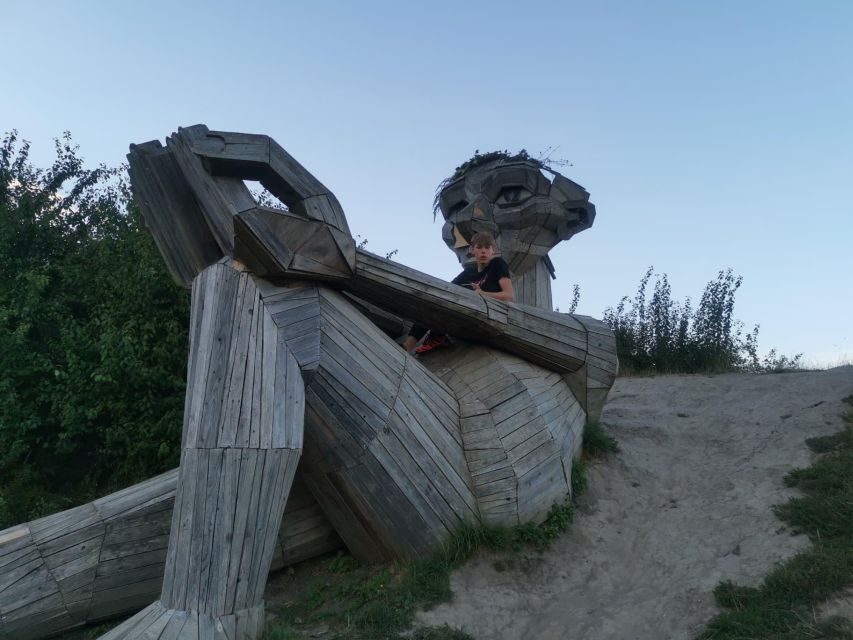
Hilltop Trine: the view-focused moment
Hilltop Trine is all about elevation and perspective—she has the best view around. When you reach a hilltop giant, you’re doing two things at once: locating the sculpture and naturally getting a bigger picture of the surrounding area.
This is usually where you’ll want your camera ready. Even if Denmark’s skies are changeable, you’ll still get strong compositions: the giant against trees, sky, and slope.
Oscar Under The Bridge: the surprise stop
Oscar Under The Bridge is the “wait, what?” location. A giant placed under a bridge is the kind of trick that turns a normal structure into part of the artwork.
Bring your best eyes here. Shadows can make it harder to spot details, and rain can make surfaces slick. But that same mood—cool, shaded, unexpected—is why this stop works.
The coffee break reset in the countryside
After the first three giants, there’s a short coffee break. This is a smart move for a few reasons.
First, it breaks up the time on your feet. Second, it gives you a chance to check in with the group, warm up if the weather turns, and refocus before the last chunk of the hunt.
From what you can expect on the ground, the break includes coffee or tea, and there’s often something to snack on. That’s a big deal when you’re not getting meals included. Even if you plan to buy food later, you’ll feel better having a little fuel mid-tour.
Thomas on the Mountain and the joy of finding height
Next comes Thomas on the Mountain. This is the “height advantage” giant, which means the fun shifts from simply spotting him to getting the right angle and distance.
I like these taller stops because they reward patience. You might feel a little out of breath on the approach—mostly from walking and natural terrain—but the payoff is usually a clear view of the sculpture and how it fits into the setting.
If weather is mild, this is also a great moment for photos where you can capture the giant and the surrounding trees and sky in the same frame.
Little Tilde and the charm of the smaller find
Little Tilde is described as the cutest giant you’ll ever meet. And that kind of label isn’t just marketing—it hints at what you’ll experience on-site.
Smaller giants tend to make you slow down and look closer. You’re more likely to notice shapes, textures, and the way recycled materials get transformed into something friendly and characterful. It’s also usually easier to frame a tight portrait-style photo without needing a ton of space.
If you care about details, this is a great stop to give yourself extra time. If the weather is rolling in, it can also be the more “comfortable” stop since you’re not chasing the tallest viewpoint for as long.
Teddy Friendly: the wrap-up giant that lands on a smile
The last giant is Teddy Friendly, the one meant to feel cuddly. Ending with this kind of personality is smart because it leaves you with a positive final memory.
By the end of four hours, your brain is full: art locations, different poses, different outdoor scenes, and the fun of the hunt. Teddy Friendly gives you a last photo moment that feels less like a mission and more like a payoff.
Also, because the tour is designed for a small group, the end stop is often where you get good energy for group pictures. Milad typically helps with photos at the stops, so don’t be shy about asking.
Photo spots, wildlife, and why the hunt feels better than a checklist
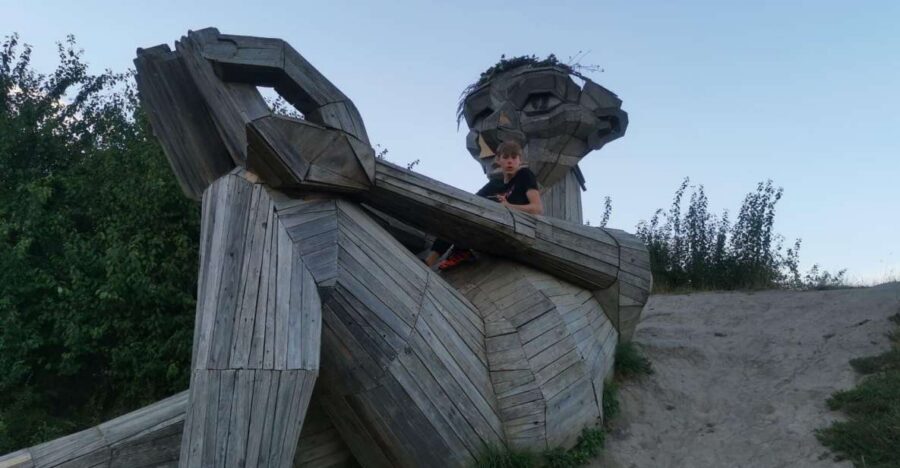
These giants aren’t placed in isolation. You’ll find them surrounded by nature, with friendly wildlife around at times, and each stop is framed for photos.
The “hunt” part matters because it changes how you move through the countryside. Instead of “walk from A to B,” you’re actively searching for specific features: where the giant is positioned, what it’s doing, and how the surroundings shape the composition.
That’s why the tour is a good break from the usual Copenhagen rhythm. You still get the art moment, but you’re also getting a nature walk you can actually enjoy instead of simply endure.
What to bring: shoes and rain gear will save your day
Denmark weather can be unpredictable, and this tour is outdoors the whole time. So pack like you mean it.
Bring:
- Comfortable walking shoes (non-slip is your friend)
- An umbrella
- Water and snacks
- Rain gear and weather-appropriate clothes
Also, keep a little snack plan for yourself even though there’s a coffee break. Meals aren’t included, so if you tend to get hungry, your best move is to bring something small you can eat during pauses.
If you’re sensitive to cold, consider layering. Even on a pleasant day, you’re outside walking and waiting at photo stops.
Price and value: why $137 feels fair for a 4-hour art walk
At $137 per person for about 4 hours, this is one of those prices that only makes sense when you look at what’s included.
You get:
- A live English guide
- Private transportation (including the ride out of the city)
- A coffee break
- A small group setup (up to 6)
The value is mainly in logistics. Finding multiple outdoor installations around Copenhagen efficiently is hard without a car or local guidance. The private transportation saves time and energy, and the guide helps you reach the right spots instead of playing guessing games in the woods.
If you were to do it alone, you’d likely spend more time solving transit and finding the sculptures. Here, you’re paying for route knowledge, smooth timing, and a guide who helps keep the experience fun and flowing.
Meals are not included, so you’ll want to budget for that separately. But you’re not stuck worrying about where to eat during the tour itself because the schedule is built around short walks and a coffee break.
Who should book this, and who should skip it
This is a strong fit if you want:
- Outdoor time away from the city center
- A gentle art hunt where you do real walking, not museum standing
- Plenty of photo opportunities with an organized route
- A small-group feel where you can actually talk with Milad
It’s also good if you’re a solo traveler. Small group size helps conversation flow without drowning you in crowd noise.
Skip or think twice if:
- You have walking difficulties or physical limitations. The tour involves moderate walking and is outdoors for the full duration.
- You want a fully seated experience. This is not that kind of day.
And one more note: unaccompanied minors aren’t allowed, so plan accordingly if you’re traveling with kids.
Should you book the hunt for the Six Forgotten Giants?
Yes, if you want a break from Copenhagen’s usual sightseeing and you like the idea of finding art in nature, this is an easy “worth it” pick. The mix of recycled-material sculptures, short walks between distinct locations, and a guide-run route that gets you to all six giants is the core win.
Book it especially if you care about photos and atmosphere. The giants are staged in ways that make you look longer than you would inside a museum, and that’s the point.
If you’re tight on mobility or hate rainy outdoor walking, you may want to choose a different outing. Otherwise, bring good shoes, pack rain gear, and enjoy the most playful side of Denmark outside the city center.
FAQ
How long does the Six Forgotten Giants Hunt and Nature Walk take?
It lasts about 4 hours.
What group size is this tour?
It’s a small group limited to 6 participants.
Where do I meet the tour?
Meet outside of the YMCA Interpoint Hostel.
What’s included in the price, and is lunch provided?
Included are the guide, private transportation, and a coffee break. Meals are not included.
What language is the tour guide?
The live tour guide speaks English.
What should I bring for the tour in Denmark?
Bring comfortable shoes, an umbrella, snacks, water, rain gear, and clothes that match the weather.
Is the tour suitable for everyone?
The walking is described as moderate, and it may not be suitable for people with walking difficulties or other physical limitations. Also, unaccompanied minors are not allowed.
Can I cancel or pay later?
You can cancel up to 24 hours in advance for a full refund. You can reserve now and pay later, depending on availability.