REVIEW · COPENHAGEN
2-Hour Walking Introduction to Copenhagen and its Main Sights
Book on Viator →Operated by Hamlet Tours · Bookable on Viator
Copenhagen clicks fast on foot. This 2-hour orientation walks you through Copenhagen’s key landmarks while explaining how the city works today and how it got there. I like the small group setup (max 10), plus the fact that you get a real local guide who can answer your questions as you go, not just read from a script. The main drawback: it’s still a lot of ground in a short time, so you’ll want decent walking shoes and a bit of patience at busy central areas.
You’ll start at the statue of Andersen at Rådhuspladsen and end at Amalienborg Palace. Along the route, the tour mixes major civic buildings (City Hall, Christiansborg) with “wow” sights like the harbour, Nyhavn’s colorful fronts, and the dragon-tailed tower of the old stock exchange—plus practical ideas for what to do next. If the weather is bad, the experience may be rescheduled, so keep your first day flexible.
In This Review
- Key highlights worth showing up for
- A 2-hour Copenhagen primer that helps your whole trip
- Where the tour starts (and how it sets the route up)
- Stop-by-stop: City Hall Square, Tivoli views, and Strøget on one route
- Christiansborg Slot: the Denmark power center made human
- Christian IV’s Brewhouse and the harbour: where trade meets strategy
- Holmens Kirke and Royal ties: when you get in, you’ll feel it
- King’s New Square: a Renaissance setting and a natural transition
- Nyhavn: the colorful harbour front with a smart origin story
- Amalienborg Palace finish: where stories meet ceremonies
- Guide energy and how it shapes the whole experience
- What you actually get for $40.41
- Who this walking tour is best for
- Should you book it? My practical verdict
- FAQ
- Is this tour offered in English?
- How long is the walking tour?
- Where does the tour start and end?
- How many people are in the group?
- Are any entrances included?
- What if the weather is bad?
Key highlights worth showing up for
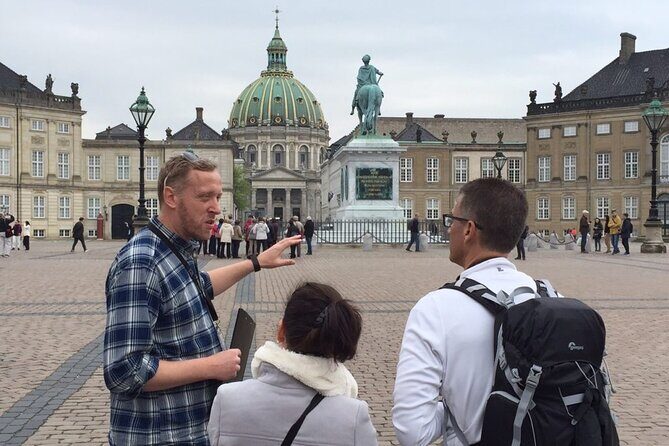
- Small group, max 10 people, so you get more conversation and fewer awkward pauses
- Headset audio included (optional), which helps a lot when the streets get noisy
- A power-and-history route from City Hall Square to Christiansborg Slot to Amalienborg
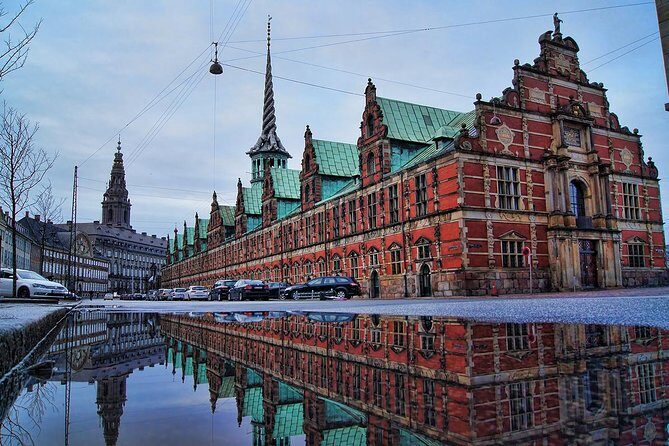
- Harbour stops with big visual payoff, including Christian IV’s Brewhouse and the dragon-tailed Børsen
- Nyhavn + royal finish, with timing sometimes aligned to the changing of the guards
- You leave with a mini map and clear next-step ideas, so your day doesn’t end when the tour does
A 2-hour Copenhagen primer that helps your whole trip
This walk is built for that first-day moment when you’re looking at a map and thinking: ok, but where do I actually start? The format works because it ties each area to a story—government buildings, royal residences, the harbour’s role, and the old trading power of Copenhagen—so the city feels connected instead of random.
Price-wise, $40.41 for about two hours is fair value when you factor in a live guide, optional headset audio, and the practical map and recommendations at the end. You’re not paying for museum tickets; you’re paying for orientation and interpretation, which is exactly what most visitors need before they start wandering on their own.
The pacing is also intentional: most stops are short (often around 10 minutes), so you get a broad view of central Copenhagen without turning your afternoon into a museum sprint.
Other walking tours we've reviewed in Copenhagen


Where the tour starts (and how it sets the route up)
You meet at Statue of Andersen, Rådhuspladsen, right in the city’s core. If you’ve ever struggled to meet guides in busy squares, this start helps because it’s a well-known public landmark area, not a hidden backstreet.
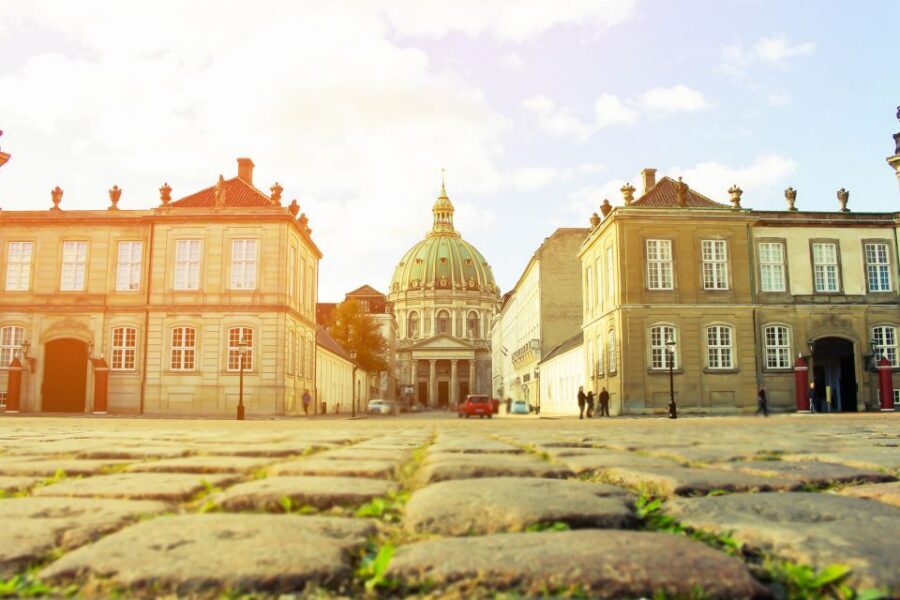
The ending point is Amalienborg Palace. That matters because it funnels you toward the city’s most famous “royal” area right when you’re ready to keep exploring—whether that means sticking around for ceremonies or walking on toward nearby highlights.
Stop-by-stop: City Hall Square, Tivoli views, and Strøget on one route
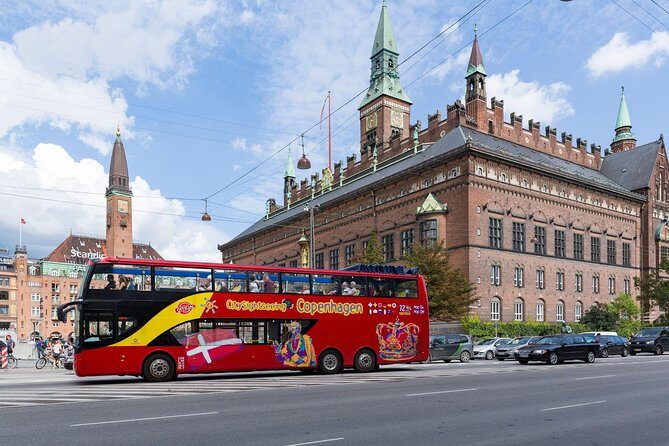
Your first stop is City Hall Square, the heart of Copenhagen where Danes gather in huge numbers for major wins—sports victories or wartime events. Even if you never catch a celebration, it’s a good way to understand the city’s rhythm: this is public space meant for crowds, not quiet strolls.
From there, the tour circles through the kind of scenes you’d otherwise miss because you’d be too focused on your next photo:
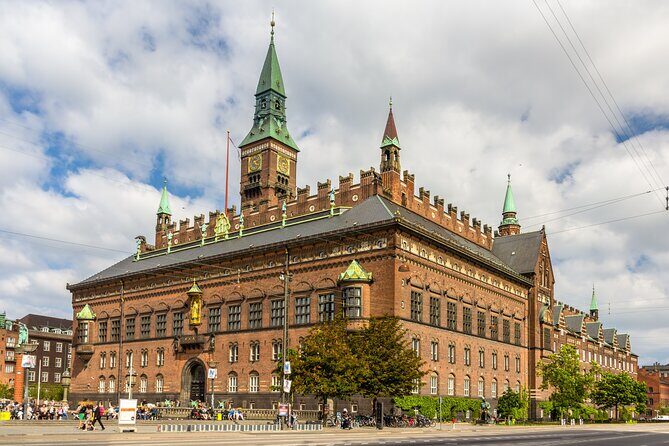
- City Hall itself (built in 1905) as the hub of Copenhagen administration.
- Tivoli Gardens, known as one of the most beautiful amusement parks in the world—strangely perfect because it sits in the middle of a major city.
- Strøget, described as the world’s longest pedestrian shopping street, where the city’s everyday life turns into a continuous walkable “main drag.”
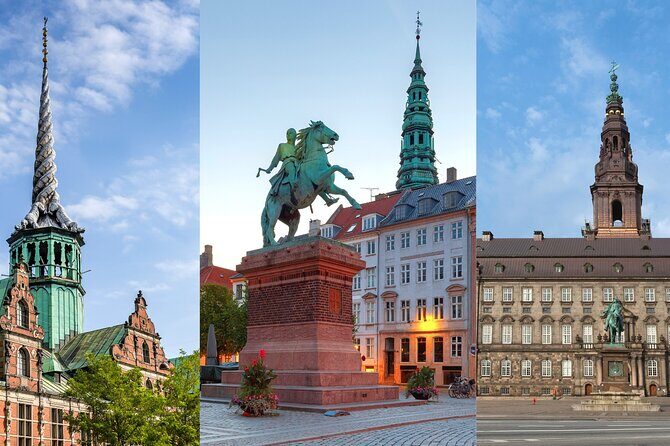
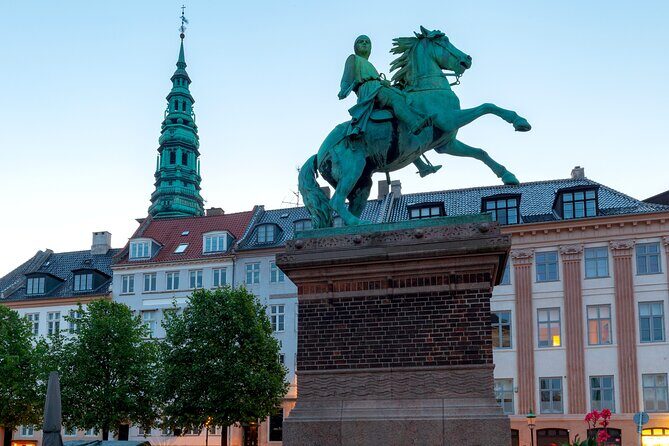
- The equestrian statue of the bishop credited with founding Copenhagen in 1189, which gives you a quick historical anchor before the tour shifts to politics and power.
This first segment is often the easiest to enjoy because it’s visual and immediate. The drawback is also practical: this is central Copenhagen, so it can be busy. If you’re sensitive to crowds, come prepared to move with the flow for the short photo-and-story stops.
Christiansborg Slot: the Denmark power center made human
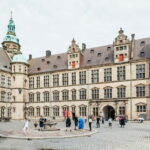
Next up is Christiansborg Slot. This massive palace complex is where Denmark’s political and legal life lives in the same place—parliament, the supreme court, and the prime minister are all based here. The tour uses the building as a way to explain how Copenhagen’s role shifted over time, including the idea that Copenhagen’s story begins around this spot.
This stop is valuable because it helps you read the city like a map of institutions, not just sightseeing. Once you understand why these buildings cluster here, you’ll find it easier to connect other landmarks later in your trip.
If you’re hoping for big interior access, manage expectations: the walk is designed as an outdoor orientation, so you mainly get the context and viewpoints rather than a full palace visit.
Christian IV’s Brewhouse and the harbour: where trade meets strategy
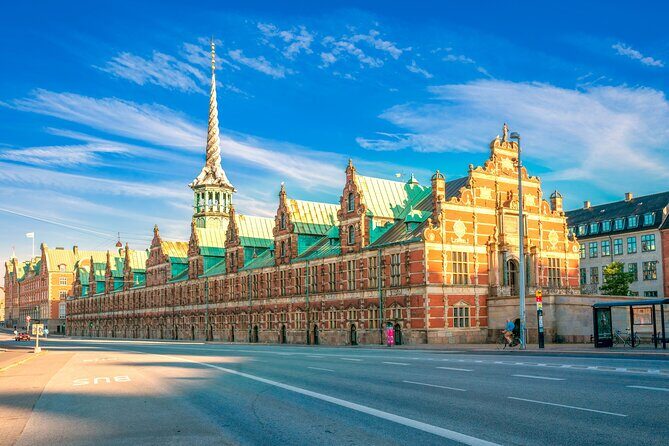
The route then moves to Christian IV’s Brewhouse, a huge brick structure dating to 1618 in the harbour area. Here, the story shifts from politics to how Copenhagen used its location—your guide explains how the harbour functioned as a navy base in the Renaissance.
This is one of my favorite “type of stop” choices on walking tours, because it answers a question you might not think to ask: why does this city look the way it does near the water? The harbour isn’t just scenic; it’s tied to defense, shipping, and the practical needs of a growing city.
Right after that, you also see the old stock exchange from the early 1600s, with a tower described as made up of tails from three dragons. That detail is so specific that it usually sticks in your memory—proof that you’ll get more than generic landmark mentions.
One small consideration: the harbour area can involve uneven ground and wind off the water. Not a deal-breaker, but it’s worth wearing layers.
A few more Copenhagen tours and experiences worth a look





Holmens Kirke and Royal ties: when you get in, you’ll feel it
At Holmens Kirke, you’re looking at a church dating from the 1500s, and it’s tied to big names in Denmark. The tour explains it as a place where prime ministers are buried and royals are married.
You may enter if it’s open, and that’s the flexible part. It’s common for churches to be closed during services or changing schedules, so you’ll want to treat this as a “maybe” rather than a guarantee. When you do get inside, it’s one of those stops where the city’s political story gets a spiritual back layer.
Even if you don’t go in, the exterior stop still works because it gives context for the role of institutions in Danish life.
King’s New Square: a Renaissance setting and a natural transition
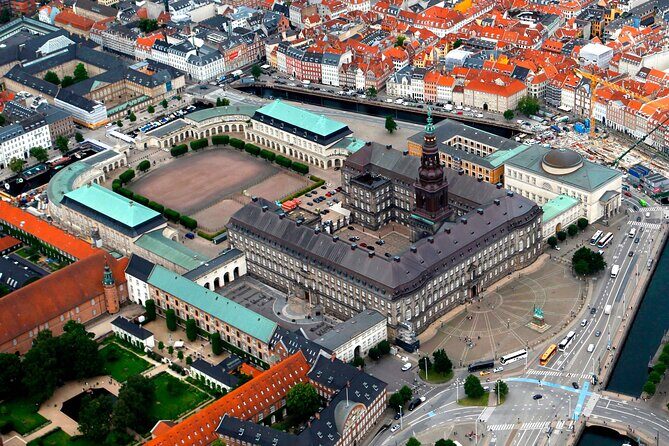
Your walk ends at Copenhagen King’s New Square, a beautiful Renaissance square surrounded by impressive 1700s buildings. This stop works as a “breather” in the route, giving you one more architectural anchor before the finale.
The guide also uses this point to help you plan your next steps. You’ll get advice on how to get back or how to keep walking toward Nyhavn, Amalienborg Palace, and even the Little Mermaid area.
This is practical tour design. A lot of city walks end with a vague goodbye. Here, you get direction for what to do next so you can keep momentum right away.
Nyhavn: the colorful harbour front with a smart origin story
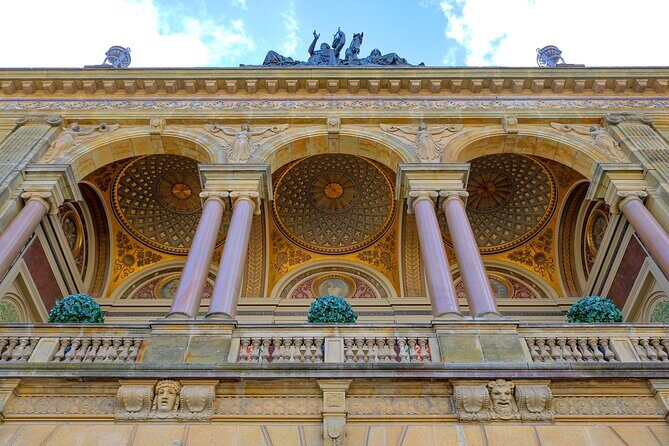
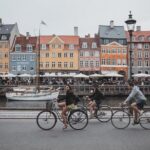
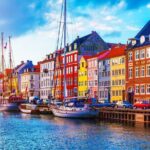
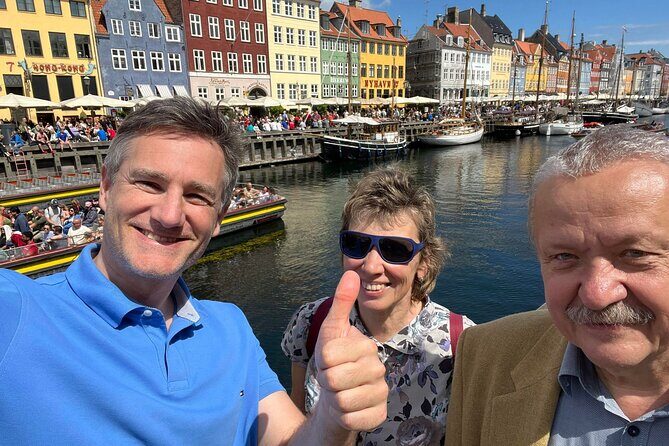
Then comes the iconic Nyhavn. Those colorful houses aren’t just pretty—they connect to the city’s past. You hear how the harbour area was dug out in the 1600s by Swedish prisoners of war.
That origin detail turns Nyhavn from a postcard scene into something you understand. You’re still there for the views, but now you can read the place as a product of geography, power, and human history.
The stop is short, so this is a perfect time to decide what kind of Nyhavn experience you want after the tour. If you want a long sit-down meal, plan it afterward when you’re not on a schedule.
Amalienborg Palace finish: where stories meet ceremonies
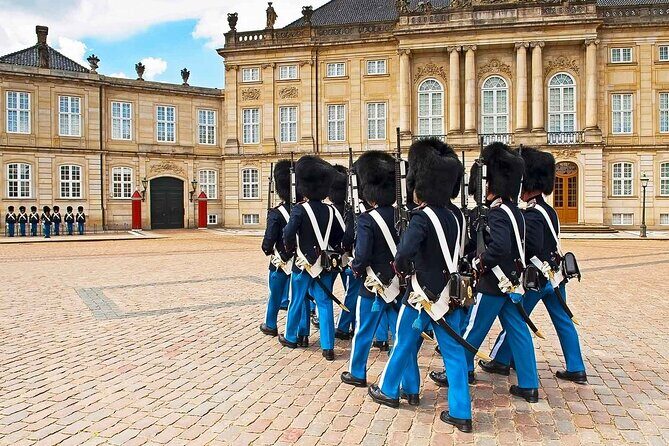
Your final stop is Amalienborg Palace, the royal residence where the king and family live in four huge mansions from the mid-1700s. The tour notes that dramatic fights took place here during World War II, which adds weight to what can otherwise feel like purely decorative royal tourism.
In the reviews, the ending timing is sometimes aligned with the chance to see the changing of the guards at Amalienborg. Since that depends on the day and schedule, treat it as a hopeful bonus, not a guarantee.
Even if you don’t catch a ceremony, this finish is still smart. It leaves you at a central “hub” area where it’s easy to continue walking, hop on public transport, or head toward dinner.
Guide energy and how it shapes the whole experience
The guides are a big part of the value here. You’ll hear lots of history explained with personality and humor, and you can ask questions along the way instead of waiting until the end.
From past participants, you may encounter guides such as Jens, Jan, Nick, Rasmus, Thomas, or George—and the consistent theme is clear: guides bring the city to life through stories, local habits, and history that connects directly to what you’re seeing.
Headsets are provided, but they’re not mandatory. If you’re in a noisy area or the group is moving quickly, they’re a real help for catching the details without craning your neck or falling behind.
What you actually get for $40.41
Here’s how I think about the price in practical terms:
- You pay for a guided orientation, not for museum entries.
- Several stops are free to visit (City Hall Square, Christiansborg Slot viewpoints, Holmens Kirke if open, Copenhagen King’s New Square, Nyhavn, and the general outdoor Amalienborg area).
- One major structure along the walk—Christian IV’s Brewhouse—notes that admission is not included, so if you want to go inside, budget extra later.
At $40.41 for about 2 hours, the big “why” is time saved. If you tried to plan this same route yourself, you’d still need someone to connect the dots between institutions, harbour history, and the meaning of each landmark.
That’s also why the map and the “what to do next” tips matter. A good orientation tour reduces indecision, and in a place like Copenhagen, that can easily translate into a better first day.
Who this walking tour is best for
This works especially well if you:
- are in Copenhagen for a short stay and want quick, usable context
- want a friendly first-day plan that ends near major sights
- prefer street-level seeing over museum hopping
- like asking questions and getting immediate answers
It may not be your best match if you want long museum time or deep interior access, because this is built as an outdoor route with short stops.
Most travelers can participate, and it’s a near-public-transport route, so it’s also a good option for people who don’t want to commit to a complicated itinerary.
Should you book it? My practical verdict
If you want a fast, friendly way to understand Copenhagen’s layout and meaning—government power, royal Denmark, and the harbour’s historic role—this is a strong pick. The small group, the optional headset, and the guide-led context turn a short walk into more than “just seeing buildings.”
Book it if you’re aiming to hit Nyhavn and Amalienborg efficiently, and you want your next sightseeing decisions to feel guided rather than guesswork. Skip it only if you’re hoping for long indoor visits or you already know Copenhagen’s history well and just want independent wandering without a structured route.
Either way, start with this tour on your first day if you can. It helps the rest of your Copenhagen plans make sense.
FAQ
Is this tour offered in English?
Yes. The tour is offered in English, with a local English-speaking guide.
How long is the walking tour?
It runs for about 2 hours, and that total duration includes travel time. Individual stops are short, with some listed around 6–15 minutes.
Where does the tour start and end?
It starts at the statue of Andersen at Rådhuspladsen and ends at Amalienborg Palace at Amalienborg Slotsplads.
How many people are in the group?
The tour has a maximum of 10 travelers.
Are any entrances included?
Some stops are marked as free, while Christian IV’s Brewhouse is noted as not included for admission. Other interiors depend on opening times (for example, the church is entered only if it is open).
What if the weather is bad?
This experience requires good weather. If it’s canceled due to poor weather, you’ll be offered a different date or a full refund.