REVIEW · COPENHAGEN
Grand Tour of Copenhagen – The Little Mermaid to Royal Castle
Book on Viator →Operated by Enjoy The Tours ApS · Bookable on Viator
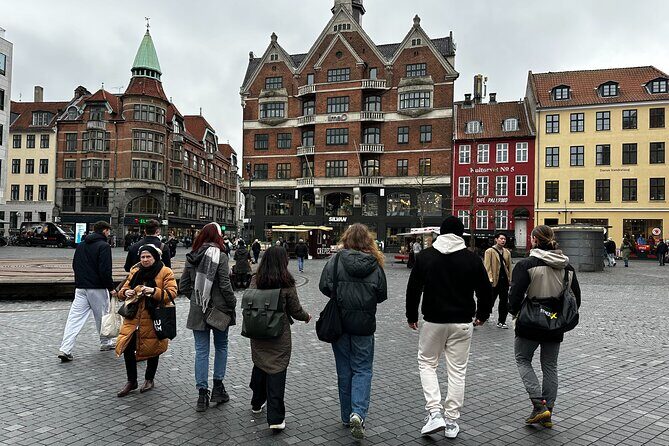
Copenhagen can feel huge in a short visit, but this tour strings the best bits together. I like the easy flow from landmark to landmark, and I like that the stops mix famous icons with places that explain Copenhagen’s character. One heads-up: it’s a short, action-packed 2.5–3 hours, so you’ll take in most sights from the outside or in brief time windows rather than lingering for hours.
What makes this one work is how the route moves through the city’s “storyline.” You start at the Little Mermaid, then you bounce through royal power centers, major churches, and classic harbor scenes like Nyhavn. Add the air-conditioned vehicle, onboard WiFi, and an audio guide, and you get a real serviceable overview—ideal when you want momentum without guessing your way across town.
If your travel style is slow strolling only, you might not love the pace. If you want a smart first day plan, this tour is a practical way to get oriented fast.
In This Review
- Key highlights to look forward to
- A royal-to-harbor route that actually makes sense
- Price and logistics: what you really get for $61.40
- Getting oriented fast: Banegårdspladsen pickup and onboard comforts
- The Little Mermaid: more than a photo stop at the water
- Tivoli Gardens, an art museum break, and Denmark’s plant world
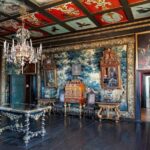
- Rosenborg Castle’s Dutch Renaissance look—and why it matters
- Resistance Museum: history under your feet
- Gefion Fountain and Amalienborg: ceremony with a schedule
- Frederiks Church dome scale and Christiansborg power in one loop
- Opera harbor photos, Børsen dragons, and the Christianshavn canal view
- Danish culture stops: church ships, the Black Diamond library, and Kingens Nytorv
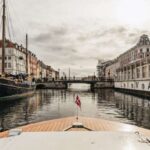
- Langebro and Nyhavn: the classic harbor finale
- Who this tour fits best (and who might not love it)
- Should you book Grand Tour of Copenhagen: Little Mermaid to Royal Castle?
- FAQ
- How long is the Grand Tour of Copenhagen?
- What does the tour cost?
- Where does the tour start and when?
- What’s included in the ticket price?
- Is lunch included?
- Can I cancel for free?
Key highlights to look forward to
- Little Mermaid details you might miss, including why you see more at low tide
- Amalienborg guard change at midday with daily Life Guards participation
- Frederiks Church dome scale, plus the budget story behind its materials
- Christiansborg’s real seat of power and the Folketing meeting halls above the old ruins
- Black Diamond library stop where modern design meets a serious reading culture
- Nyhavn’s layered history, from Swedish prisoner-of-war origins to Andersen’s addresses
A royal-to-harbor route that actually makes sense
This tour isn’t just “see monuments.” It’s a line through Copenhagen’s identity. You move from a myth turned bronze statue at the water’s edge, to the royal family’s ceremonial zone at Amalienborg, and then onward through the city’s political and cultural hubs before finishing at the harbor atmosphere most people remember.
That ordering matters. Early on, you’re dealing with the famous visual hook—the Little Mermaid—and you quickly build context for why Copenhagen looks the way it does: kings, ships, trade, and a city shaped by water.
Other Danish castle tours we've reviewed in Copenhagen

Price and logistics: what you really get for $61.40
At about $61.40 per person for roughly 2 hours 30 minutes (up to 3 hours), you’re paying for three things: transportation between key areas, a host/driver who keeps the day moving, and an audio guide that helps the stops stay coherent instead of becoming random snapshots.
The group is capped at 33 people, which is a sweet spot for a highlights tour. It still feels like a group experience, but it’s not a giant bus herd where you lose track of what matters.
Practical notes that affect your comfort:
- It’s a daytime plan starting 9:30 am.
- It ends back at the Banegårdspladsen 2 meeting point.
- Lunch isn’t included, so plan a snack strategy. If you’re prone to low-blood-sugar grumps, bring something small before you start.
- Pickup is offered, which can be a lifesaver if you’re starting near a hotel or need to time your sightseeing around another commitment (like a cruise day).
Getting oriented fast: Banegårdspladsen pickup and onboard comforts
Your day begins at Banegårdspladsen 2, 1570 København, with pickup available. Even if you start right at the meeting point, the value here is simple: you don’t waste your first morning figuring out transit routes, crossings, and parking headaches.
Once you’re on board, you have:
- WiFi on board
- An audio guide
- A host/driver
That combination sounds small, but it matters. You’ll hear consistent explanations through the day, and it cuts down on the awkward “we’re in front of a thing, now what?” moments. It also helps when you’re hopping between neighborhoods quickly.
The Little Mermaid: more than a photo stop at the water
You’ll hit one of Copenhagen’s biggest magnets early: the Little Mermaid. She’s been sitting on her granite rock since 1913, cast in bronze by Edvard Eriksen. She was made as a gift from Carl Jacobsen, the founder of Carlsberg Brewery.
Here’s a key practical detail: the statue sits on a rock that’s accessible at low tide. So if you love good timing and good photos, this is one of those sights where conditions affect what you can see.
The story layer is also part of why this stop works. The sculpture is based on Hans Christian Andersen’s mermaid tale, and you’ll learn the statue has had a rough ride over the years—attacked and even beheaded more than once, plus a history of vandalism like red paint. More recently, you may notice political graffiti, including the words Free Hong Kong.
That mix—fairytale romance, civic symbolism, and protest graffiti—turns her from a simple postcard into a real piece of Copenhagen conversation.
Tivoli Gardens, an art museum break, and Denmark’s plant world
After you start with the most famous icon, the tour shifts into “slow down your brain” mode.
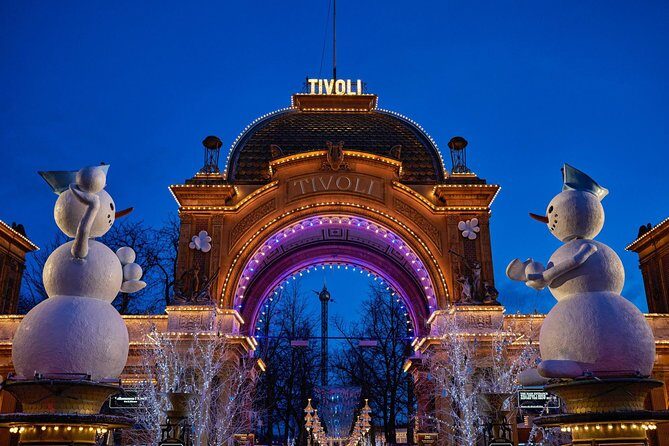
First up is Tivoli Gardens, dating to 1843 and opened by Georg Carstensen. Even if you don’t go inside, it’s a great reminder that Copenhagen’s culture isn’t only about palaces. It’s also about public pleasure: gardens, entertainment, and the idea that leisure is part of civic life.
Then you’ll stop at an art museum with antique sculptures from the Mediterranean area, plus French and Danish works from the 19th century. That’s a useful mix because it supports what you’ll see later in the trip—royal taste, city wealth, and cultural imports.
The standout “hands-on imagination” moment is the State Natural History Museum’s plant collection, which is Denmark’s largest and spread over 10 hectares. You’ll hear about signature spaces like the Palm House, and you’ll also get a museum-and-science pairing that’s unusual for a tour that starts at the seaside. The stop includes things like the Astronomical Observatory / Østervold Observatory and the legacy of Tycho Brahe (1546–1601), plus artworks such as Athena and Marsyas by Myron.
If you’ve ever wondered why Copenhagen feels both formal and curious, this section explains it.


Rosenborg Castle’s Dutch Renaissance look—and why it matters
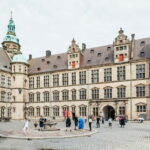
Next comes Rosenborg Castle, built in the Dutch Renaissance style by King Christian IV. Here’s the neat detail: the exterior is said to be the same as the day it was built.
That’s not just trivia. It gives you a sharper sense of continuity. Many European monuments have been altered, expanded, or rebuilt over time. Rosenborg’s preserved outside lets you “read” the original intention more clearly—royal image-making that still stands up in the streets today.
Resistance Museum: history under your feet

You’ll also visit the Danish Resistance Museum, which is housed underground in a new building opened in 2020. The previous building burned in 2013, but many items from the collection were saved.
This is one of those stops where the time investment pays off because it changes how you see everything else. You’re not just learning dates; you’re learning how life worked during German occupation from 1940 to 1945, with attention on the Danish resistance groups’ activities.
It’s a darker counterpoint to the royal buildings. And that contrast is part of why Copenhagen history feels real instead of museum-flat.
Gefion Fountain and Amalienborg: ceremony with a schedule
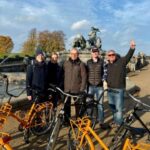
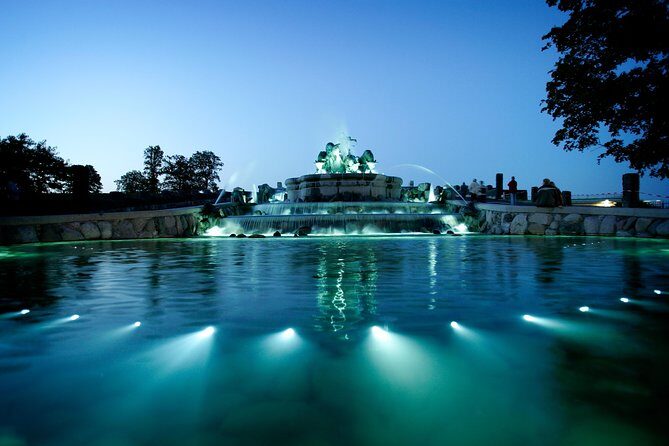
Before you reach the palaces, you’ll see the Gefion Fountain, dedicated to the goddess Gefion. The story is dramatic: she turned her sons into oxen and ploughed the island of Sjælland out of earth from Sweden.
The fountain was paid for by the Carlsberg Foundation and designed by Danish sculptor Anders Bundgaard, sculpted between 1897 and 1899. The basin was completed in 1908, the year the fountain was first activated.
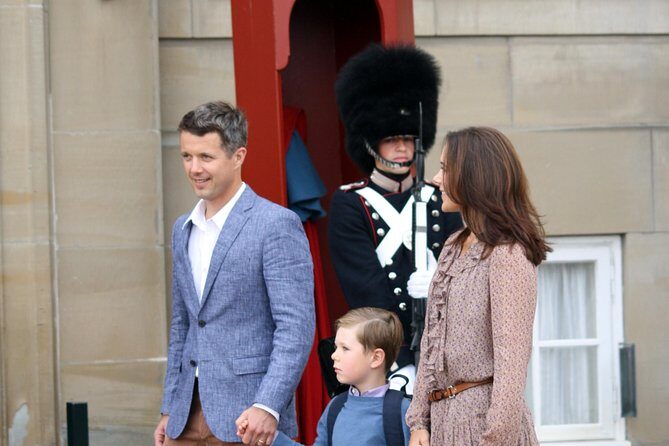
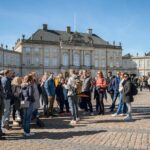
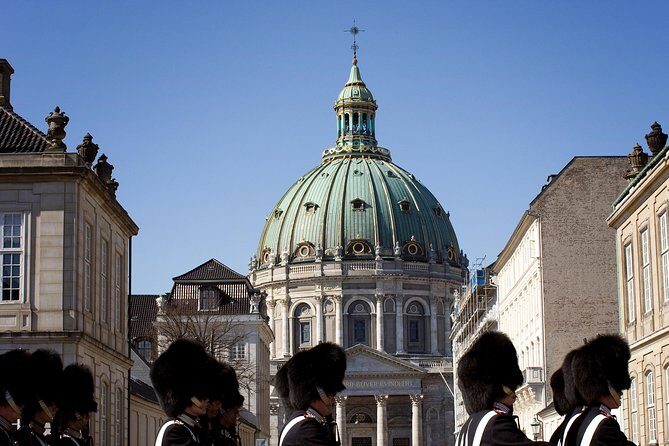
Then you move to Amalienborg Castle for the daily changing of the guard at midday (Life Guards, every day). The stop is short—about 20 minutes—but it’s timed for the real ceremonial beat rather than random “sometime around lunch” waiting.
If you want photos, aim to position yourself early in that window. This is also one of the few places on this route where people tend to hold their attention. The guard change makes it hard to zone out.
Frederiks Church dome scale and Christiansborg power in one loop
At Frederiks Church (the Marble Church), you’ll learn it was commissioned by King Frederik V and designed by Nicolai Eigtved in 1740. The project slowed after Eigtved died in 1754, and construction stopped in 1770. Later, Ferdinand Meldahl took over the design, and because of budget limits, the remaining portion was built using limestone instead of marble.
The dome on top is described as the third largest church dome in Europe—so even if you’re not a church person, you’ll feel the scale.
Then you head to Christiansborg, where the Danish parliament (Folketing) meets. The current building dates to 1928, and beneath it are ruins of an earlier Copenhagen castle built in 1167 by Bishop Absalon.
You’ll also hear about fires and repairs tied to the complex, including a roof fire in 1992 and completion in 1997. And if you’re into the monarchy angle, Christiansborg is where King Frederik X’s throne is connected to ceremonies like the balcony moment when he was installed by Prime Minister Mette Frederiksen. Denmark doesn’t hold coronations, so the political theater is different than in many other European capitals.
Opera harbor photos, Børsen dragons, and the Christianshavn canal view
One of the best “quick break” stops is Det Kongelige Teater – Operaen. You’ll have a chance for photos with harbor views and the nearby Amalienborg palace area.
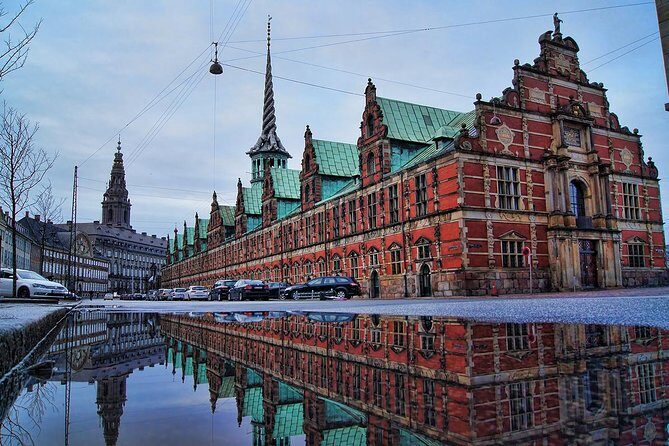
Then you’ll see the equestrian statue of the city’s founder, Bishop Absalon (1902). From there it’s off to Børsen, the old stock exchange building dating back to the 1620s, built by King Christian IV. The spire is made of intertwined dragons’ tails—one of those details you have to see to believe.
After that, the route shifts to Christianshavn, where you’ll overlook canals and the Church of Our Saviour area. This part of the day is great for people who like water views and street-level energy without committing to a full walking tour.
Danish culture stops: church ships, the Black Diamond library, and Kingens Nytorv
As the day continues, the tour doesn’t ignore the “everyday Copenhagen” pieces that make the city feel lived-in.
You’ll pass by Holmens Church. It was built in 1619 in a former anchor forge by King Christian IV. It serves as a parish church and is also the church dedicated and used by the Danish Royal Navy. Inside, there are models of ships hanging from the ceiling—exactly the kind of detail that makes a historic church feel specific, not generic.
Nearby, Kingens Nytorv was commissioned in 1670 by King Christian V and inspired by the Place d’Vendôme in Paris. There’s a statue in the middle of Christian V placed in 1688, described as the oldest royal statue in Copenhagen. The area also connects to the Royal Theatre and Royal Academy of Arts, housed in the former Charlottenborg Palace.
Then comes the modern contrast: the Black Diamond. This library extension opened in 1999, designed by Schmidt, Hammer and Larsen, and built of black granite from Zimbabwe. It’s connected by bridge to the main library building from 1906, and it has spaces like reading rooms plus a music room, along with a cafe and bookshop. This is a good stop when you want one moment of “today Copenhagen” instead of only royal-era architecture.
Langebro and Nyhavn: the classic harbor finale
To finish strong, you’ll end with two iconic harbor experiences.
First is Langebro, a bridge that opens to let large ships pass. It was built in 1954, designed by Kaj Gottlob, and it’s owned by Copenhagen City Council. The bridge is listed as 7 meters (21 feet) high and 35 meters (106 feet) long. There was an earlier wooden bridge version in 1690 built by King Christian V. In 2019, repair work began after concrete damage from rainwater was found, with repair costs described as 307 million Kroner (about €40 million).
Even if you’re not obsessing over bridge engineering, this is a reminder that Copenhagen’s harbor isn’t decorative. It’s functional.
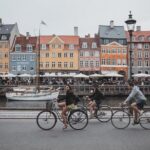
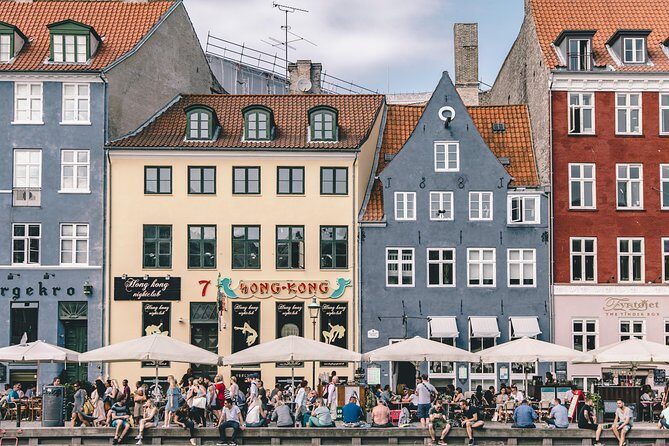
Then you arrive at Nyhavn, the postcard harbor that’s also full of real history. Nyhavn was built between 1671 and 1673 by Swedish prisoner-of-war labor. The oldest house, Nyhavn 9, dates to 1681. The area was rougher in the 1970s but renovated in the 1980s, and today it’s packed with restaurants and pavement cafes.
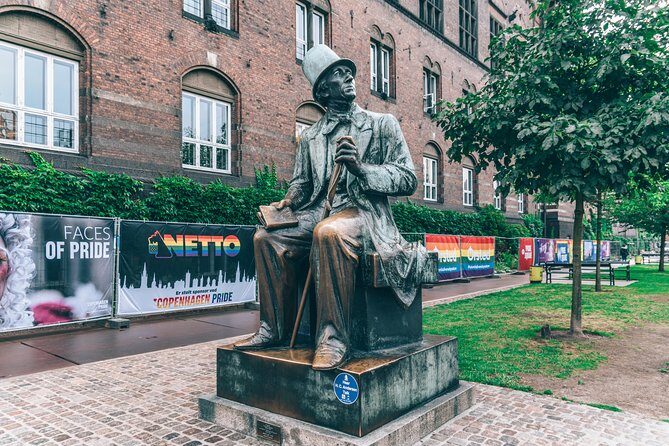
You’ll also hear the literary angle: Hans Christian Andersen lived in Nyhavn at different times—numbers 18, 20, and 67.
Look toward the end of the harbor and you’ll see the memorial anchor placed in 1951, honoring Danish merchant seamen who lost their lives during the Second World War.
This is the perfect ending because it blends beauty with the human details that make cities feel like they belong to actual people, not just eras.
Who this tour fits best (and who might not love it)
This is a great fit if:
- You have limited time in Copenhagen and want the highlights in one organized run.
- You like seeing famous sites and getting a little context so you don’t just snap photos and move on.
- You’re traveling solo, as a couple, or as a small group and want an efficient first pass through town.
This may feel less ideal if:
- You want to spend long hours inside museums or churches.
- You hate quick stops where you need to shift your attention every few minutes.
- You’re hoping for a full deep-history lecture. This is a tour of sights plus useful interpretation—not a multi-hour museum crawl.
Should you book Grand Tour of Copenhagen: Little Mermaid to Royal Castle?
Yes, if you want a smart first day plan. For the money, you’re getting a real route, transport between neighborhoods, and a mix of royal ceremony, serious history, and harbor atmosphere that’s hard to stitch together on your own when time is tight.
I’d skip it only if you already know you’ll spend most of your trip doing long museum visits and slow wandering. If that’s your style, you’ll want to build your own schedule and linger.
FAQ
How long is the Grand Tour of Copenhagen?
The tour runs about 2 hours 30 minutes, with some schedules taking up to 3 hours.
What does the tour cost?
The price is listed as $61.40 per person.
Where does the tour start and when?
It starts at Banegårdspladsen 2, 1570 København, Denmark, with a start time of 9:30 am. The tour ends back at the same meeting point.
What’s included in the ticket price?
Included features are an air-conditioned vehicle, WiFi on board, an audio guide, and a host/driver.
Is lunch included?
No. Lunch is not included.
Can I cancel for free?
Yes. You can cancel up to 24 hours in advance of the experience start time for a full refund.