REVIEW · COPENHAGEN
Copenhagen: Amalienborg Palace Museum Entry Ticket
Book on GetYourGuide →Operated by Kongernes Samling / The Royal Danish Collection · Bookable on GetYourGuide
Royal rooms, saved like time stopped. That alone makes Amalienborg Palace Museum a smart Copenhagen stop. I especially like the Fabergé Chamber and the Danish-Russian royal connections shown through real objects. I also love how the rooms are presented as if the family just stepped out—so it feels more personal than a typical history display.
For some people, the trade-off is simple: it’s a focused palace museum, and at $19 you might feel the “must-see” part is quicker than you’d expect. If you’re the type who wants hours of galleries and constant crowds, you may want to pair it with time around Amalienborg Square.
Key points worth your attention
- Fabergé Chamber: see Russian jewelry and pieces tied to Danish and Russian royal links
- Rooms preserved as lived-in spaces: Christian X’s study and the dining room look staged like the day they left
- Gala Hall scale: 8-meter ceiling height, gilding, and palace-square views
- Christian X and Queen Alexandrine: their dining room is presented in near original condition
- Kids have support: audio guidance includes a children-focused route in the museum
- A temporary royal timeline: access includes the Frederik X exhibition during its run
In This Review
- Amalienborg Palace Museum entry ticket: what you’re really buying
- Where the museum entrance is and how to avoid ticket headaches
- Fabergé Chamber: the object-focused room that makes the monarchy feel real
- Christian X’s dining room: living space as historical evidence
- Queen Louise’s private salon: the personal side of royal networks
- Gala Hall: 8 meters of gilding and palace-square views
- The Frederik X exhibition: your ticket’s bonus timeline
- How long it takes: a practical pacing plan
- Price and value: $19 for a palace museum that’s intentionally focused
- Practical rules: bags, pets, food, and why they affect your day
- Should you book this Amalienborg Palace Museum ticket?
- FAQ
- How much does the Amalienborg Palace Museum entry ticket cost?
- How long is the ticket valid, and do I need a start time?
- Is a guided tour included?
- Where is the museum entrance at Amalienborg Square?
- What do I need to do before going upstairs?
- What happens if I arrive more than 20 minutes late?
Amalienborg Palace Museum entry ticket: what you’re really buying
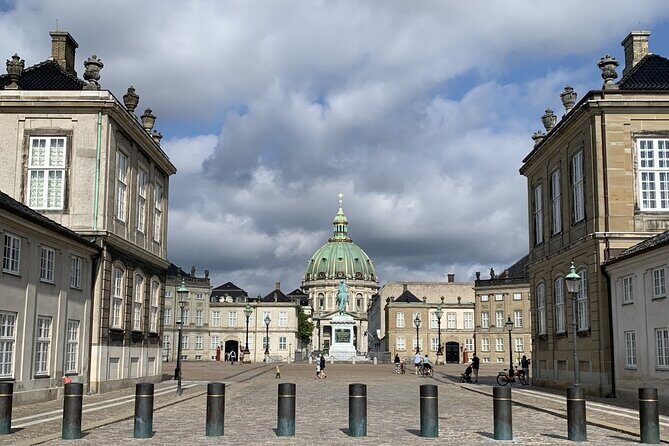
This ticket is for the Amalienborg Palace Museum, located at Amalienborg in central Copenhagen. Amalienborg is Denmark’s famous palace complex made up of four palaces, and the museum is connected to Christian VIII’s Palace. It’s a good choice if you want monarchy history in a place where you can actually look at the rooms and objects.
Included with your entry you get access to the museum and all exhibitions. There’s no guided tour included, which is great if you like to go at your own pace. It also means you’ll spend most of your visit looking, reading, and using the museum’s audio-style guidance rather than following a group schedule.
The museum’s central promise is straightforward: you walk through about the last 150 years of the Danish monarchy and meet the people behind the crown. It’s not just portraits and dates. You see daily-life spaces, like studies and dining rooms, plus standout themed rooms such as the Fabergé Chamber.
Where the museum entrance is and how to avoid ticket headaches
Start by finding the right entrance. If you enter Amalienborg Square from Frederiksgade/the Marble Church, the museum entrance is in the first building to your left. That’s an easy detail to miss when you’re tired from transit or walking, so I’d use it as your quick checkpoint.
Before you go upstairs, you’ll need to go downstairs to the cashier to present and scan your online ticket. This is the step that usually causes the most confusion for people who show up and try to go straight in.
Timing matters. Your ticket is valid for 1 day, but you should also pay attention to the starting times shown when you check availability. If you arrive more than 20 minutes late, your ticket is no longer valid—so I’d plan for Copenhagen walking time and a calm buffer.
If you’re using a phone ticket, expect that you may need to exchange the QR code for the actual ticket before going upstairs. Once you’re in the right flow, the visit moves smoothly.
Other Danish castle tours we've reviewed in Copenhagen


Fabergé Chamber: the object-focused room that makes the monarchy feel real

One of the museum’s biggest selling points is the Fabergé Chamber. This is where you see hand-crafted Russian jewelry from 1860 to 1917, with a special focus on the close ties between the Danish and Russian monarchies.
Even if you’re not a jewelry nerd, this room works because it connects big politics to tangible objects. You get a clear sense that royal families weren’t separate bubbles. They were linked through relationships, ceremonies, and shared status—right down to how pieces were made and presented.
A highlight mentioned in the museum description is the Fabergé coronation brooch, created for the coronation of Tsar Nicholas II. When you see a piece like that in person, it’s easier to understand why these courts cared so much about display and symbolism. It’s monarchy as messaging, not just mythology.
Christian X’s dining room: living space as historical evidence

Next, focus on the rooms connected to Christian X and his family. The dining room for Christian X and Queen Alexandrine is presented almost exactly as it appeared when they lived there from 1899 until their deaths in 1947 and 1952. That near-original feel is a big part of why the museum is worth it.
What I like about a room like this is that it changes the way you think about monarchy. Instead of only reading about power, you’re seeing a daily-life setting. A dining room also makes you think about routine: who sat where, what mattered, what was served, and how formal life shaped everyday choices.
Then there’s Christian X’s study, preserved as if he had just left. The description notes dark, heavy furnishings and dark walls, typical of a gentleman’s study around 1900, and it’s clear the room belonged to an officer. If you pay attention to these design cues—rather than rushing past them—you’ll get more out of the museum with less effort.
Queen Louise’s private salon: the personal side of royal networks
The museum also includes Queen Louise’s private salon, presented with an interior style from around 1895. This room is a nice counterbalance to the formal rooms. It shows decoration choices and personal space rather than only ceremonial settings.
Look for the paintings and the framed photographs on the tables. Those details are described as evidence of her rich family life and her close ties across Europe. In other words: even when the monarchy is treated like a system, there were real people with relationships and circles.
This is also a room where you can slow down. The salon doesn’t just say “royals were important.” It shows what they surrounded themselves with and hints at how travel, politics, and family life overlapped.
If your visit time is tight, I’d still make room for the salon. It’s one of the places where the museum feels less like a textbook and more like a window into personality.
Gala Hall: 8 meters of gilding and palace-square views
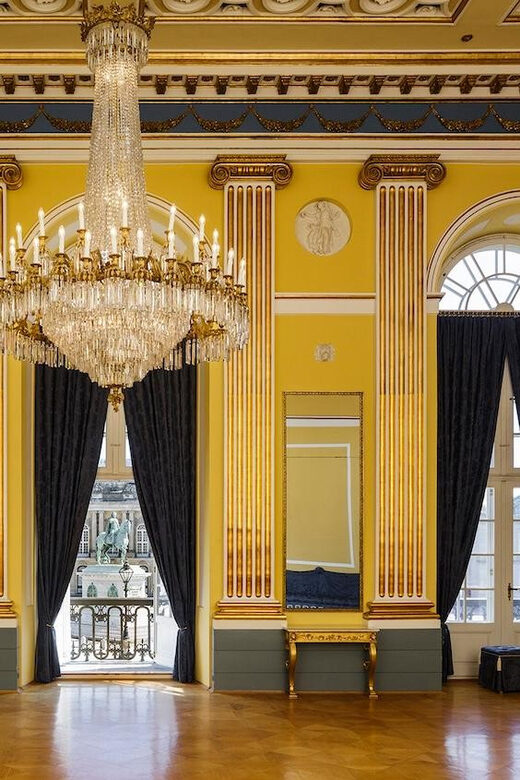
The museum’s showpiece room is the Gala Hall. The ceiling height is listed at 8 meters, and you’ll see lavish gilding plus a view toward the palace square. This is the kind of room that helps you understand why palaces weren’t built only for comfort—they were built to project status.
The interior design is credited to artist Nicolai Abildgaard, commissioned in 1794 by the royal family. The sculptor Bertel Thorvaldsen created the sculptures. Those names matter because they anchor what you’re seeing to real Danish art history.
When you’re in this hall, give yourself a minute to look up. The museum description is clear that the room ranks among the most impressive rooms in Denmark, and scale is a big part of that. It’s also a good visual break from smaller rooms like the study and salon.
Other Amalienborg Palace tours we've reviewed in Copenhagen

The Frederik X exhibition: your ticket’s bonus timeline
Your entry ticket includes access to the temporary exhibition FREDERIK X: King of Tomorrow. The museum notes it ran March 22 to September 8, 2024 and marks the historical succession of the Danish throne on January 14.
This exhibit uses a mix of media: photographs, objects, video clips, paintings, and sound. That variety matters because it keeps the story from becoming only text panels. It also helps you connect one king to the larger idea of how monarchy continues changing with time.
Since the dates are tied to 2024, the best move is to treat this as a “check what’s on today” bonus. Your ticket includes the exhibitions currently listed for your visit time, but for this specific one you’ll want to confirm whether it’s still running during your dates.
How long it takes: a practical pacing plan
Most people won’t need a full half day. The museum description frames it as a focused walk through royal rooms, and reviews back up that it’s commonly around 45 minutes to an hour for the museum route.
A smart pacing plan is:
- Start with the themed rooms you care about most (Fabergé Chamber and one preserved room, like the study)
- Then move through the dining room and salon at a comfortable reading pace
- Save the Gala Hall for when you need a visual “reset”
If you’re visiting with kids, the museum has support. One of the strongest review signals is that audio guidance for children is available in the museum sections, and that helps families feel less lost and less bored. That also means you can avoid turning the visit into a constant explanation session.
Also note what you can’t bring: baby strollers are not allowed, and large bags, large purses, and backpacks aren’t allowed inside. If you’re coming with a family, you’ll want to travel light so the logistics don’t eat your visit time.
Price and value: $19 for a palace museum that’s intentionally focused
At $19 per person, Amalienborg Palace Museum sits in a mid-range zone for Copenhagen. Here’s how I’d judge the value for you.
If you care about monarchy history and want to see preserved rooms—especially Christian X’s study and the dining room—then the price makes sense. You’re paying to walk through carefully staged spaces, plus a standout object display (the Fabergé Chamber) and major decorative room (the Gala Hall).
On the other hand, if you expect a huge museum campus with endless galleries, you might find the experience shorter than you’d like. That’s not a flaw—it’s a design choice. The museum is meant to be concentrated and memorable, not sprawling.
So the best “value fit” is someone who likes:
- rooms and objects more than pure lecture-style exhibits
- monarchy as culture and design, not just power
- a visit that’s easy to plan into a Copenhagen day
Practical rules: bags, pets, food, and why they affect your day
Copenhagen museums are usually strict about space, and this one follows the rulebook closely. The site lists key “not allowed” items:
- Oversize luggage
- Baby strollers
- Food and drinks
- Luggage or large bags
- Pets (assistance dogs allowed)
- Bags (you should expect limitations similar to “no large bags”)
This matters because palace museums often have narrow circulation and security checks. If you show up with a backpack, it can delay entry and create a scramble at the entrance.
The good news: the museum is wheelchair accessible, so mobility shouldn’t be a barrier to entry. If you’re planning around accessibility, I’d still plan extra time for cashier processing downstairs.
One last tip: because arrival later than 20 minutes can invalidate tickets, you’ll want to treat bag/ID checks as part of your schedule rather than an afterthought. Build in a little slack.
Should you book this Amalienborg Palace Museum ticket?
I’d book if you want an efficient, high-impact look at the Danish monarchy in a real palace setting. The combination of preserved rooms, the Fabergé Chamber, and the Gala Hall gives you both human-scale history and big architectural drama. It’s also family-friendly thanks to the presence of children-focused audio guidance.
I’d hesitate if you’re looking for a long, sprawling museum experience or if you hate object displays and careful room-by-room walking. In that case, you might feel the museum is too short for the price.
If you’re trying to choose between “palace rooms” and “city walking,” this ticket is a great middle ground: one museum stop that fits cleanly into a Copenhagen day, plus you’ll already be standing right in the heart of Amalienborg Square.
FAQ
How much does the Amalienborg Palace Museum entry ticket cost?
The entry ticket is priced at $19 per person.
How long is the ticket valid, and do I need a start time?
The ticket is valid for 1 day. You’ll need to check availability to see starting times.
Is a guided tour included?
No. The ticket includes entry and access to exhibitions, but it does not include a guided tour.
Where is the museum entrance at Amalienborg Square?
If you enter Amalienborg Square from Frederiksgade/the Marble Church, the entrance is in the first building to your left.
What do I need to do before going upstairs?
Before your visit, you’ll need to go downstairs to the cashier to present and scan your online ticket.
What happens if I arrive more than 20 minutes late?
If you arrive more than 20 minutes late, your ticket will no longer be valid.