REVIEW · COPENHAGEN
Copenhagen: MACA Art Museum Entry Ticket
Book on GetYourGuide →Operated by maca museum · Bookable on GetYourGuide
Banksy in Copenhagen sounds like a wish list. At MACA Art Museum, you get street art history plus major 20th/21st-century names, all set in the Nyhavn waterfront port area. I like that the museum clearly points you to specific shows like Banksy’s early methods, and I also like the convenience of downloadable audio guides and coat/bag storage—but you should note there are no headphones for sale.
This ticket is a smart pick if you want a modern-art day that also plugs you into Copenhagen’s classic scene: canals, bars, and the postcard streets right outside. And since Amalienborg Royal Palace is just a few steps away, you can keep the momentum after the museum without turning your day into a logistics puzzle.
If you’re planning a full day, I’d build in time to slow down. The museum’s audio guide matters because street art can move fast, and the audio is built to help you read the ideas without squinting at labels.
In This Review
- Key things that make this ticket worth your time
- Entering MACA in Nyhavn: a museum that sits inside real Copenhagen
- Banksy & Street Art: The Early Years is the main event
- Graffiti from 1980s/1990s New York: names you can trace through the walls
- More than street art: where Basquiat, Warhol, KAWS, Haring, Hirst, and Kusama fit in
- Audio guides you can download: how to use them without getting stuck
- Café courtyard, candlelight setting, and a Nyhavn finish
- Amalienborg Royal Palace and Hans Christian Andersen: two easy add-ons right nearby
- Price and value for $24: what you get beyond “just entry”
- Who this ticket suits best
- Should you book this MACA Art Museum entry ticket?
- FAQ
- Where is MACA Art Museum in Copenhagen?
- How much is the MACA Art Museum entry ticket?
- How long is the ticket valid?
- What’s included with the entry?
- Is an audio guide available in English?
- Do I need headphones for the audio guide?
- Where does the activity start and end?
Key things that make this ticket worth your time

- Banksy’s Early Years: rare drawings, stencils, photos, and paintings that show how his work actually formed
- Major street-art lineups: a 1980s/1990s New York graffiti focus with names like Lady Pink and Dondi
- Big-name modern icons too: Banksy, Basquiat, Warhol, KAWS, Haring, Hirst, and Kusama appear in the broader museum mix
- Nyhavn location: museum time and waterfront time are in the same pocket of Copenhagen
- Audio guides in many languages: included as a downloadable option to your smartphone
Entering MACA in Nyhavn: a museum that sits inside real Copenhagen
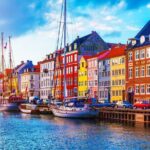
MACA Art Museum is right in central Copenhagen, in the historic waterfront trading port of Nyhavn. That location is more than a pin on a map. It means you’re not just walking from museum to hotel. You’re dropping into the part of Copenhagen where people actually hang out—canal views, restaurants, and bars.
I like how the ticket ends where it starts, which nudges you to plan your day in blocks. Do the museum first, then switch modes. After the galleries, it’s easy to wander Nyhavn on foot and make the rest of your afternoon feel like Copenhagen, not a checklist.
One small consideration: the audio experience is built around downloading guides to your smartphone. If your phone battery is shaky or your storage is tight, you’ll want to sort that out before you arrive—because the museum’s included guide isn’t something you plug in with store-bought headphones.
Other museums and attractions we've reviewed in Copenhagen



Banksy & Street Art: The Early Years is the main event
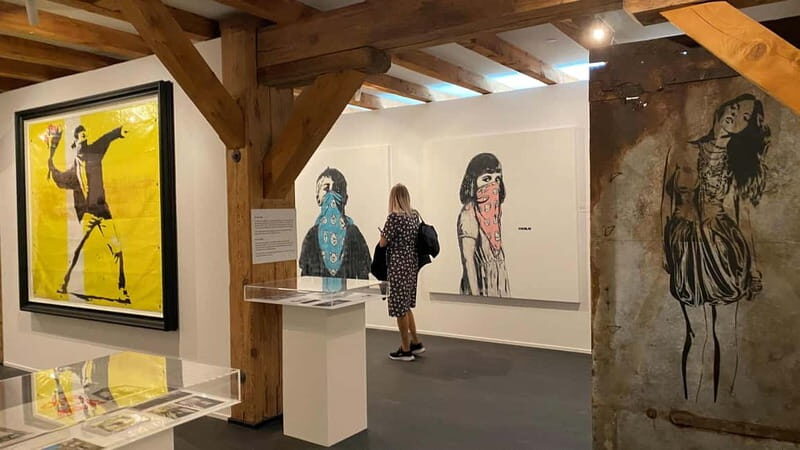
MACA presents Banksy & Street Art: The Early Years, and it’s the kind of show that rewards careful looking. Instead of treating Banksy like a finished product, it focuses on early working methods and creative process—using rare drawings, stencils, photographs, and paintings.
What makes this valuable for you is the shift in perspective. Street art can feel like a one-hit punch: quick, bold, gone. This exhibit slows the story down. You’re shown the steps that lead to the final pieces, so you start noticing how ideas evolve from rough form into something public.
You’ll also appreciate that the museum frames this early stage with actual materials, not just explanations. Seeing stencils and drawings in the same context as finished work helps you understand why certain shapes and gestures show up again and again.
If you’re a Banksy fan, you likely know the public images. What you may not expect is how much you’ll enjoy seeing the behind-the-scenes logic—how the process shapes the message.
Graffiti from 1980s/1990s New York: names you can trace through the walls

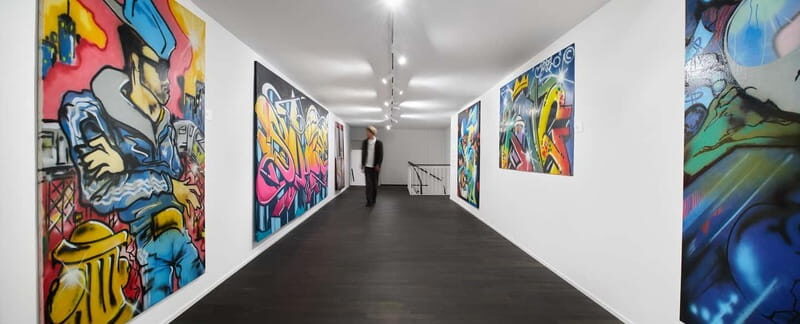
Alongside the Banksy focus, MACA highlights street artists tied to the 1980s and 1990s New York graffiti art scene. The museum points you to recognizable names such as Futura 2000, Dondi, Lady Pink, and Shepard Fairey, plus artists like STIK, VHILS, XOOOOX, Bambi, and Retna.
Here’s the practical part: if you don’t know much about this world, the show structure still helps. You’re not left with a vague “street art overview.” You’re given an era and a scene. That makes it easier to connect styles to time and place, and easier to compare techniques as you move gallery to gallery.
If you already know a few of these artists, you’ll probably like the way MACA groups them into a broader picture. You can spot similarities in visual language, then notice how each artist pushes the idea in a different direction—tagging, lettering, stenciling, and image-driven work.
The drawback isn’t the content. It’s time. If you rush, street art can feel like “cool images” instead of a set of ideas with lineage. Plan to slow down enough to let the art history land.
More than street art: where Basquiat, Warhol, KAWS, Haring, Hirst, and Kusama fit in

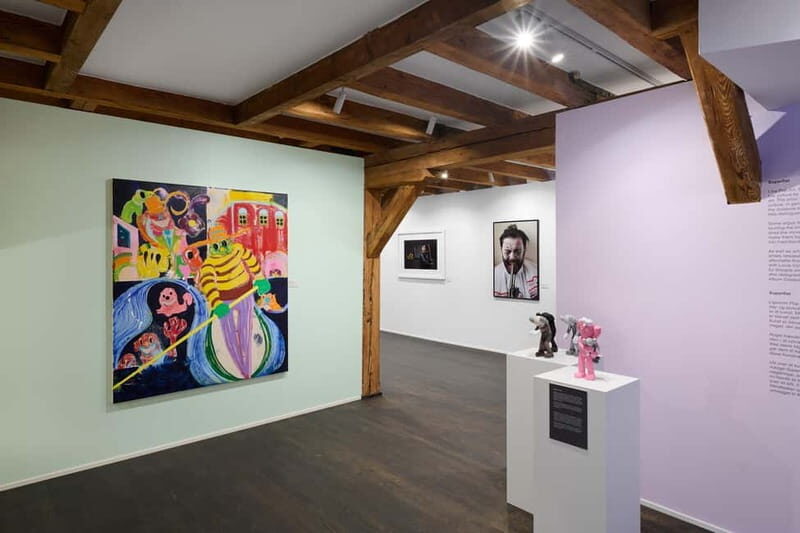
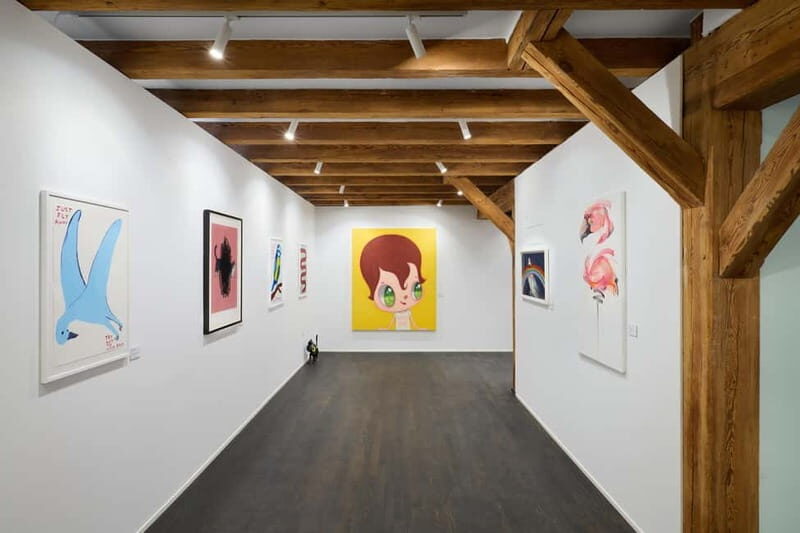
The ticket description positions MACA as a place to see some of the greatest artists of the 20th and 21st centuries, including Banksy, Basquiat, Warhol, KAWS, Haring, Hirst, and Kusama. In practice, this matters because it changes the audience you can bring.
You can go even if you’re not a street-art specialist. Someone who loves pop art will recognize Warhol. Someone drawn to contemporary conceptual work might find Kusama or Hirst’s presence meaningful. And if your group splits—one person into street style, one into modern art icons—MACA gives you a shared foundation.
My take: this mix is part of the value. At many museums, you either get a niche show or a general overview. Here, the ticket is built to make street art feel like an important thread of modern art, not a side attraction.
Audio guides you can download: how to use them without getting stuck
Your entry includes downloadable exhibition audio guides. They’re available in a wide set of languages, including English, Danish, German, Spanish, Italian, Japanese, Korean, and many others.
Two practical points:
- You’ll need to download the audio to your smartphone. It’s included, but it’s not presented as a set of pre-loaded devices inside the museum.
- Headphones are not available for purchase. So if you arrive without a way to listen, you’ll be stuck reading silently while everyone else gets the full audio layer.
For me, audio guides are at their best when they help you understand what you’re looking at while you’re still in front of it. Use it like a tool, not like homework. If a section feels confusing, press play. If a piece feels obvious, skip ahead. This keeps the museum from turning into a long lecture.
Also, the ticket includes coat and bag storage. That helps you move without juggling stuff, which matters when you’re visiting in a city that’s easy to walk around.
A few more Copenhagen tours and experiences worth a look



Café courtyard, candlelight setting, and a Nyhavn finish
MACA doesn’t force you to choose between art and comfort. During spring and summer months, there’s access to a private outdoor courtyard cafe. In winter months, the museum describes a cozy candlelight setting inside.
Even if you don’t plan a long sit-down, having an option to take a break changes your pacing. Street art shows can be visually intense, and a quick pause keeps you from burning out halfway through.
And because you’re in Nyhavn, your day can naturally extend outside the museum. After you finish the galleries, you can enjoy the waterfront atmosphere—bars and restaurants along the famous canal streets. The museum area also connects you to nearby sights, so you can keep your legs moving without a long transit plan.
Amalienborg Royal Palace and Hans Christian Andersen: two easy add-ons right nearby
One of the smartest reasons to book MACA is its neighbors. Amalienborg Royal Palace is just a few steps from the museum. That makes it easy to add a royal stop after you’ve finished your art time.
The palace is the official residence of HM King Frederik X, HM Queen Mary, and Her Majesty Queen Margrethe II. If you like Denmark’s identity beyond museums—symbols, architecture, and royal storylines—this nearby connection helps your day feel complete.
The museum area also ties in with Hans Christian Andersen. You can visit his home of the fairy tale author in the same Nyhavn area while you’re out exploring.
I like this pairing because it turns your day into a Denmark sampler: contemporary street art in one place, Danish storytelling and royal presence in the next.
Price and value for $24: what you get beyond “just entry”
At $24 per person, this ticket sits in a mid-range zone for Copenhagen attractions. The value isn’t only that you can enter. You also get:
- entry to MACA museum and access to all exhibitions
- downloadable exhibition audio guides across many languages
- coat and bag storage
- the ability to skip the ticket line
The line-skipping detail is small, but in a city where you’ll likely be walking and timing things carefully, it helps. It also means you can focus on the museum experience instead of losing minutes at the door.
The other value angle is the content density. You’re not buying one art bubble. You’re getting a major Banksy-focused show plus broader street art coverage and references to big modern names. For a one-day visit, that mix makes your ticket feel like a “whole museum day,” not a quick stop.
If you’re comparing costs, remember the audio guide is included. In many museums, audio becomes an extra expense. Here, it’s part of the package, assuming you’re set up to download it to your smartphone.
Who this ticket suits best

This ticket is a strong match if you:
- want a Copenhagen day that mixes modern art with classic waterfront walking
- like street art but also want context through early methods and a specific era
- have mixed interests in your group and need something that can satisfy different tastes
- want a plan that’s easy to extend into Nyhavn, Amalienborg, and Hans Christian Andersen’s area
If you hate using a smartphone for audio or you don’t plan to bring headphones, the experience might feel incomplete. Since headphones aren’t sold at the museum, it’s worth preparing before you go.
Should you book this MACA Art Museum entry ticket?
Book it if you want a clear, art-nerd friendly structure to your day: Banksy’s early process as the centerpiece, plus a New York graffiti era section, all in a central location that makes it easy to add sightseeing afterward.
Skip it only if you’re planning a very short stop and you tend to rush through exhibits. This museum rewards a slower visit, and the audio guide is a big part of how the shows land. Also, if you arrive without headphones and you don’t want to use earbuds, you may find the audio guide less useful.
Overall, for $24, the combination of modern-art names, street art focus, and Nyhavn’s location makes it a solid value choice for a Copenhagen day.
FAQ
Where is MACA Art Museum in Copenhagen?
MACA Museum is located in the center of Copenhagen, in the historic waterfront trading port of Nyhavn. Amalienborg Royal Palace is just a few steps away.
How much is the MACA Art Museum entry ticket?
The price is listed as $24 per person.
How long is the ticket valid?
The ticket is valid for 1 day. You should check availability to see starting times.
What’s included with the entry?
Entry includes access to all exhibitions, downloadable exhibition audio guides (download to your smartphone), and coat and bag storage.
Is an audio guide available in English?
Yes. Audio guides are included and available in many languages, including English.
Do I need headphones for the audio guide?
Headphones are not available for purchase. The audio guide is downloadable to your smartphone, so you’ll need your own way to listen.
Where does the activity start and end?
It starts at the MACA Museum entrance and ends back at the meeting point (the same location).