REVIEW · COPENHAGEN
Walking tour – Copenhagen Old Town & Tivoli Park included
Book on Viator →Operated by Scandinavian Guides · Bookable on Viator
Copenhagen can feel big. This 2-hour walk helps you hit the best parts of Old Town and end in Tivoli Park without wasting time. You get a local-style guide to connect the dots between squares, canals, royal buildings, and the cathedral, with Tivoli entry included.
Two things I really like: you get time-saving flow between major sights, and the guide handles the pacing so you can focus on photos and stories. The other big win is Tivoli—your included ticket is built to get you inside faster, so you’re not stuck waiting while the fun goes on without you.
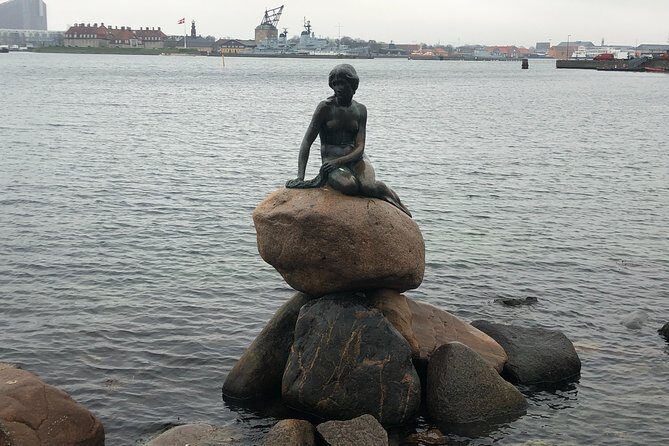
One drawback to consider: it’s not the full city tour, and it specifically leaves out The Little Mermaid. Also, some interior viewing details depend on opening hours at the moment you’re there, especially around the Church of Our Lady area.
In This Review
- Key highlights you should care about
- Copenhagen in two hours: what this Old Town and Tivoli tour gives you
- Starting at Højbro Plads and King’s New Square’s big “city planning” moment
- Nyhavn canals: a postcard stop with actual street-level context
- Amalienborg at 12:00: timing the Royal Guard change correctly
- Rosenborg Castle’s role in the royal route
- Church of Our Lady (Copenhagen Cathedral): Thorvaldsen and major moments
- Old Market and Nytorv: Caritas Well and squares rebuilt after catastrophe
- Radhuspladsen, Strøget, and the city’s long shopping spine
- Tivoli Park entry: how to use the last stop like a pro
- Price and value: is $79.30 worth it?
- Who should book this Copenhagen Old Town and Tivoli tour?
- Should you book this Copenhagen Old Town and Tivoli tour?
- FAQ
- How long is the walking tour, and when does it start?
- What is the price per person?
- What do I get included with Tivoli Park?
- Does the tour include The Little Mermaid?
- Where does the tour start and end?
- What language is the tour offered in?
- What time is the Royal Guard changing at Amalienborg?
- How big is the group?
- Is there free cancellation?
Key highlights you should care about
- Skip-the-line style Tivoli entry so you can spend more time enjoying the park
- Royal Guard change at 12:00 noon at Amalienborg, a very Copenhagen moment
- A smart Old Town route that moves from squares and canals to major landmarks on foot
- Cathedral stop with Thorvaldsen sculptures (Christ and the apostles) explained in context
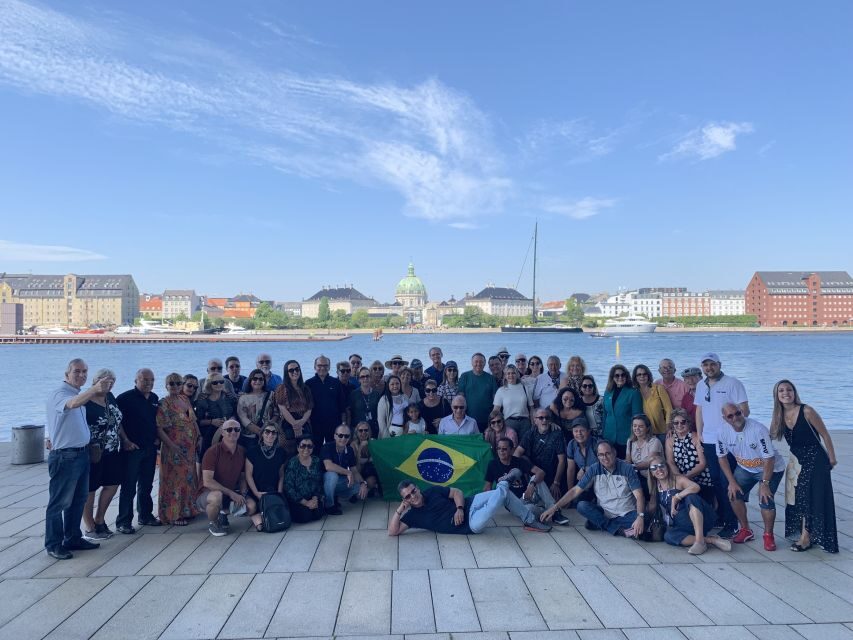
- Small group size (max 21) for a more relaxed walk and better guide attention
Copenhagen in two hours: what this Old Town and Tivoli tour gives you
This is built for the kind of trip where you land, check out, and somehow still want to feel like you experienced the city. The route is short enough to stay sane, but it’s packed with recognizable Copenhagen anchors.
Your tour is a guided walking experience in English, starting at 10:00 am and lasting around 2 hours. You’ll walk through central old-city areas with stops that focus on architecture, power, trade, and royal life. Then you end at Tivoli, where you can linger based on the park’s opening hours.
If your travel style is: show me the essentials and give me context, this works well. You don’t just get names and dates. You get the why behind the squares, why certain buildings face the way they do, and how the city’s story moved over time.
Other Tivoli and Round Tower experiences we've reviewed in Copenhagen


Starting at Højbro Plads and King’s New Square’s big “city planning” moment
You meet at Højbro Plads, right in the center. That’s a good start point because it’s easy to reach and it keeps you off the “wrong end” of Copenhagen.
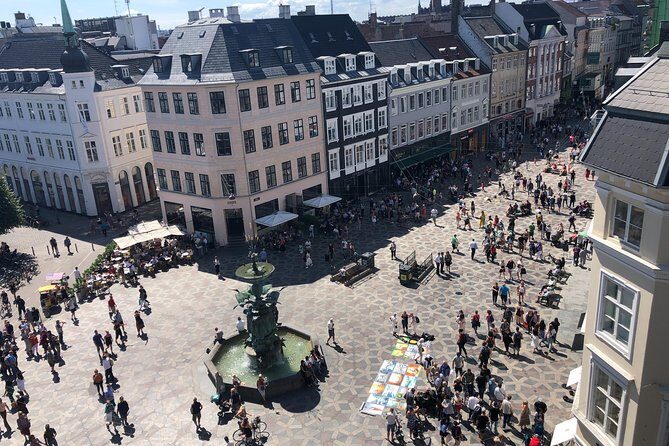
From there you head to Copenhagen King’s New Square, the large open space tied to Christian V’s 1670 city expansion. This stop is more than a photo moment. The guide points out how the square helped shift the city’s heart away from the older medieval area around Gammeltorv. In other words, you’re standing at a clue about how Copenhagen became a modern-style capital.
You’ll also get a practical orientation lesson. Several major buildings face the square, including the Royal Danish Theatre (from 1874), Charlottenborg Palace (1671), and Thott Palace (1683, now the French Embassy). You’ll even see commercial landmarks like Hotel d’Angleterre and Magasin du Nord. It’s a quick way to understand that the city center is a blend of culture, politics, and shopping.
My advice: take a minute to look around instead of just filming. The whole point is that you’re learning how the city is arranged.
Nyhavn canals: a postcard stop with actual street-level context
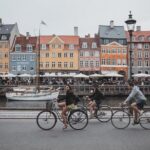
Next up is Nyhavn, the canal scene everyone recognizes from photos. But the tour’s value here is the context. The guide helps you see how this canal area functions as a historic “front door” for the city, rather than a single picturesque corner.
Nyhavn is one of those places where the details are the experience: the waterline views, the street angles, and the way the buildings hold the canal space. It’s easy to stroll through and call it done. On a guided walk, you get a little more meaning attached to what you’re looking at.
One practical tip: if you’re the type who likes to take photos at your own pace, this is a good stop to slow down. The walking segments are short, so you can afford a couple of minutes of extra time here.
Amalienborg at 12:00: timing the Royal Guard change correctly
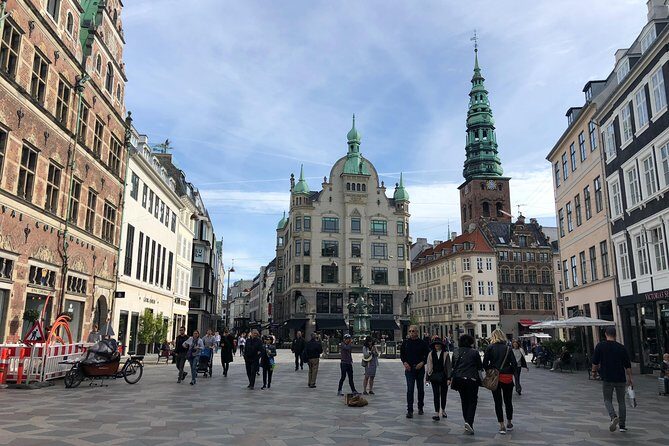
Your tour includes the royal-core area around Amalienborg Palace, and this is where Copenhagen turns into ritual.
Amalienborg is famous for the Royal Guard changing of the guard every day at 12:00 noon. The guard doesn’t just appear on cue. You’ll hear the route: the guards march from their barracks in Gothersgade by Rosenborg Castle, move through Copenhagen’s streets, and end at Amalienborg.
Even if you’re not a royal-history nerd, this matters because it turns the city into a stage. You’re watching a living tradition tied to the locations you’re walking past. It’s one of the easiest “I’m actually in Copenhagen” moments you can catch.
Amalienborg itself is built from four identical-style palace blocks, each tied to a different royal family role: Christian VII’s Palace (also called Moltke’s Palace), Frederik VIII’s Palace, Christian IX’s Palace, and Christian VIII’s Palace. The square has a statue of King Frederik V (from 1771) anchoring the view. If you want a quick win, this is it: clear sights, clear story, and a hard schedule moment at noon.
Real-world note: guard timing is the anchor, but crowds happen. If you care about a great photo spot, arrive with the group and don’t wander off too far.
Rosenborg Castle’s role in the royal route
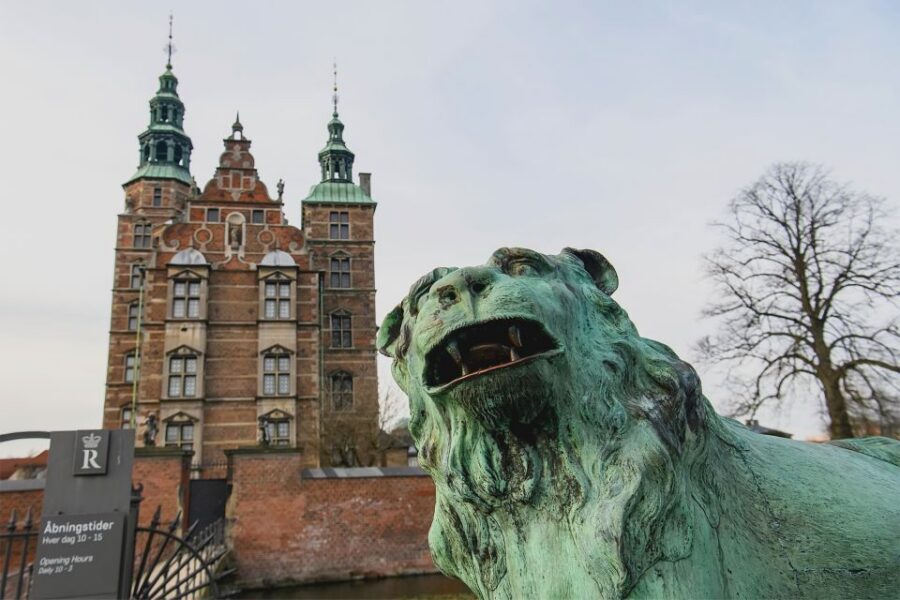
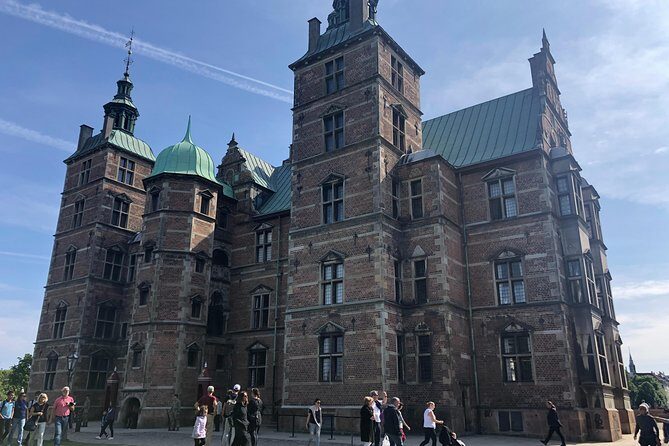
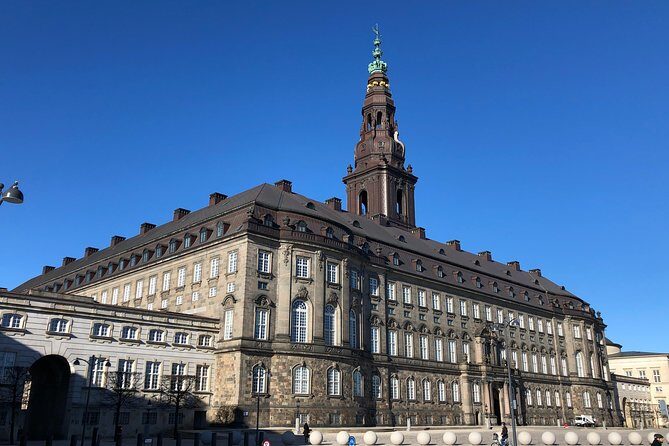
Rosenborg Castle enters the story as another key piece of royal architecture and geography. The tour frames it as a Renaissance castle originally built as a country summerhouse in 1606, associated with Christian IV.
You might not spend a long time here inside, but the stop helps connect two things:
1) why the royal route makes sense geographically, and
2) how Copenhagen’s royal landmarks cluster across the central city.
This is useful if you plan to explore afterward. After your tour, you’ll know where to aim if you want to keep walking on your own.
Other walking tours we've reviewed in Copenhagen






Church of Our Lady (Copenhagen Cathedral): Thorvaldsen and major moments
The Church of Our Lady, also known as Copenhagen Cathedral, is a big cultural stop. The building you see today follows a Neo-Classicist design by C.F. Hansen. The foundation stone dates to 1817, and the solemn consecration took place in 1829.
What makes this stop more than a history lecture is how the tour explains the site layers. This location served as a church long before this current building, with an earlier church around 1200 associated with Bishop Absalon’s foundation in Copenhagen. So you’re not just looking at a structure; you’re standing on a long-running “holy ground” site.
Inside, the tour focuses on Thorvaldsen’s sculptures: Christ and the twelve apostles. The guide highlights details like Christ’s arms in a welcoming gesture and the replacement of Judas with Paul. That’s the kind of information that helps your brain actually lock onto what you’re seeing instead of treating it like decorative stone.
You’ll also hear about major events tied to this cathedral. Examples include:
- the marriage of Margrethe (later Queen Margrethe I) in 1363
- Søren Kierkegaard’s funeral in 1855
- the 2004 wedding of Crown Prince Frederik and Mary Donaldson
And there’s even the wartime chapter: in 1807, the cathedral burned after an incendiary rocket during the British bombardment.
One caution: access can affect what you get out of this stop. If the cathedral interiors or the chapel area linked with Thorvaldsen’s works aren’t available at your exact visit time, you may still get exterior context but miss some sculpture-focused viewing. If this is a priority for you, it’s worth building in flexibility.
Old Market and Nytorv: Caritas Well and squares rebuilt after catastrophe

From the cathedral area, the tour moves into the square-and-street rhythm of central Copenhagen. The Old Market (Old Square) and Nytorv pair up along the Strøget pedestrian spine, and they form a shared public space that’s older than it looks.
Even though this area dates back to Copenhagen’s 12th-century foundation, much of what you see in the buildings today came after the Great Fire of 1795, when the area rebuilt in Neoclassical style. That fact matters because it explains why the architecture feels “clean-lined” and uniform compared with medieval cities.
A highlight here is Caritas Well, a Renaissance fountain erected in 1610 by King Christian IV. It’s a small object with big impact because it’s a visual marker of the city’s earlier artistic and political language.
You’ll also hear how Gammeltorv and Nytorv combine into a larger square space dominated by the Copenhagen Court House. That building served as the City Hall from 1815 to 1905, so the square wasn’t only for markets. It was also for civic life.
If you like walking and learning, this is one of the stops where the guide’s storytelling really helps you “read” the city. The squares stop being random and start being functional.
Radhuspladsen, Strøget, and the city’s long shopping spine
The tour then steps toward Radhuspladsen, the City Hall square area, and ties it back into what you’ll see along Strøget. Strøget is the big pedestrian shopping street, and it’s one of Europe’s longest, at about 1.1 km.
This part works because it’s a reality check. Copenhagen’s old-city core isn’t frozen in time. It still lives in the present, and Strøget is where you see how tourism, locals, and commerce share the space.
You don’t need to shop here. You need to understand where the city’s “main street” sits and how it connects to the older squares and royal areas you just visited.
One more practical note: if you’re tired, this is a good time to watch your pace. The guide sets a rhythm, but this is still an active walking experience. Keep water handy if you’re arriving in warmer months.
Tivoli Park entry: how to use the last stop like a pro
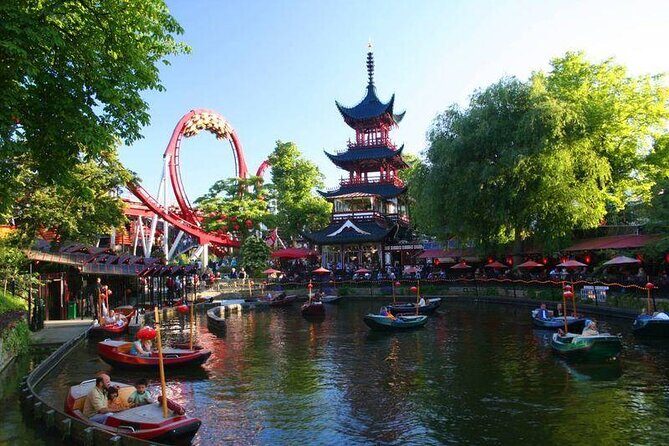
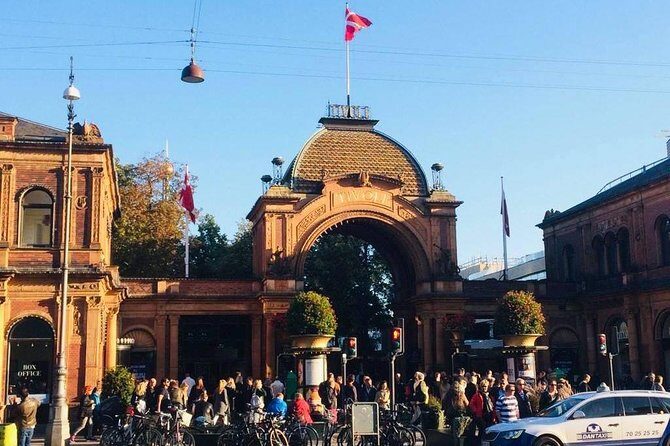
The tour ends at Tivoli Park, located at Vesterbrogade 3. Tivoli is an old-school classic amusement park and the tour sets you up to enjoy it on your terms.
Here’s the key value: your entry includes Tivoli Park general admission, listed for ages 8 and up. If you’re traveling with younger kids, you should confirm what’s covered for them before you go. Your ticket is also set up as a mobile ticket, and the tour is designed to help with getting through faster than if you were starting from scratch.
The tour includes time to get you right at the park area, plus some history about the park at the entrance zone. Then you’re free to explore.
How to spend your Tivoli time (without feeling rushed):
- Pick 2 to 3 areas you actually want to experience, not just a long list of rides.
- Do a quick walk of the main paths first so you know where everything is.
- If you’re traveling with kids or teens, decide what counts as a win before you enter. It prevents the classic drift into decision chaos.
This is also a smart move for adults who aren’t ride-obsessed. Tivoli’s appeal includes the atmosphere and the fact that it’s a place to wander, not only a place to spin.
Price and value: is $79.30 worth it?
At $79.30 per person for about 2 hours, you’re paying for two things that are hard to DIY efficiently:
1) guided navigation through central Old Town landmarks, and
2) the Tivoli admission that’s included to help you get in faster.
If you tried to plan it yourself, you could certainly visit these places independently. But you’d still be doing the same walking without the connecting context, and you’d have to manage ticket entry on your own timeline.
This tour’s value is strongest if you want your visit to feel organized. It’s also a good fit if you only have part of a day in Copenhagen and want a coherent arc that moves from royal power to old squares to a relaxing park finish.
Where you might feel less thrilled is if you’re a slow walker who likes long stops in museums, or if you’re hoping for a deep architectural deep dive. This is built for smart coverage, not long lingering.
Who should book this Copenhagen Old Town and Tivoli tour?
Book it if you:
- have limited time and want the central hits
- want the 12:00 noon Royal Guard change included in your plan
- enjoy learning the meaning behind what you see, not just taking pictures
- like ending with a fun option rather than heading straight back to your hotel
Skip it or adjust your expectations if you:
- mainly care about The Little Mermaid (this tour does not include it)
- need long interior time inside the cathedral areas
- prefer a totally unstructured itinerary and don’t want a guided pace
As for guide style, the experience can vary with who’s leading. The strongest versions of this tour tend to feel calm, patient with photos, and strong on local storytelling. Guides such as Felipe and Viviane are examples of the kind of presentation that makes the walking feel easy and worth it.
Should you book this Copenhagen Old Town and Tivoli tour?
Yes, if you want an efficient morning that ends in a genuinely fun payoff. The combination of Old Town landmarks plus Tivoli admission included means you’re not spending your limited time juggling logistics.
I’d book it especially if you can catch the Amalienborg guard change at 12:00 noon and you want a guide to connect the places into one story. Just keep your expectations realistic: it’s a short walk, not an entire-day museum pass, and it leaves out the Mermaid.
If cathedral interiors are a top priority for you, plan to be flexible and accept that opening times can change what you get to see at the exact moment you arrive.
FAQ
How long is the walking tour, and when does it start?
The tour runs for about 2 hours and starts at 10:00 am.
What is the price per person?
The price is $79.30 per person.
What do I get included with Tivoli Park?
Your ticket includes Tivoli Park general admission (listed as ages 8 and up). You’ll have a mobile ticket for entry.
Does the tour include The Little Mermaid?
No. The tour is designed to cover other major highlights and excludes The Little Mermaid.
Where does the tour start and end?
It starts at Højbro Plads and ends at Vesterbrogade 3, at Tivoli Park.
What language is the tour offered in?
The tour is offered in English.
What time is the Royal Guard changing at Amalienborg?
The changing of the Royal Guard is at 12:00 noon daily.
How big is the group?
The maximum group size is 21 travelers.
Is there free cancellation?
Yes. You can cancel up to 24 hours in advance for a full refund, based on the experience’s local time.