REVIEW · COPENHAGEN
Copenhagen: A guided walk for first-timers in the city
Book on GetYourGuide →Operated by Hamlet Tours · Bookable on GetYourGuide
Copenhagen comes with big sights and bigger questions. This guided first-timers’ walk is a smooth way to connect the dots across the city center in just 2 hours. I especially like the small group feel and the fact that you get a headset, so the guide’s voice stays clear even in busy squares.
Two more things I really like: you start at a super recognizable spot (the Andersen statue), and you finish with a practical plan—your guide hands over a map and suggests where to go next. The one drawback to consider is that this is a highlights walk with quick stops, not a deep, inside-the-buildings tour, so if you want lots of time in museums or major monuments, you may feel a bit rushed.
In This Review
- Key things to know before you go
- Why this 2-hour walking loop works so well for first-timers
- Price and what you get for about $46 per person
- Meeting at the Andersen statue and pacing your way through the center
- Stop-by-stop: the City Hall and Christiansborg Palace chapter
- From Biskop Absalon to Børsen: power, trade, and the city’s older bones
- The Black Diamond and King’s New Square: where modern Denmark shows up
- Nyhavn to Amalienborg: ending where Copenhagen turns cinematic
- Headsets, small groups, and why the listening quality matters
- The one caution: it’s a walk, not an inside-sights tour
- Who this suits best (and who might prefer something else)
- Should you book this Copenhagen first-timers walk?
- FAQ
- How long is the guided walk?
- What distance will we walk?
- Where does the tour start and where does it finish?
- Is the tour inside attractions or mainly outside?
- What group size should I expect?
- Is the tour in English?
Key things to know before you go
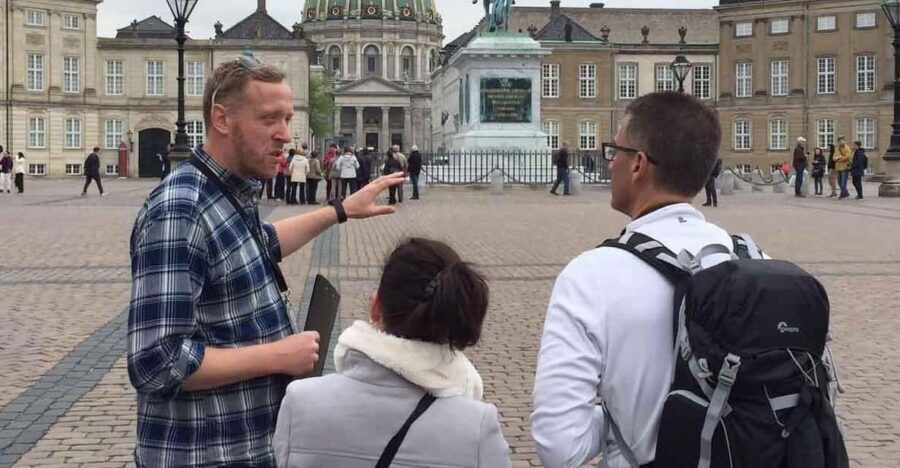
- Headsets included so you can hear the guide the whole time, even at intersections and in crowds
- Small group size (limited to 10 participants, usually less) for questions and calmer pacing
- 3 kilometers (1.8 miles) in 2 hours, with short stopovers designed for first-time orientation
- No waiting in lines for entrances since you don’t enter sights; it’s mostly outside viewing and storytelling
- Start at the Andersen statue, an easy meeting point in the center
- A map at the end plus route suggestions, so the tour actually helps you plan your next steps
Why this 2-hour walking loop works so well for first-timers
If Copenhagen is your first stop on a Denmark trip, this kind of guided loop is a smart move. The distance is modest—about 3 kilometers, or 1.8 US miles—and the timing is built around short viewing moments rather than a long slog. In other words, you get the feel of the city without losing an entire day to logistics.
This walk also helps you read what you’re seeing. Copenhagen can feel like a mix of medieval energy, modern design, and very practical everyday life. A good guide ties those threads together, and that’s exactly what you’re paying for: not just locations, but the reasons behind them—like why bicycles are so common and how Copenhagen flexed its power across Scandinavia in the Middle Ages.
There’s also a bonus for the jet-lag crowd: you can do this early. Getting your bearings right away means the rest of your trip gets easier, because you know how the sights relate to each other.
Other walking tours we've reviewed in Copenhagen


Price and what you get for about $46 per person
At $46 per person for a 2-hour, small-group experience, the value comes from the package, not from a single headline attraction. You’re not just getting a person who walks you around. You’re getting an English-speaking live guide, plus headsets to keep you listening, plus a map of Copenhagen for after the tour.
Could you DIY this route? Sure. But DIY costs you two things: time and context. With a guide, you get explanations on the spot—how the city’s past connects to its present—and you don’t have to stop and research every corner.
One thing to note for your expectations: this is not an entry-ticket tour. You don’t go inside the stops, so the price reflects outdoor storytelling and orientation rather than museum access.
Meeting at the Andersen statue and pacing your way through the center
The tour begins at the Statue of Andersen, and that’s a practical choice. The meeting point is central and easy to find, so you’re not spending your first hour hunting a vague landmark.
Once you’re walking, the pace is friendly. Stops are mostly measured in minutes—often around 5 minutes—so you’ll see a lot without feeling like you’re stuck waiting for someone to catch up. And because the headset is part of the deal, you can keep your eyes on the streets and buildings rather than constantly straining to hear.
Also, this is built for conversation. The guide can answer your questions, which matters because Copenhagen raises the same questions for many first-timers: How did this city grow? Why this architecture? Why do people bike everywhere? You’ll hear the answers as you walk, instead of collecting random notes you never use.
Stop-by-stop: the City Hall and Christiansborg Palace chapter
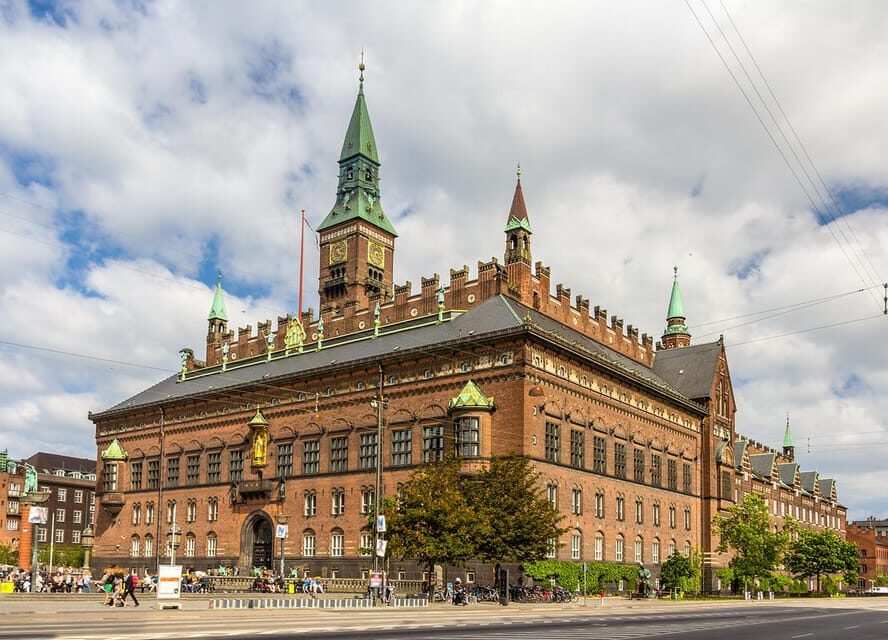
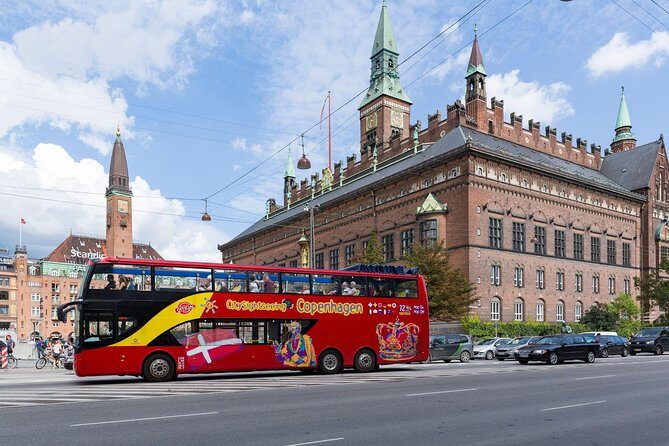
The walk moves from the Andersen statue toward City Hall (Copenhagen City Hall), with a brief stop to take in the setting. City Hall is one of those places that instantly signals official Copenhagen—clean lines, civic presence, and a sense that the city plans beyond today.
Next comes Christiansborg Palace, first with a short walk-by and then a longer sighting. Christiansborg is the kind of stop that helps you understand how Denmark organizes power and governance in the real geography of the city. Even without going inside, the exterior and surrounding views help you place the palace as a focal point rather than just a photo stop.
From these two stops, you usually start picking up patterns in what the guide emphasizes: continuity and change. Copenhagen isn’t one era. It’s layered. The best first-timer walks help you recognize those layers quickly.
From Biskop Absalon to Børsen: power, trade, and the city’s older bones
After Christiansborg, you head toward Biskop Absalon, Copenhagen. This is one of those quick, high-impact moments—short in time, but useful for understanding how the city’s older identity shows up in modern streets. It’s a reminder that Copenhagen’s center didn’t pop into existence recently.
Then comes Børsen (the old stock exchange building). Even if you’re not a finance person, Børsen is a strong example of how commerce shaped the city. This is where your guide’s storytelling helps. You’re not just looking at a landmark; you’re learning why it matters in Copenhagen’s longer story—especially the way the city gained influence during earlier centuries.
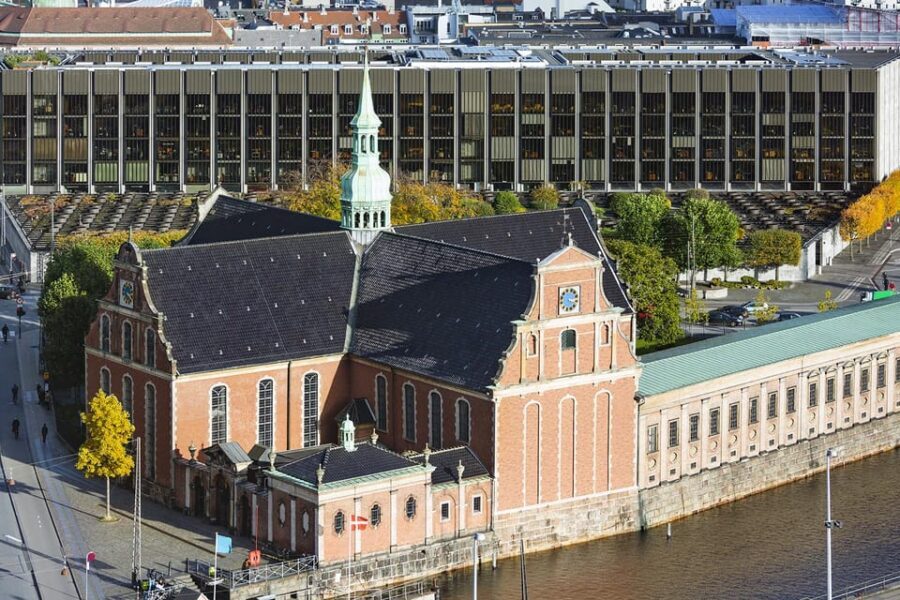
You’ll also pass Church of Holmen and Christian IV’s Brewhouse. Both stops work well for first-timers because they show Copenhagen wasn’t only about politics and trade. Buildings tied to community life and production remind you that everyday livelihoods built the city alongside the grand institutions.
A thoughtful detail: at each stop, the guide keeps the explanation tied to what you’re seeing right now. That’s why a 2-hour walk can still feel like more than a checklist.
Other guided tours in Copenhagen





The Black Diamond and King’s New Square: where modern Denmark shows up
One of the more memorable sections of the walk is when the scenery turns more contemporary. The Black Diamond is a standout here. It’s a visually distinctive piece of modern Copenhagen, and it’s a useful contrast after the older civic and commercial landmarks.
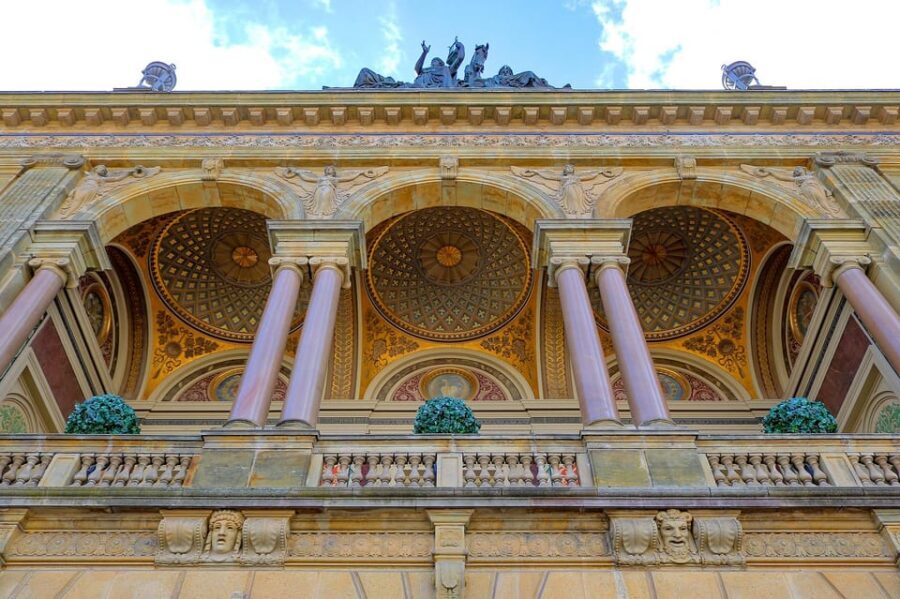
You’ll also hit King’s New Square, then continue on toward the Royal Danish Theatre area. This part of the route is great if you want to understand Copenhagen’s rhythm: historic cores exist, but modern architecture and cultural institutions live right in the same frame.
What I like about stops like this is the mental recalibration. After a few older buildings, Copenhagen can feel like a museum street. Then a place like the Black Diamond shifts your thinking. It shows you the city invests in design and public life, not just preservation.
If you’re a fan of architecture or you just like seeing how a city keeps evolving, this middle stretch is a strong payoff.
Nyhavn to Amalienborg: ending where Copenhagen turns cinematic
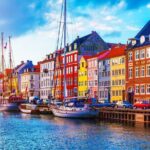
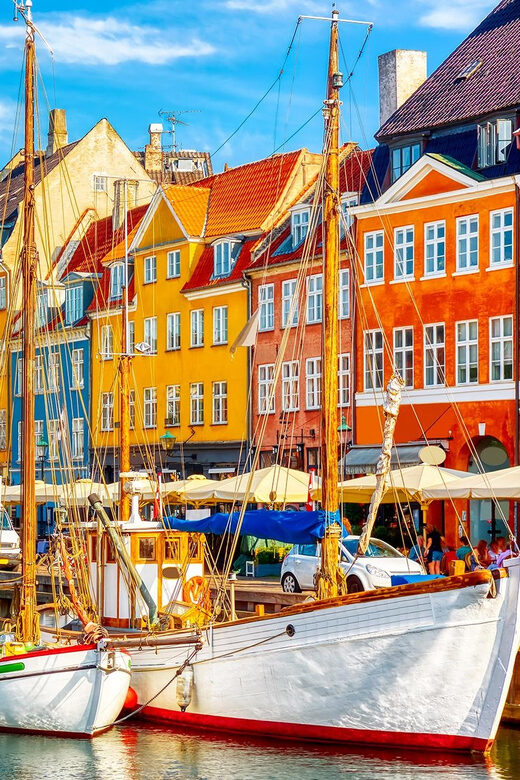
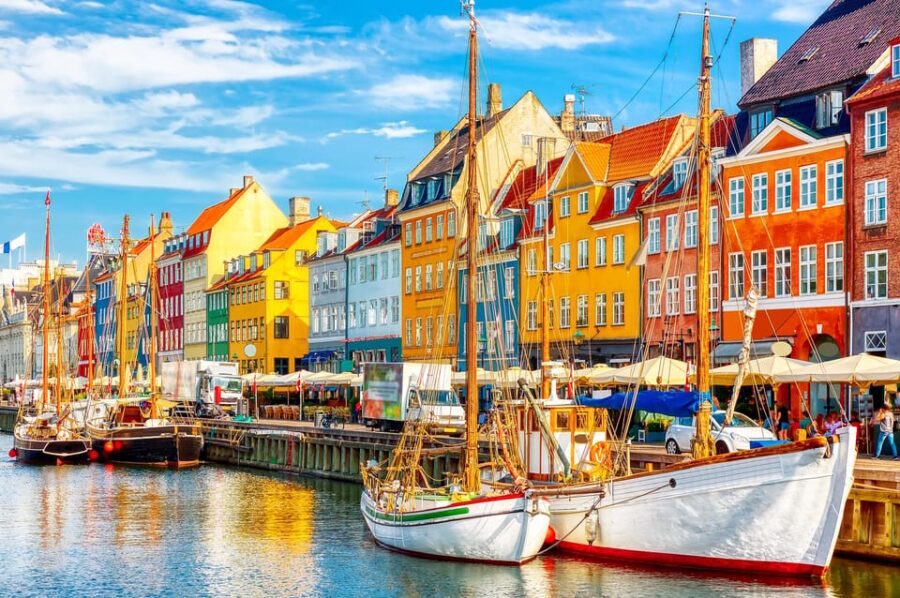
Nyhavn is the most popular name you’ll hear on this route, and for good reason. The canal-side setting is lively, photogenic, and instantly recognizable, even if it’s your first time in Copenhagen. This stop usually gives you a short walk-through feel rather than a long linger, but it’s timed well—right after the more institutional sights, it feels like a release.
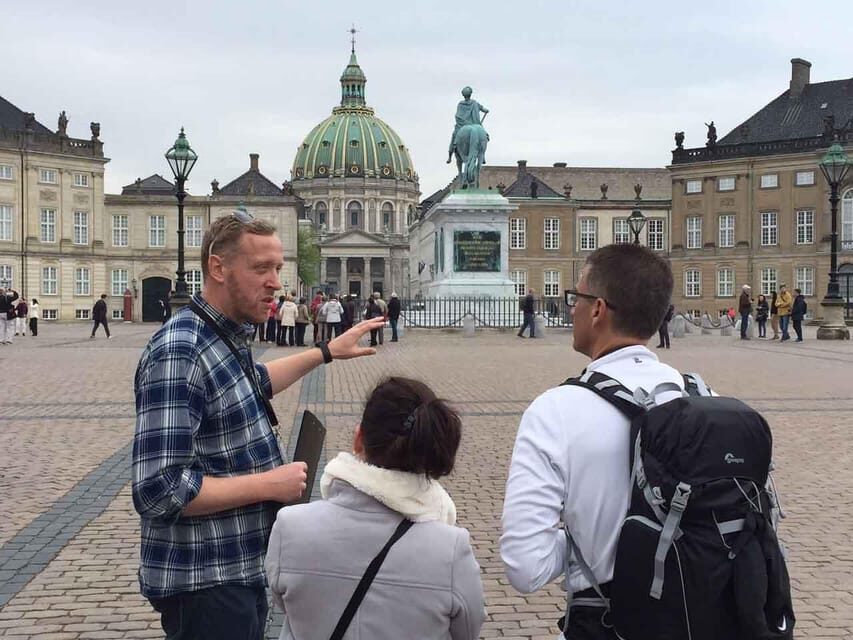
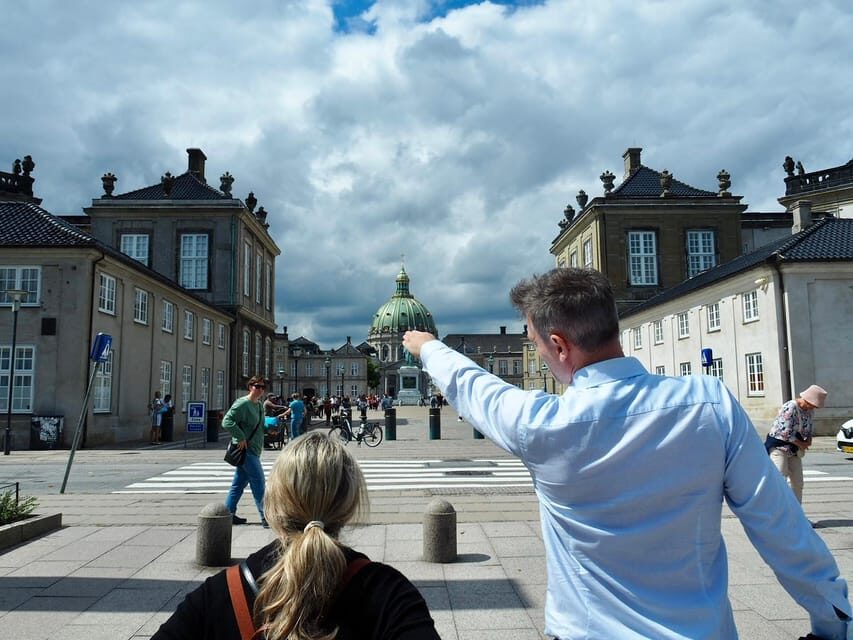
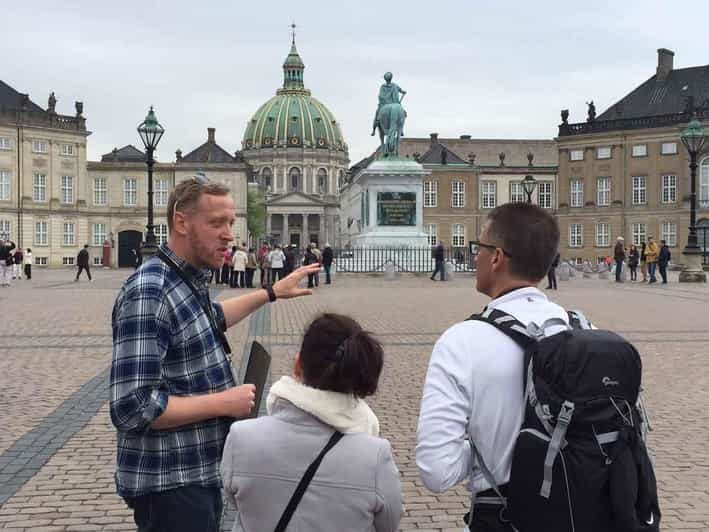
Then the walk moves to Amalienborg Palace. You’ll have time to head toward it on foot, and the tour finishes there. Amalienborg is one of those places where Copenhagen’s identity snaps into focus: you’re not only looking at a building, you’re seeing a symbol of national life.
What’s clever about ending here is that you’re set up for the rest of your day. If you want to go for dinner, find a canal cruise, or keep exploring neighborhoods, you’re finishing in an area that’s easy to connect from. The guide also provides a map and suggested routes after the walk, which makes the final section feel more like a start than an ending.
Headsets, small groups, and why the listening quality matters
A headset tour is one of those features you don’t fully appreciate until you’ve tried a non-headset walk in a crowded city. Here, the guide’s voice stays clear, which makes the stories land. It also helps you keep pace. When you can hear the guide immediately, you don’t fall behind just to catch up on what was said.
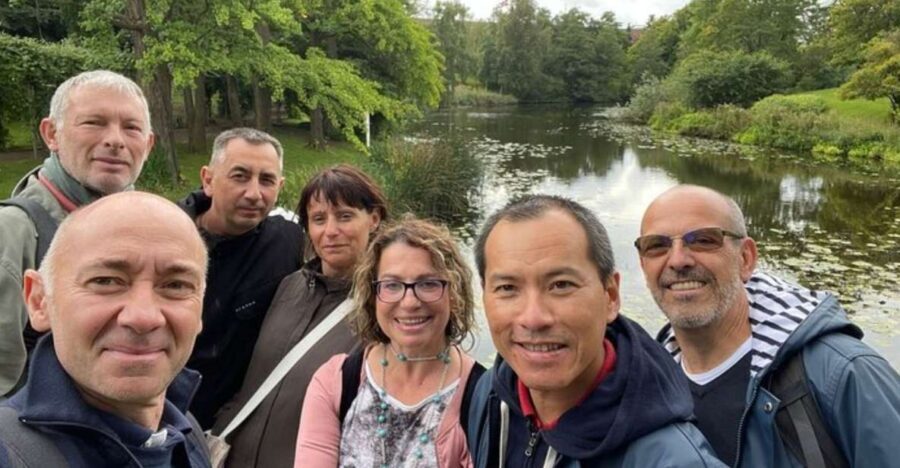
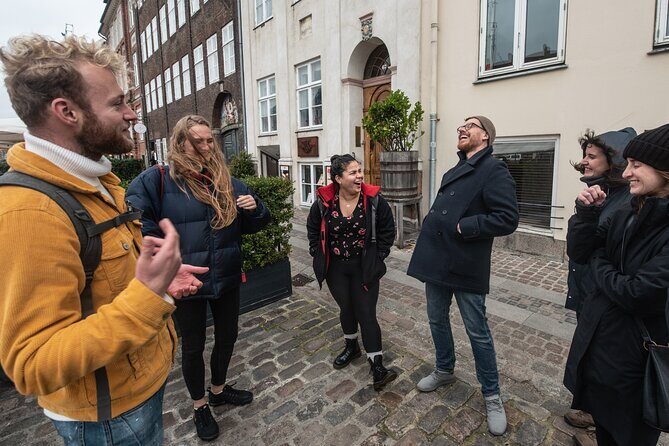
The group size also plays a big role. This walk is limited to 10 participants, and it’s typically even smaller. That’s a sweet spot: you get the benefits of a group (moving together, shared context) without the chaos of a larger crowd. One of the best perks is questions. When the guide isn’t juggling dozens of people, you actually get answers that match your curiosity.
This small-group feel also shows up in the guide style. In guides’ performances described with names like Jens and Thomas, the common thread is passion and clear storytelling, plus little personal touches that make Copenhagen feel lived-in rather than recited from a script.
The one caution: it’s a walk, not an inside-sights tour
A fair consideration is that the tour doesn’t include entering attractions. You’ll see the key exteriors and hear the stories, but you won’t spend time inside major sites.
One review note also points to a mismatch some people might expect: the walk is designed for important central landmarks, but it may not cover every landmark you had hoped for, and stops can be brief. If you’re hoping for a slow-paced, landmark-heavy tour with lots of deep dives into individual sites, this format may feel lighter than expected.
My practical advice: treat this as your first orientation and story connection. Afterward, use the map and route suggestions to follow your strongest interests—maybe that means lingering around Nyhavn longer, or returning to a palace area when you have time to slow down.
Who this suits best (and who might prefer something else)
This experience fits first-timers who want a guided orientation without a heavy time commitment. The walk is about 2 hours with a total distance of 3 kilometers, so it’s realistic for many people who can handle a city pace.
It’s also a good choice if you care about explanations, not just photos. You’ll learn the whys behind visible details—like Copenhagen’s biking culture and the city’s medieval influence. And because you get a map afterward, you leave with a plan instead of a vague memory of where everything was.
On the flip side, it may not suit everyone. The tour isn’t suitable for wheelchair users, and it’s not geared toward people with low fitness. Since the route is on foot and includes walking segments of varying lengths, you’ll want to be comfortable with that.
Should you book this Copenhagen first-timers walk?
I think this is a good booking when you want three things fast: bearings, context, and an easy path for the rest of your Copenhagen days. The headset and small group size are strong value multipliers, and the guide-led stories—like the bicycle explanation and Copenhagen’s medieval rise—make the city feel understandable instead of random.
Book it if you’re arriving early and you want to hit major central highlights efficiently, without spending the whole day waiting around or buying multiple tickets. Skip it or pair it with a different type of tour if you want long stops inside sites, or you expect a very exhaustive list of every historical landmark.
If your goal is to feel confident walking Copenhagen afterward, this is the kind of tour that earns its place on day one.
FAQ
How long is the guided walk?
The tour lasts 2 hours.
What distance will we walk?
The route covers about 3 kilometers, which is approximately 1.8 US miles.
Where does the tour start and where does it finish?
You meet at the Statue of Andersen. The tour starts there and finishes at Amalienborg.
Is the tour inside attractions or mainly outside?
It’s mainly outside viewing. The tour does not enter any of the sights.
What group size should I expect?
It’s a small group limited to 10 participants (and usually less).
Is the tour in English?
Yes, it’s a live tour guide in English.