REVIEW · COPENHAGEN
Native Walking Tour to Copenhagen
Book on Viator →Operated by SAM'S LOST · Bookable on Viator
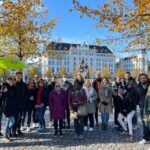
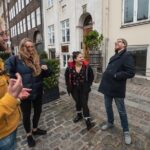
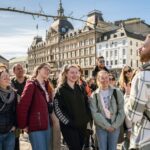
A four-hour walk with a local guide pays off. You’ll cover Copenhagen landmarks on foot, from Nyhavn canals to Rosenborg Castle, with Sam as your four-language guide and local stories as the soundtrack. Two things I like are the warm start at Nero Shop (coffee, tea, or soda) and the goody bag you get at the end, including a keychain, a written fun fact, and a coffee voucher.
The only real downside is not the walking. A few serious issues have come up around ticket/voucher handling and guide no-shows, so I’d go in with extra caution and a backup plan. Also, while several sights are free, the Marble Church and tower viewpoints cost extra, so you’ll want to budget a little more.
This is a small-group walk, max 12, and it ends at the Round Tower for possible top views. It asks for moderate physical fitness, so plan comfy shoes and expect some steps. If you want history told at street level, plus a harbor-side food stop at Reffen, this fits Copenhagen perfectly.
In This Review
- Key things to know before you go
- Kicking off in the center: Nero Shop, Kongens Nytorv, and a quick plan
- Nyhavn on foot: colorful facades, real stories, and price reality
- Amalienborg and the guards: royal theater without the museum slog
- Frederiks Kirke (Marble Church): a dome that borrows from Rome
- Kastellet: ramparts, shape, and why Christian IV still matters
- The Little Mermaid: iconic statue, fast context, and the best selfie angle
- Reffen (Skojteoen) and the harbor trip: food, sand loungers, and Amager views
- Our Saviour’s Church: tower views that cost extra, but can be worth it
- Rosenborg Castle and the king’s garden: calmer history before the finish
- The Round Tower: astronomy, Christian IV, and climbing to the top
- Price and value: what $100.41 buys (and what you’ll still pay)
- Logistics that can make or break your day: meeting spot, walking pace, weather
- A real caution: ticket/voucher confusion and guide no-shows
- Who should book this Copenhagen walk (and who should skip it)
- Should you book this Copenhagen walking tour?
- FAQ
- How long is the Native Walking Tour to Copenhagen?
- Where do I meet the guide, and where does the tour end?
- What’s included in the price?
- Which major sights have entry fees not included?
- Is the guide multilingual?
- What food stop is included?
- How big is the group?
Key things to know before you go
- Coffee first, then “how Copenhagen really works” at Nero Shop, led by a guide who lives the city
- Sam’s 4-language approach (Danish, Norwegian, English, Arabic), which can make stories easier to follow
- Free sights are plentiful, but paid viewpoints still appear (Marble Church, Our Saviour’s tower, Round Tower)
- Reffen at Amager is a smart break: street-food style eating plus big harbor views
- The day ends on a high note at the Round Tower area, with a chance to go up
Kicking off in the center: Nero Shop, Kongens Nytorv, and a quick plan
The tour meets at Kongens Nytorv 1, right in the heart of downtown Copenhagen. You’ll start by doing the most logical thing in any city: getting caffeine before the first photo stop. At the Nero Shop, you can choose coffee, tea, soda, or an energy drink—quick, easy, and useful if you’re coming from a long travel morning.
What I like about this start is pacing. Copenhagen walking tours can feel rushed; this one begins with a short break, so you’re not already tired by the time you reach Nyhavn. It’s also a good moment to get oriented with your guide and learn what matters most that day.
If you’re the type who likes to know where you’re going before you leave, you’ll appreciate how the guide ties landmarks together as you move—palaces, churches, harbor neighborhoods—rather than treating each stop like a separate checkmark.
Other tours with a local guide we've reviewed in Copenhagen

Nyhavn on foot: colorful facades, real stories, and price reality
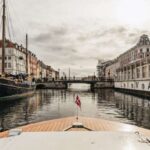
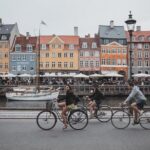
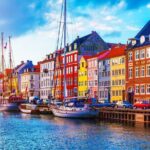
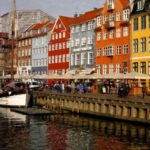
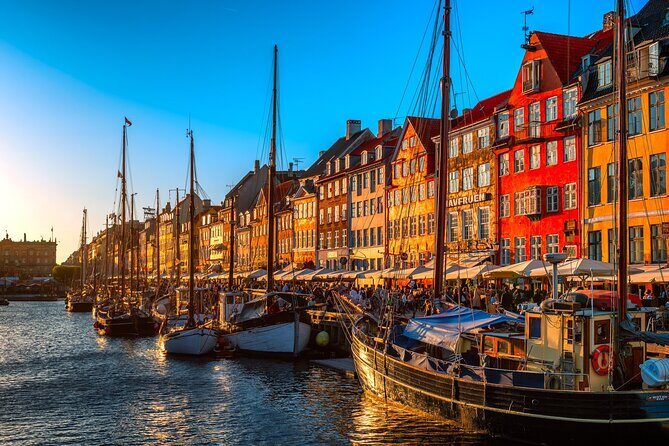
Next comes Nyhavn, one of Copenhagen’s most photogenic streets. The guide leads you along the canal-front with stories that explain why the place looks the way it does and how it’s used today. The restaurants and bars lining Nyhavn get a lot of attention, and yes—there’s a sense that some of that convenience comes with high prices. Still, it’s worth seeing up close.
The value here is the human layer: the guide’s commentary turns the street from a postcard into a neighborhood. Instead of just seeing buildings, you’re picking up the why behind the vibe—why certain parts feel lively, why others feel formal, and how Copenhagen balances old-town charm with modern city life.
Practical tip: Nyhavn is busy. If you want sharper photos, keep moving with the group and don’t stop too long where crowds gather.
Amalienborg and the guards: royal theater without the museum slog
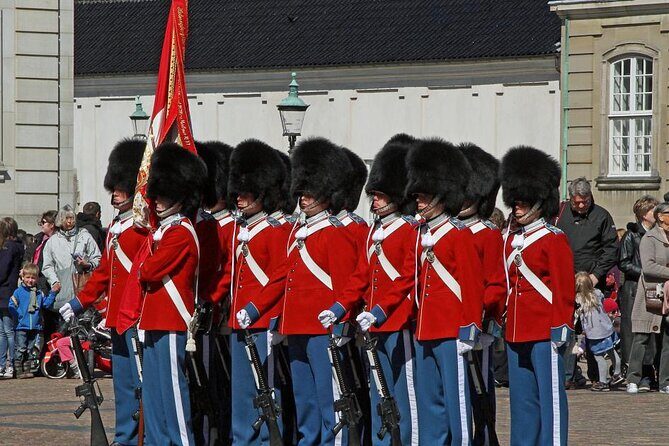
After Nyhavn, you head toward Amalienborg Palace Museum. You have a chance to catch a glimpse of royal life and the royal lifeguard during the march. The tour time here is short, so this is more about the atmosphere than deep museum touring.
This stop works well because it’s close to the next “bigger wow” church moment. You get a taste of ceremonial Copenhagen, then you move on before the day gets too heavy. If you’re interested in monarchy as something people experience in daily rhythms—rather than a distant history lesson—this is a good pivot point.
Also, since the guide is multilingual, you’re more likely to get the details clearly, even if your comfort language is not English.
Frederiks Kirke (Marble Church): a dome that borrows from Rome
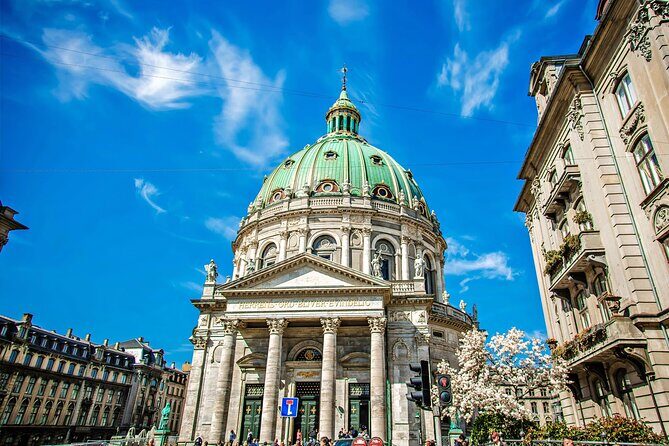
Then you reach Frederiks Kirke, often called Marmorkirken (Marble Church). The key detail here is the architecture: it’s described as taking inspiration from St. Peter’s Basilica in Rome, with a big dome that feels like a European cousin, not just a local landmark.
Entry is not included. The church admission is listed at 6 euro, and it’s free up to age 12. The tour says you may be able to walk up to the tower if possible, which is exactly the kind of optional extra that can make this stop feel like more than a quick look.
What to consider: the church is best if you’re willing to pause and absorb. If you prefer fast photo stops only, this stop might feel longer than you want. But if you enjoy interiors, details, and scale, this is one of those Copenhagen moments where the size hits you.
Kastellet: ramparts, shape, and why Christian IV still matters
Next you move toward Kastellet, a fort-style site tied to Copenhagen’s ramparts. It was built starting in 1624 under Christian IV and today it still reads as a highly designed, almost star-like military construction—your guide describes it as appearing like a five-star structure.
This is a great stop because it changes your perspective. You go from palaces and ornate churches to something built for defense and order. And because the timing here is moderate, you’re not stuck in one place long enough to get bored.
The guide also calls attention to another church work inside the area (framed as one of the most beautiful church works in Copenhagen, from the guide’s perspective). That’s a hint: in Kastellet, don’t just watch the walls—check what’s inside the view. Copenhagen loves mixing formality and beauty.
Other walking tours we've reviewed in Copenhagen



The Little Mermaid: iconic statue, fast context, and the best selfie angle
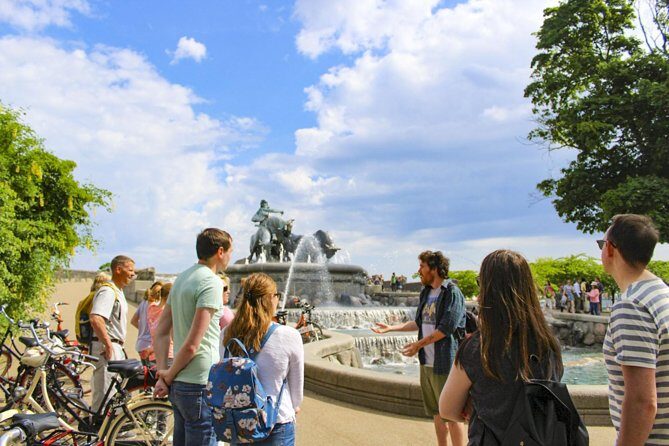
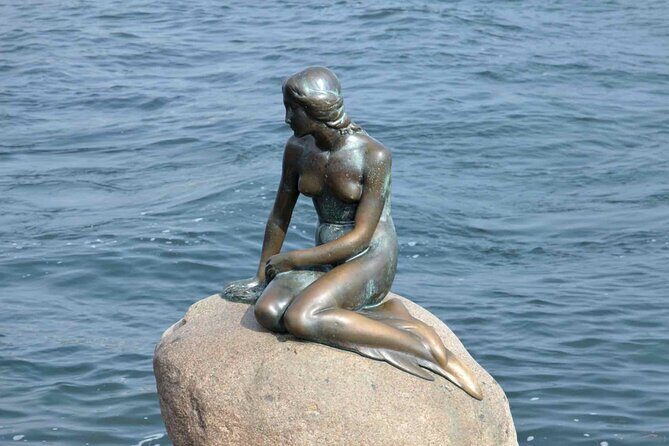
Then comes the Little Mermaid, erected in 1913 at Langelinie. Here’s the extra detail that matters: the donation connection. The sculpture was donated to Copenhagen by the son of the founder of the Carlsberg beer company. That’s the sort of story that turns a tourist icon into a specific piece of city culture.
Admission is free. The tour timing is short, around 15 minutes, which is perfect. You’ll see the statue, take photos, and then keep moving—Copenhagen tours work better when you don’t overstay at the most crowded spot.
Practical tip: if you want photos without blocking everyone, be quick and keep your body angled so you’re not forcing others to squeeze around.
Reffen (Skojteoen) and the harbor trip: food, sand loungers, and Amager views
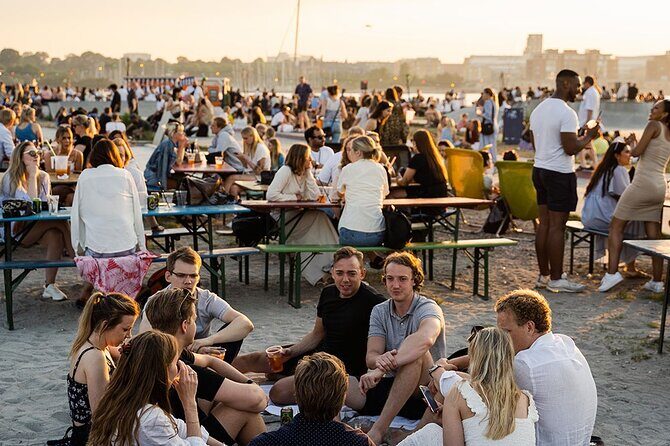
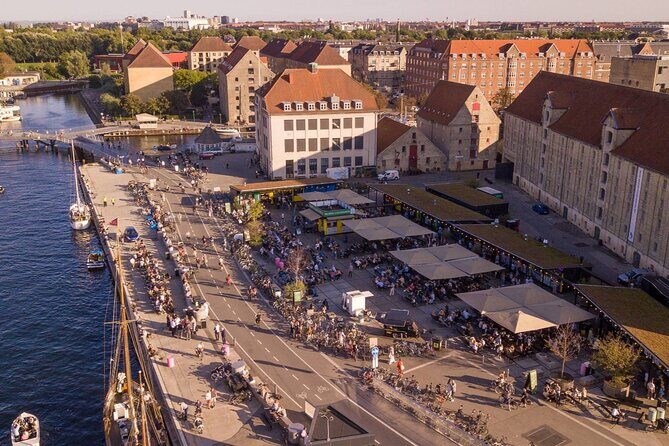
Now for a very Copenhagen break: Reffen. The tour includes a harbor-style trip across toward Amager, and then you’re in the Reffen area where you can grab street-food style dishes from various places. The info notes that prices are reasonable, and you can take food or drink out.
One of the best parts of this stop is the setting. You can take your meal to sun loungers on the sand and enjoy views back toward Copenhagen. That matters because it gives you a visual timeout after towers and castles. You stop thinking about “which attraction next?” and start thinking about “I’m actually in Copenhagen right now.”
What I’d plan for: the food itself costs extra unless you manage to eat cheaply, and the tour time here is long enough that you’ll want to decide what you want before you stand in line for 20 minutes. Bring cash if you like, or at least be ready for casual food-market payment styles.
Our Saviour’s Church: tower views that cost extra, but can be worth it
Next is Our Saviour’s Church, a stop framed as mind-blowing, especially because of the tower. The biggest payoff is the panoramic view of the city center from the tower.
That panoramic entry is not included. The info lists 7 euro, and it’s free up to age 12. The tour also describes a funny-and-sad story connected to the tower, so this isn’t just about climbing for angles. Your guide is expected to bring meaning to the view.
A fair warning: if the tower is crowded or if weather shifts, your time can feel tight. Still, views from here are the kind of payoff that make a walking tour feel like more than sightseeing.
Rosenborg Castle and the king’s garden: calmer history before the finish
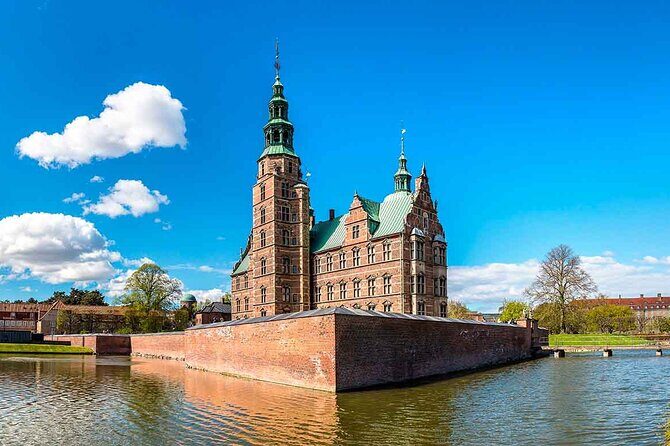
After the big tower moment, you shift to Rosenborg Castle. You’ll enter the king’s garden, then walk toward the castle. Danish history here comes with stories, and the stop is designed to feel guided—not just ticket-and-go.
Admission is listed as free for the tour portion. The time is around 20 minutes, so think of it as a scenic, story-focused visit rather than a full museum tour.
The value is the pacing: you’re not ending the tour at a museum that needs hours of reading. You get a sense of royal setting and garden atmosphere, then you continue to one of Copenhagen’s most distinctive “final bosses.”
The Round Tower: astronomy, Christian IV, and climbing to the top
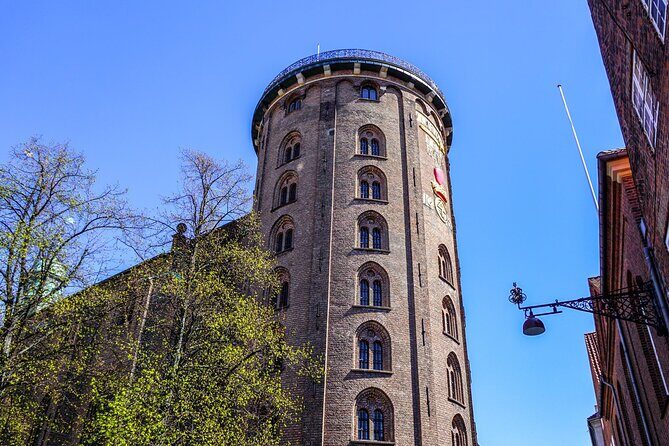
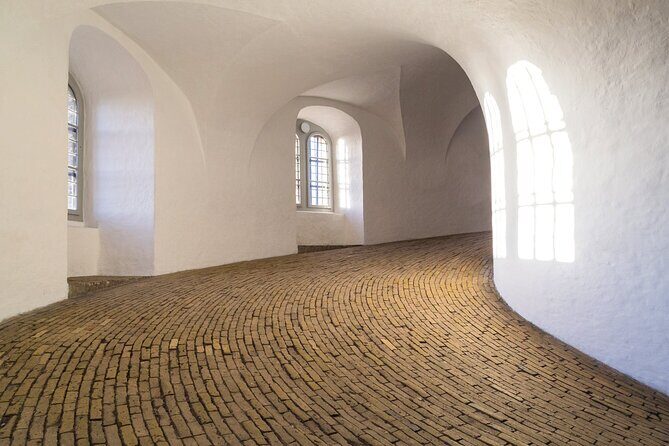
The final stop is the Round Tower, attributed to King Christian IV and described as a living landmark since 1642. This is your classic Copenhagen finish: history you can feel in the structure, plus a view you can physically earn.
Entry to the Round Tower is not included. It lists 5 euro, or 1.5 euro up to age 15. The tower was used to observe planets and predict or see comets—so even if you aren’t a science person, you’ll enjoy how the building served a real purpose.
The tour ends at the Round Tower area, and the tour info notes that it includes a trip to the top as part of the experience. That means you’ll likely finish with the view and a “wrap it up” moment that helps the whole walk feel complete.
If you love a dramatic ending, this is one of the stronger finish points in Copenhagen.
Price and value: what $100.41 buys (and what you’ll still pay)
The price is $100.41 per person, booked on average 44 days in advance, and the duration is about 3 hours 45 minutes. With a maximum of 12 travelers, you’re not fighting a crowd for your guide’s attention.
Here’s how the value stacks up based on what’s included and what’s optional or extra:
Included:
- Coffee and/or tea plus soda
- A gift bag with a keychain, a coffee voucher, and a written fun fact about Denmark
- A native guide fluent in Danish, Norwegian, English, and Arabic
- A food-market style stop where you eat like locals do (food cost itself isn’t listed as included)
Not included (the ones you should budget for):
- Frederiks Kirke: 6 euro (free up to age 12)
- Our Saviour’s Church tower view: 7 euro (free up to age 12)
- Round Tower: 5 euro (1.5 euro up to age 15)
So yes, some costs still sit outside the ticket price. But the tour is still strong value if you want multiple major sights in one go, plus stories from a guide who can explain things clearly in several languages, not just one.
Logistics that can make or break your day: meeting spot, walking pace, weather
This tour is built around a lot of real walking across central Copenhagen. It’s marked for people with moderate physical fitness, and the route includes church areas and tower climbs, so comfortable shoes matter.
The meeting point is easy to find in central Copenhagen: Kongens Nytorv 1. The end point is also central: the Round Tower (Købmagergade 52A, 1150 København). That means you finish where you’re likely to be able to catch public transit quickly or keep exploring.
Weather is a factor. The experience notes it’s dependent on good weather. If it’s rainy, your best move is to have rain protection and to expect some adjustments depending on conditions.
A real caution: ticket/voucher confusion and guide no-shows
I’ll be direct here. There are serious reports tied to this operator about guides not showing up and about voucher/ticket confusion where people weren’t issued proper tickets and couldn’t redeem them easily. There’s also been frustration about difficulty contacting the operator close to departure time.
That doesn’t mean every tour goes wrong. But it does mean you should protect yourself.
My practical approach if you book:
- Try to have your confirmation details saved offline (screenshots help).
- Arrive a bit early at Kongens Nytorv 1 so you’re not waiting at the exact start minute.
- If possible, verify how tickets are handled and ask for clarity in writing before the day of the tour.
- If you have a tight schedule, keep a small buffer day or be ready with a self-guided Plan B.
This is the part that matters most. The sightseeing itself is strong on paper and in layout. Reliability is the one variable I wouldn’t ignore.
Who should book this Copenhagen walk (and who should skip it)
This tour fits you if you:
- Want a small-group Copenhagen overview with storytelling, not just monuments
- Like mixing famous icons (Little Mermaid) with less obvious city structure (Kastellet ramparts)
- Want a guide who can speak in multiple languages, including Arabic
- Enjoy a food stop that feels like a city hangout, not a sit-down restaurant tour
You might skip it if you:
- Need every admission fee included in the price
- Hate waiting around for tower access or don’t want any extra charges at viewpoints
- Can’t handle uncertainty around ticket handling or last-minute guide reliability
Should you book this Copenhagen walking tour?
My verdict is mixed-but-leaning-positive on content value, with one big “be smart” note on execution. The route is well chosen: Nyhavn, royal Copenhagen, Marble Church, fortifications at Kastellet, the Little Mermaid, a harbor-food break at Reffen, then tower payoffs at Our Saviour’s and the Round Tower.
If you can handle a few extra entry fees and you’ll keep a close eye on confirmation and arrival timing, it can be a great way to get your bearings fast in Copenhagen. If your schedule is tight and you dislike any chance of disruption, I’d think twice and compare with a tour style that’s more fully “ticketed and guaranteed” from start to finish.
FAQ
How long is the Native Walking Tour to Copenhagen?
It lasts about 3 hours 45 minutes.
Where do I meet the guide, and where does the tour end?
You meet at Kongens Nytorv 1, 1050 København, Denmark, and the tour ends at the Round Tower area at Købmagergade 52A, 1150 København, Denmark.
What’s included in the price?
Coffee and/or tea (plus soda) are included, along with a gift bag (keychain, coffee voucher, and a written fun fact about Denmark). The tour is led by a native guide fluent in Danish, Norwegian, English, and Arabic.
Which major sights have entry fees not included?
Frederiks Kirke (6 euro), the panoramic view entry at Our Saviour’s Church (7 euro), and the Round Tower (5 euro) are listed as not included.
Is the guide multilingual?
Yes. The guide is listed as fluent in Danish, Norwegian, English, and Arabic.
What food stop is included?
The tour includes a stop at Reffen (Skojteoen), where you can eat street-kitchen-style food and enjoy it while taking in harbor views.
How big is the group?
The tour has a maximum of 12 travelers.