REVIEW · COPENHAGEN
Life on Copenhagen’s Streets: Philip’s crazy life
Book on Viator →Operated by Gadens Stemmer · Bookable on Viator
Copenhagen got real on Philip’s streets. This guided street walk uses everyday landmarks to frame Philip’s personal story—honest, hard, and surprisingly hopeful. I especially liked the way his storytelling stays grounded in the city around you, and how the route keeps you moving while you listen. The one thing to consider is the subject matter: it can get emotional, with talk about drug abuse, homelessness, crime, and the long road back.
You’ll be out for about 1 hour 30 minutes (give or take), in a group capped at 20. The tour runs in English and uses a mobile ticket, so you can show up without fuss and focus on the walk. If you want only light sightseeing and photo stops, this may feel heavier than you expected.
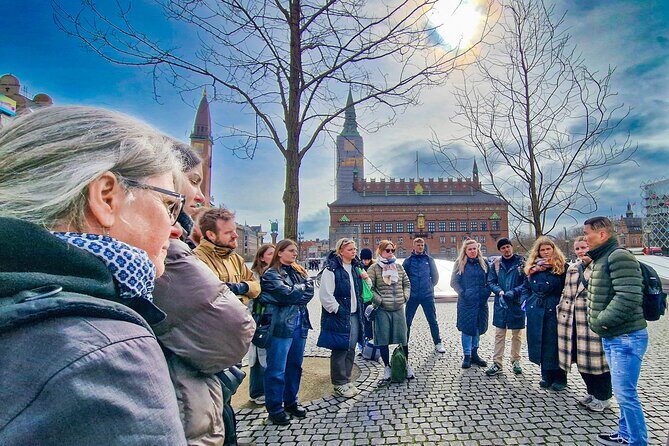
The plan is simple: start near Nørreport Station, then work through central Copenhagen squares and streets, ending by the Rådhuspladsen metro. You’ll see the Church of Our Lady (Vor Frue Kirke) from the outside—no church entry—so your time stays on the streets where the story belongs.
In This Review
- Key highlights you’ll feel in your shoes
- How Philip turns five stops into one life story
- Nørreport Station: start at Denmark’s busiest crossroads
- Church of Our Lady (Vor Frue Kirke) from the outside only
- Gammeltorv: the old square that holds the weight
- Studiestræde: heart-of-town streets for shops, cafes, and late nights
- Rådhuspladsen and Copenhagen City Hall: ending at the big public stage
- Price and value: what you pay for at $30.62
- Pacing, tone, and who this walk is for
- How to make the most of your 1.5-hour walk
- Should you book Life on Copenhagen’s Streets: Philip’s crazy life?
- FAQ
- How long is Life on Copenhagen’s Streets: Philip’s crazy life?
- What language is the tour offered in?
- Where do I meet the guide, and where does the tour end?
- Do you enter the Church of Our Lady?
- Is admission included for the stops?
- What if I need to cancel?
Key highlights you’ll feel in your shoes
- A human story mapped onto central Copenhagen: five stops, one clear narrative arc
- Philip’s plain, question-friendly approach: you’re encouraged to ask things and get real answers
- Perfect starting point at Nørreport, Denmark’s busiest station area
- Old square to modern city hall: Gammeltorv up to Copenhagen City Hall keeps the walk grounded in place
- English guide + small group size makes it easier to keep up and feel included
How Philip turns five stops into one life story
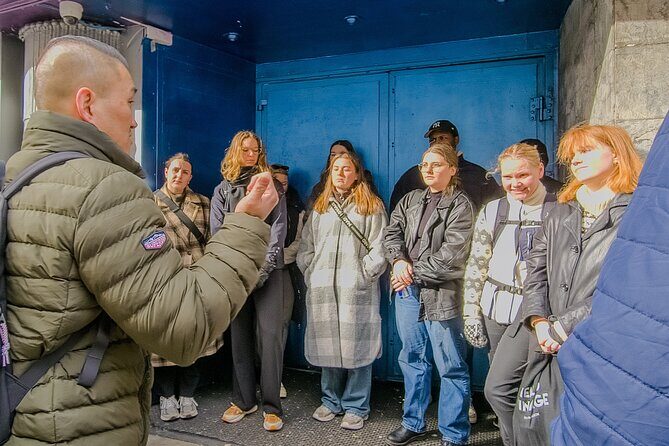
This tour is built around a single thread: how choices and circumstances shape a life, and how help can matter. Philip shares a hard story with a lot of skin-in-the-game honesty—things he’s not proud of, the consequences, and what changed after hitting bottom.
What I like most is the balance in how the story is told. Yes, it’s sad and sometimes scary, but it doesn’t end in despair. You consistently hear the message that reaching out for help is important, and that change is still possible even when life feels stuck.
The walk format also helps. Instead of sitting through a lecture, you’re outside, moving between landmarks. That makes the experience more natural—and it keeps the story connected to real streets, not just abstract topics.
If you're still narrowing it down, here are other tours in Copenhagen we've reviewed.



Nørreport Station: start at Denmark’s busiest crossroads
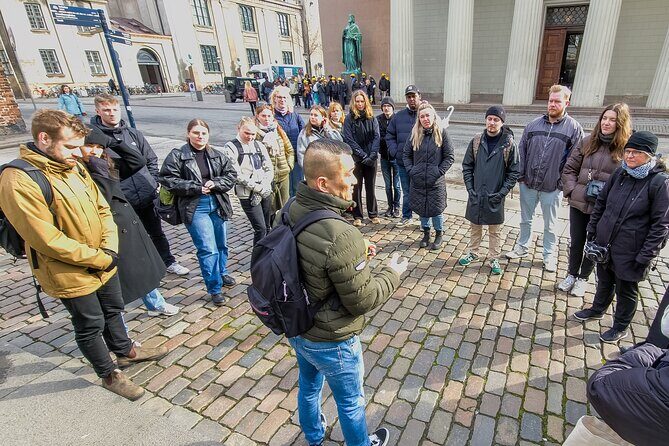
The walk begins at Nørreport Station, described as the busiest station in Denmark with around 250,000 travelers every day. That matters, because the meeting point is already a kind of character in the story: fast-moving, crowded, and full of people going somewhere.
If you like practical tourism, this is a good start. You can usually reach Nørreport easily by public transport, and the station area gives you plenty of places to orient yourself before the group gathers.
Timing is also key. The tour starts at 1:30 pm, so aim to arrive a few minutes early and be ready to listen right away. Once you’re walking, you’ll get the rhythm: short stop, short walk, next stop, story continues.
One tip: wear comfortable shoes. Even though it’s only about 1.5 hours, central Copenhagen streets add up quickly when you’re stopping often and walking at a steady pace.
Church of Our Lady (Vor Frue Kirke) from the outside only
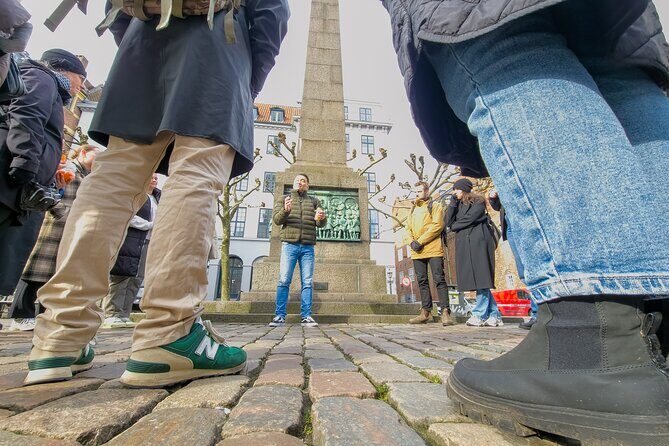
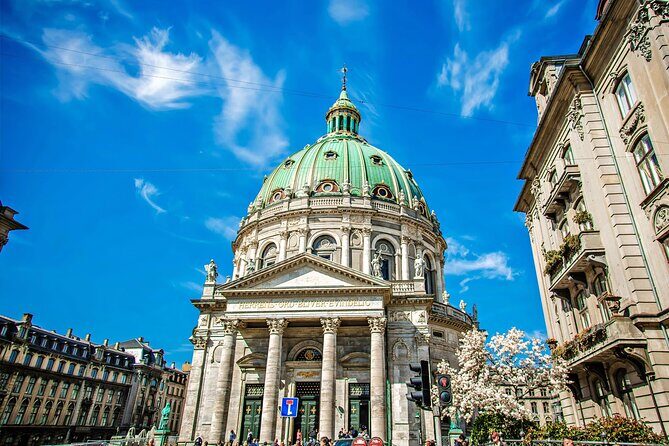
Next comes the Church of Our Lady, Copenhagen Cathedral, a Lutheran cathedral. The important detail is the rule: you don’t enter the church.
That might sound like a minus if you were hoping for an interior visit, but it can also be a smart way to pace the tour. You still get the visual anchor of a major religious landmark, without spending time on entry logistics. And because you’re not inside, you keep the focus on the street-level story Philip is telling.
As you stand outside, you can treat it like a backdrop rather than a checklist site. Watch for how the cathedral’s presence changes the feel of the area—less like a shopping street, more like a civic anchor in a city that keeps moving.
If you really want to go inside, you can plan that separately. This experience is about listening and walking; the church stop is there to set the scene.
Gammeltorv: the old square that holds the weight
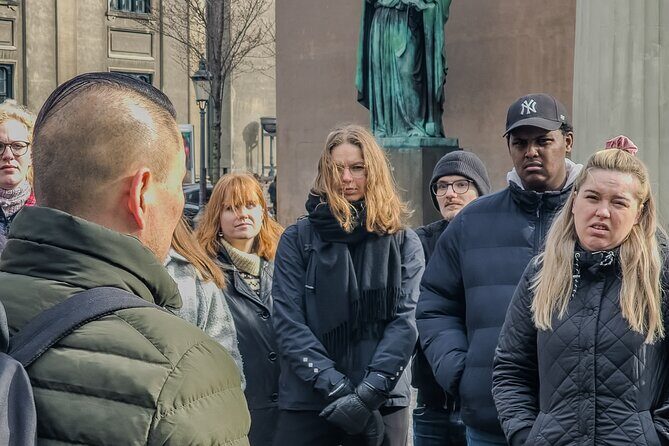
Then the tour shifts to Gammeltorv, the old square and the oldest square in Copenhagen. This is where the story starts feeling more layered. Squares like this don’t just look historic—they pull you into the idea that people have been living through hard days and ordinary routines in the same streets for generations.
Gammeltorv is also a useful stop for practical sightseeing. It’s an open area, so the group tends to regroup easily and you can hear Philip clearly without fighting for space.
Even if you don’t know Copenhagen history, you’ll get the point. The tour uses places like Gammeltorv to show how real lives are shaped by real settings—what’s nearby, who’s around, and how the city frames daily choices.
Consideration: because this stop is short, you may not have time for long sightseeing detours. If you want extra photos or browsing, plan it after the walk finishes.
Studiestræde: heart-of-town streets for shops, cafes, and late nights
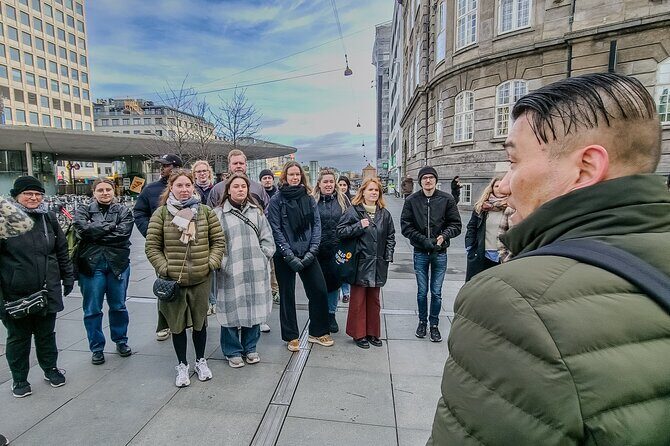
From the old square, you’ll move into Studiestræde, a street in central Copenhagen packed with shops, cafes, bars, clubs, and restaurants. This stretch changes the mood. It’s still “old city,” but it’s also very much present-day—where people meet, spend time, and pass through.
For this specific tour, Studiestræde works well because it represents the everyday side of the city. You’re not only looking at monuments. You’re seeing the spaces where most lives actually happen—where opportunity and risk can sit close together.
This is also a good section for questions. Philip answers and reflects, and that conversation-friendly style makes the story feel less distant. If you’re the type who likes to ask what something meant in real life, this is one of the best moments to do it.
Keep your expectations realistic here: you’re not touring a single venue. You’re walking through the city’s social layers while Philip puts words to what it’s like to move through them.


Rådhuspladsen and Copenhagen City Hall: ending at the big public stage
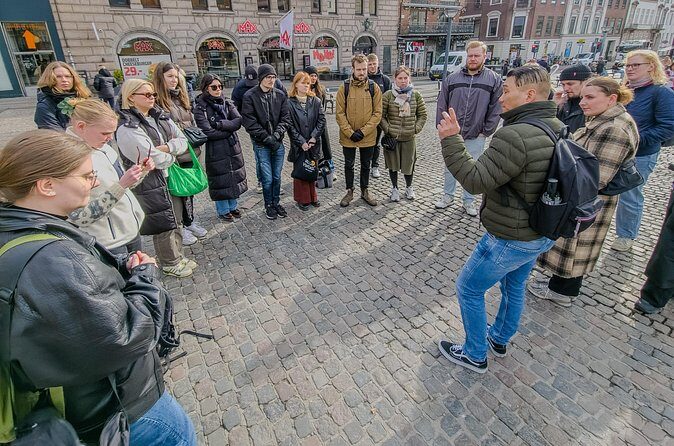
The final stop is Rådhuspladsen, City Hall Square, dominated by Copenhagen City Hall, an iconic building built in the early 20th century. It’s a strong ending point because it feels civic and open—like the city declaring that public life matters.
The tour ends next to the metro at Rådhuspladsen metro, which is great for practical planning. You’re not left in the middle of nowhere after a personal, intense story—you can hop back onto transit and go where you need to go.
This part of the route also gives you a natural decompression zone. After hearing a difficult life narrative, looking at a grand public building can bring you back to perspective. It’s not a “happy ending” in the story sense, but it’s a clear shift from narrow street corners to a broad city center viewpoint.
Price and value: what you pay for at $30.62
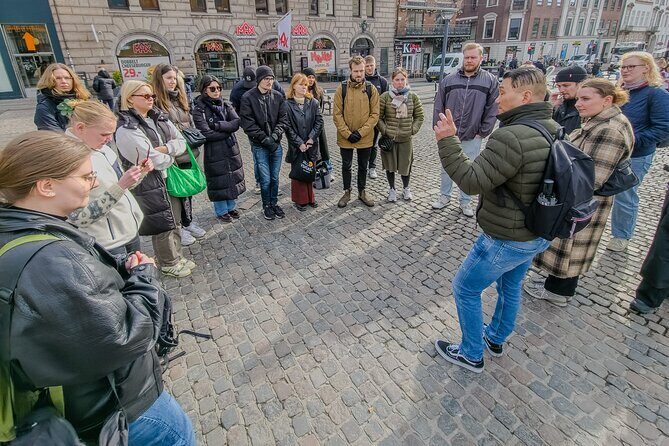
At $30.62 per person for about 90 minutes, you’re not buying museum access. You’re buying a guided street walk built around a person’s lived experience, told in an intimate way across recognizable Copenhagen spaces.
Value-wise, this is strong if you like experiences where the guide’s voice carries the show. The stops themselves include free viewing areas like Nørreport, Gammeltorv, Studiestræde, and City Hall Square. The cathedral stop is also outside only, so there’s no church admission to worry about on the day.
The format also helps make the price feel fair. With a maximum of 20 people, the group size is small enough that it doesn’t become a noisy parade. And because it’s in English, you’re not forced to rely on your own guesswork.
One more note: the walk is planned for 1.5 hours, but the story and conversation can stretch the experience. You might find yourself walking closer to 2 hours if questions and discussion run longer.
Pacing, tone, and who this walk is for
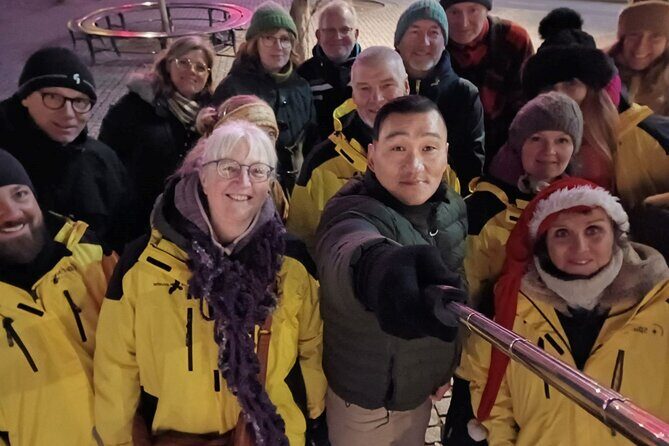
This tour is not “speed sightseeing.” It’s a guided story walk with frequent short pauses. That pacing is perfect for people who like to learn while walking, and who don’t mind that not every moment is focused on taking photos.
The tone leans serious. Philip talks about drug abuse, homelessness, and crime, and also emphasizes recovery and getting help. If you’re emotionally sensitive or you want a strictly upbeat afternoon, you might find it heavy.
On the other hand, it’s a strong choice for students or groups of young adults, and really for anyone who thinks about choices, consequences, and second chances. The message isn’t preachy; it’s grounded in a real-life account and the practical idea that support can change outcomes.
How to make the most of your 1.5-hour walk
Here are a few ways to get the best experience from the time you have:
- Arrive early at Nørreport so you start calm, not rushing.
- Ask questions when they feel natural. Philip’s style is reflective and open to discussion.
- Don’t plan a tight schedule immediately after. You may need a little time to reset after the story.
- Wear comfortable shoes and dress for typical Copenhagen street walking.
- Keep your expectations aligned: this is a story-driven city walk, not a checklist of attractions.
Also, since the tour uses a mobile ticket and meets near public transportation, it’s relatively easy to fit into a Copenhagen day. I’d treat it like your “meaningful afternoon” slot—then balance it with something lighter later.
Should you book Life on Copenhagen’s Streets: Philip’s crazy life?
Book it if you want Copenhagen to feel human, not just photogenic. The route is central and efficient, but the real value is Philip’s storytelling—honest, question-friendly, and focused on choices, consequences, and the possibility of change.
Skip it if you prefer cheerful sightseeing only, or if you don’t want to spend time with topics like addiction, homelessness, and crime. This isn’t graphic storytelling for shock value; it’s a serious life account. Just know that going in makes it easier to handle.
If you’re the type who likes city walks that teach you something beyond buildings, this one has a clear purpose. And ending at Rådhuspladsen means you finish in a convenient spot for the rest of your day.
FAQ
How long is Life on Copenhagen’s Streets: Philip’s crazy life?
It lasts about 1 hour 30 minutes.
What language is the tour offered in?
The tour is offered in English.
Where do I meet the guide, and where does the tour end?
You start at Nørre Voldgade 82, 1358 København. The tour ends at Rådhuspladsen 1599 København, next to the metro.
Do you enter the Church of Our Lady?
No. The tour does not enter the church, and it’s listed as not included.
Is admission included for the stops?
Some stops are free to view, while the Church of Our Lady is not included. Admission for that church is not part of the experience.
What if I need to cancel?
You can cancel for a full refund if you cancel at least 24 hours before the start time. If you cancel less than 24 hours before, the amount you paid is not refunded.