REVIEW · COPENHAGEN
Copenhagen: Guided Bike Tour in French
Book on GetYourGuide →Operated by Mercure · Bookable on GetYourGuide
A bike tour in Copenhagen hits differently. You’ll pedal through royal squares and waterfront classics, while a French guide connects the dots to Denmark’s social welfare model and the city’s urban changes. It’s a smart way to cover a lot in four hours without feeling like you’re stuck on a bus.
I especially like the mix of big-name landmarks and street-level perspectives, including Freetown Christiania’s alternative culture. You also get hands-on insight into why Copenhagen’s neighborhoods work the way they do, not just a list of what to look at. One thing to consider: you need solid cycling experience and your own bike, since bikes and helmets aren’t provided.
In This Review
- Key points to know before you ride
- Where the tour starts: Axelborg Visitor Service, Tivoli, and Vesterbrogade
- Denmark’s social welfare model on two wheels
- New bicycle bridges: why they change the ride
- Stop by stop: City Hall and the formal center
- Christiansborg to Stock Exchange: what to watch as you roll
- Christiania and the alternative Copenhagen at street level
- Nyhavn to King’s New Square: great visuals, quick moments
- Amalienborg and the royal Copenhagen loop
- Rosenborg Castle to the Round Tower: closing with a skyline landmark
- Price and bike rental reality: what €51 buys you
- Who should book this Copenhagen bike tour in French
- Practical tips to make the 4 hours feel easy
- Should you book this French bike tour in Copenhagen?
- FAQ
- FAQ
- How long is the Copenhagen guided bike tour in French?
- What language is the live guide?
- Are bikes and helmets included?
- Where do I meet the guide?
- How many people are in the group?
- Can I rent a bike locally?
- Do teenagers get a discount?
- What should I bring for the tour?
- What is the cancellation policy?
- Is there an option to reserve without paying right away?
Key points to know before you ride
- French-language guide with citywide context so landmarks connect to real Danish history and society
- New bicycle bridges that show how Copenhagen keeps improving cycling routes
- Freetown Christiania stop for street art and an autonomous neighborhood atmosphere
- Royal and waterfront mix: Amalienborg, Gefion Fountain area, and the Little Mermaid zone
- Small group (up to 10) for a calmer ride and easier questions
Where the tour starts: Axelborg Visitor Service, Tivoli, and Vesterbrogade
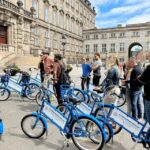
You’ll meet at the Copenhagen Visitor Service in the Axelborg building, right by Tivoli Garden’s main entrance and the SAS Skyscraper. The starting point also matches the address area on Vesterbrogade 4B, so you’re in a convenient, central part of town.
The guide will be wearing a hat or cap, which makes it easy to spot who you’re looking for. From there, the tour moves at a pace that feels like city sightseeing, not a fitness workout. In a small group of up to 10, you’re close enough to hear the guide’s explanations without constantly shouting over traffic.
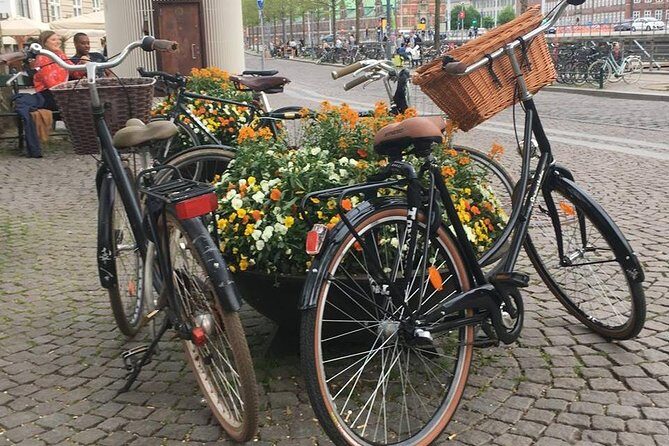
The one practical hitch: the tour does not include bicycles or helmets. If you don’t already have a bike, you’ll need to rent one in town (daily rentals start around €12) and choose the right size. This is exactly why you should arrive ready to roll and not count on last-minute adjustments.
Other bike and cycling tours we've reviewed in Copenhagen

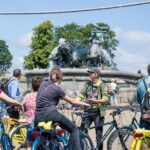
Denmark’s social welfare model on two wheels
This tour isn’t only about monuments. The big thread is how Denmark’s social welfare model shows up in the everyday shape of Copenhagen—how people live, move, and share public space. Your French guide ties history, social systems, politics, geography, and even economics back to what you’re seeing as you ride.
That matters because Copenhagen can look like “pretty bike-friendly city” from a distance, but the reasons are more specific than that. When your guide points out how urban planning and public life evolved, the city starts to make sense. You’ll likely notice that the bike routes aren’t random: they’re part of a bigger idea about connecting neighborhoods and making daily movement easier for everyone.
In four hours, you also get a rare perspective shift. Instead of treating famous places like postcards, you learn what they meant historically and why they matter socially. It’s the kind of commentary that makes a tour feel worth the money, even on the days when the weather is only fair.
New bicycle bridges: why they change the ride
Copenhagen is famous for cycling, but this tour goes one step further by focusing on recently built bike bridges. Those crossings aren’t just engineering flex. They shape the route you experience—less friction, safer turns, and smoother links between areas.
If you’ve ever cycled in a city where bike lanes suddenly end, you’ll appreciate the difference. A good bike bridge can mean you spend more time seeing places and less time guessing which street to take next. And because this tour is structured, you’ll get the benefit of someone else mapping the logic for you.
One important consideration: this is still cycling on real city streets. Even with bike infrastructure, you should have cycling experience and feel comfortable riding in traffic and around intersections. Helmets aren’t supplied, but they’re recommended—especially if you rent a bike and aren’t 100% sure how responsive it feels.
Stop by stop: City Hall and the formal center
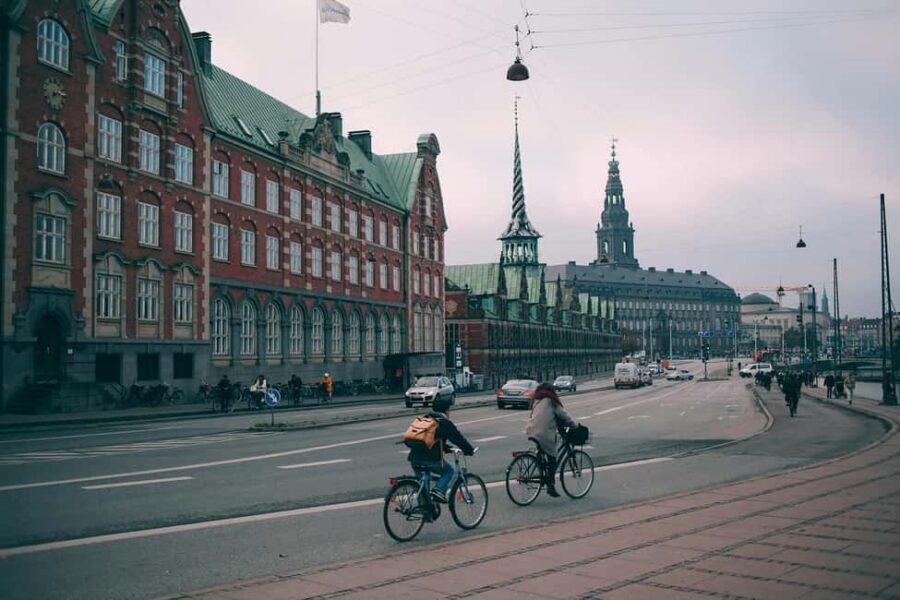
Your ride kicks off in the area around the Visitor Service, then you head toward Copenhagen’s official core. The first major sightseeing stop is Copenhagen City Hall. It’s the sort of building you can read quickly from the street, but the guide’s job is to tell you why it belongs in this part of the city and what it says about civic life.
Next you pass Christiansborg Palace. You won’t linger there, but it’s a strong visual anchor—one of those places that helps you understand Copenhagen’s government and national importance. After that, you’ll reach the Copenhagen Stock Exchange for more sightseeing. Even if you’re not a finance person, the building works well as a storytelling point: how commerce, institutions, and city growth connect over time.
A drawback to note: several stops are described as pass-by rather than extended viewing. That’s normal for a bike tour, but it means you should bring curiosity rather than expecting lots of time parked next to every landmark. If you like slow museum-style pacing, this tour may feel fast at the edges.
Christiansborg to Stock Exchange: what to watch as you roll
As you ride through this center area, keep your eyes on three things. First, notice how the streets guide you—where the bike lanes are, how turning patterns feel, and where the crossings are placed. Second, watch the way architecture shifts from government zones to commercial zones. Third, listen for how the guide frames the city’s urban evolution: what changed, and why it changed there.
This is where the tour becomes more than sightseeing. You’re learning how Copenhagen’s layout and institutions evolved together, and you’re getting that lesson in the exact places the story took shape. The bike keeps you moving, but the commentary keeps you grounded.
If you’re traveling in French, this also helps. Hearing the story in French turns the ride into something more active than sightseeing notes on your phone. You’ll probably catch more if you’re comfortable with basic listening.
Other cycling tours in Copenhagen
Christiania and the alternative Copenhagen at street level
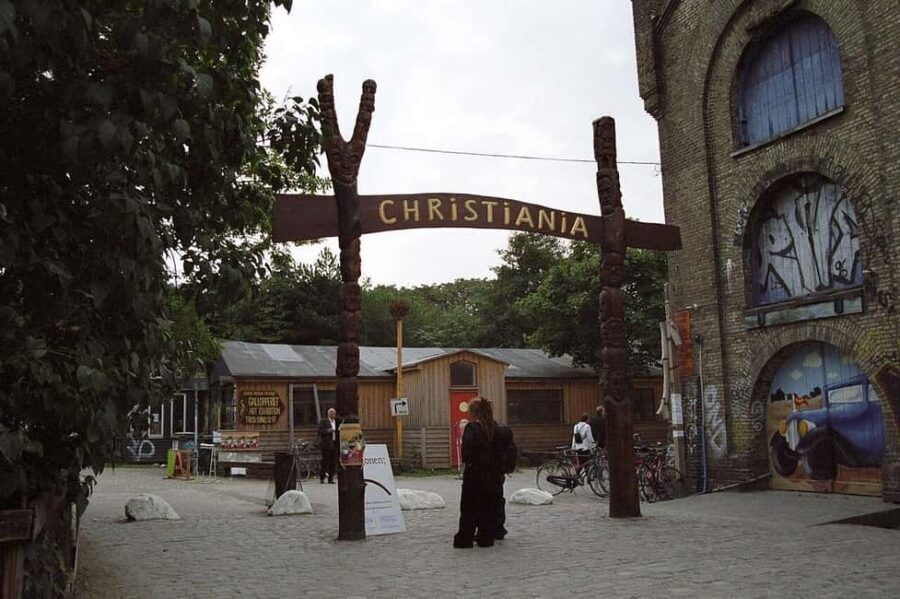
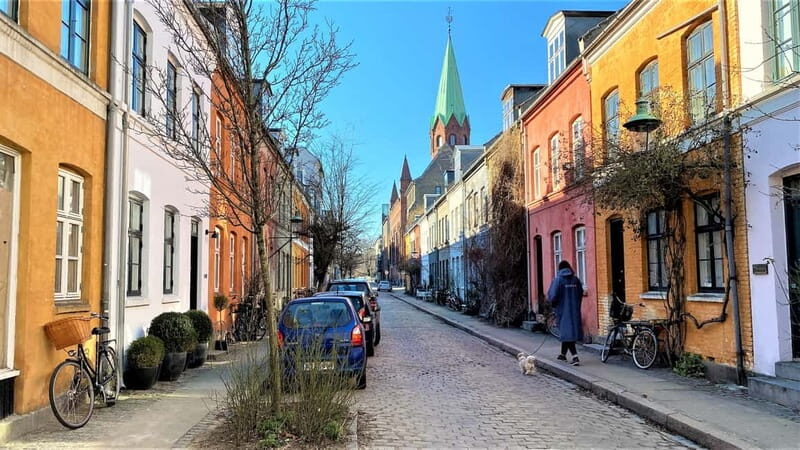
One of the most interesting moments is the stop around Freetown Christiania. You’ll pass through this area, and it’s known for colorful street art and an alternative lifestyle. This is the kind of neighborhood you can see from the curb, but the guide’s context changes what you notice.
Why it’s worth including: Christiania represents another side of how cities work. Copenhagen isn’t only about order and planning—it also includes spaces where people negotiate their own rules and identity. Your guide will help you understand how that kind of autonomy fits into the broader urban picture.
Practical note: since you’re cycling, you’ll move on relatively quickly. Don’t expect a guided deep stop where you wander inside every corner. But you will get a guided pass that helps you look at street art and public space with more intention.
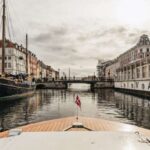
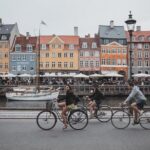
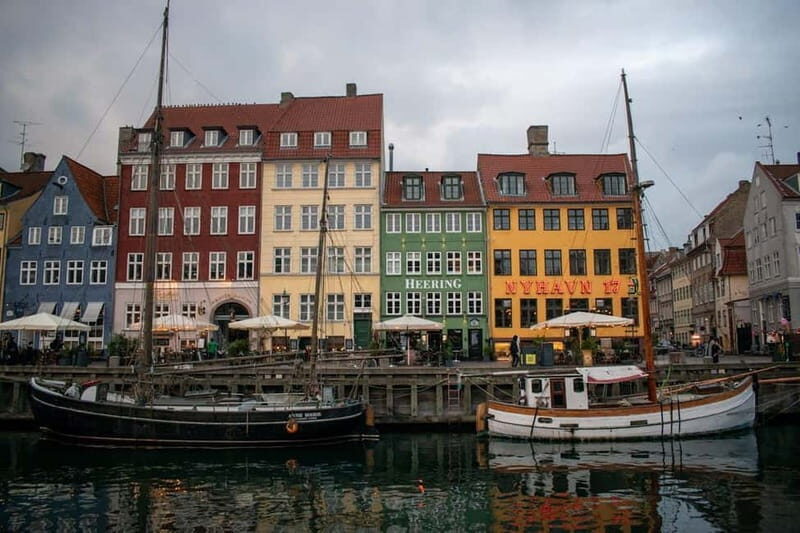
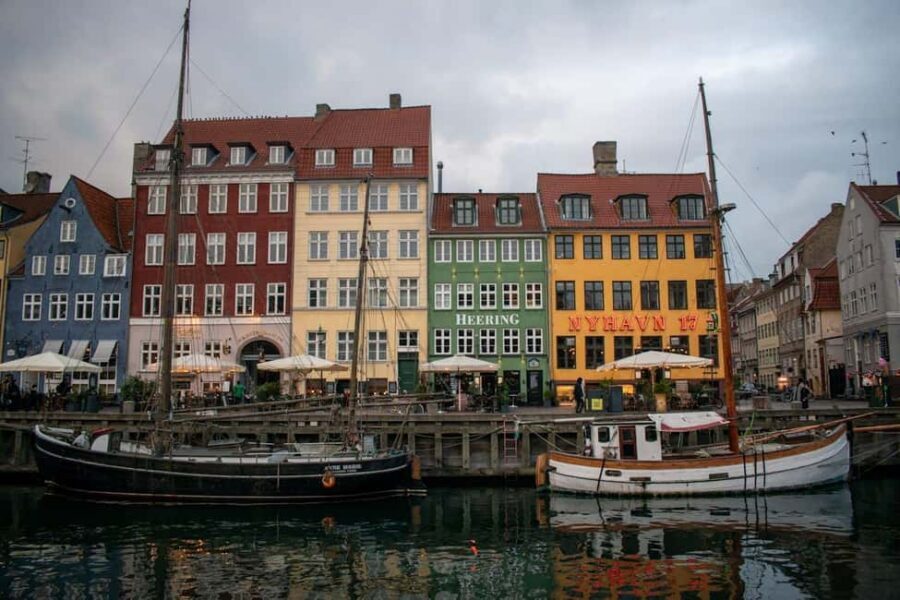
Right after that, you’ll ride toward Church of Our Saviour for sightseeing. This gives you a contrast: from an autonomous, art-forward area to one of Copenhagen’s more classic spiritual landmarks. Then you pass Nyhavn, where the canal-side atmosphere instantly makes the city feel like it belongs to the postcards—boats, colors, and that waterfront rhythm.
Nyhavn to King’s New Square: great visuals, quick moments
Nyhavn is one of those places everyone wants to see, and this tour gives you that. You pass by, so you’re not tied up searching for the best angle for photos. In practice, that’s good. Copenhagen can get crowded, and bike routing helps you see the area without spending your whole trip stuck in a slow-moving crowd.
King’s New Square also comes as a pass-by. You’ll get the general sense of the space, and your guide can connect it back to Copenhagen’s civic story. The value here is timing: the tour keeps you moving so your attention stays fresh.
If you want more time to linger at water or squares, plan for extra self-guided time afterward. The bike tour is a fast, guided sampler.
Amalienborg and the royal Copenhagen loop
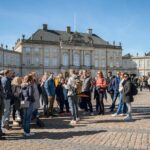
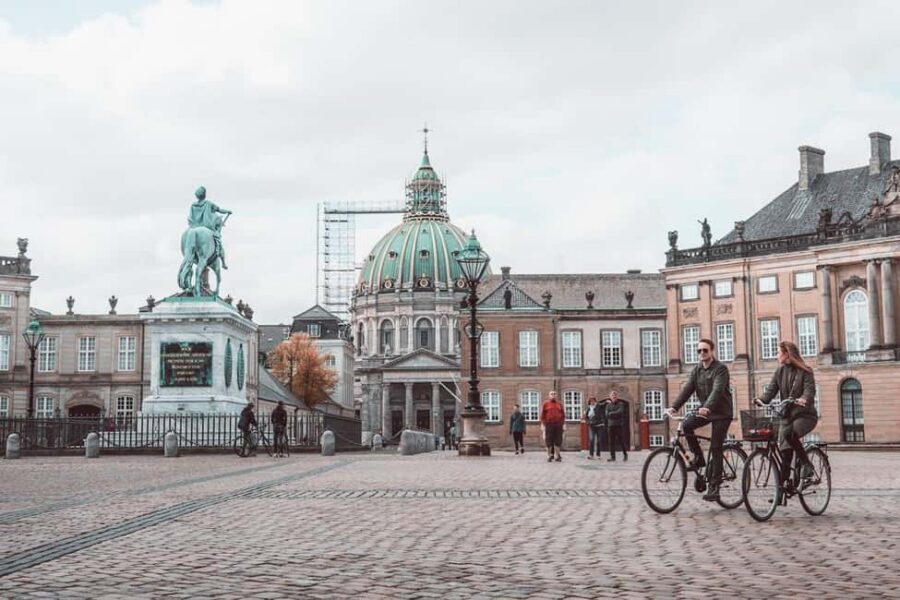
Amalienborg Palace is a sightseeing stop, which means you get more of a pause than with pass-by landmarks. It’s one of the clearest ways to understand the “royal city” side of Denmark. And because you’re on a bike, you can observe how the space around it functions—where people gather, where movement flows, and how the public realm is organized.
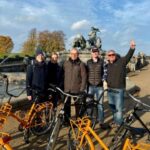
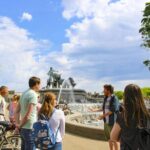
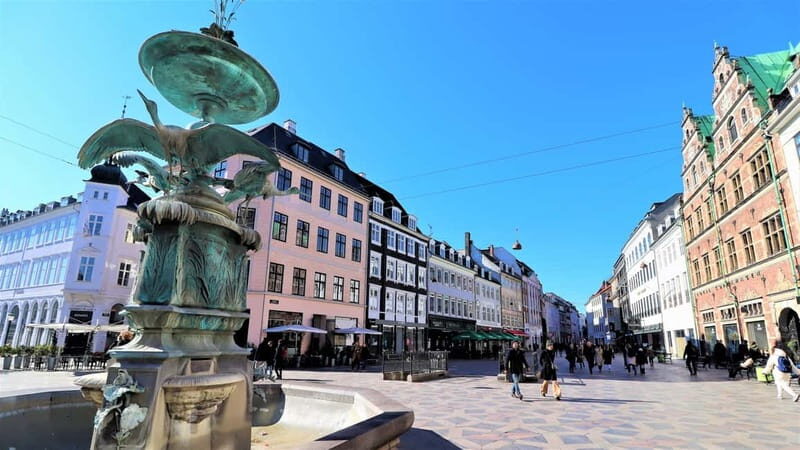
Then you pass Gefion Fountain. You’ll see it as part of the bigger west-to-east flow of central sights, not as a stand-alone attraction. That helps, because it places landmarks into a route instead of isolating them like separate checkboxes.
After that, you pass by the Little Mermaid statue area. This is a famous stop, and it can feel over-photographed if you only look at it as an icon. With a guide’s commentary and the momentum of cycling, it’s easier to treat it as a starting point for thinking about how Copenhagen projects its identity.
The best part of this royal stretch is that it’s visually strong and story-friendly. You get pageant-level architecture, water-adjacent symbolism, and civic context all in one loop.
Rosenborg Castle to the Round Tower: closing with a skyline landmark
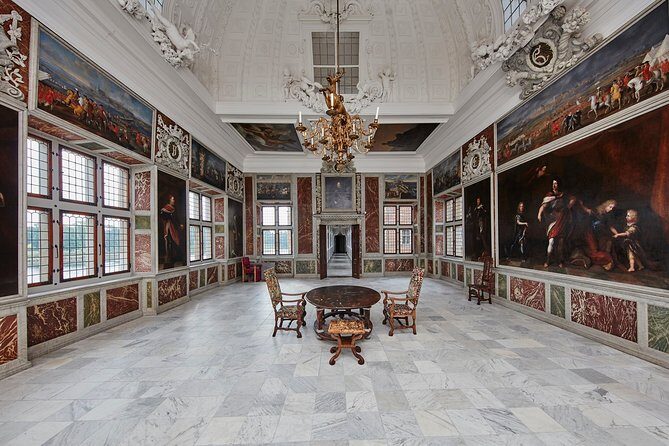
Rosenborg Castle is another sightseeing stop, and it works well toward the end of the ride. By this point, you’ve already learned how institutions, neighborhoods, and planning connect. Seeing a major historic site becomes more meaningful because you’re not only looking at the past—you’re thinking about how the city chooses to preserve and present it.
The tour then finishes at the Round Tower. Ending there is a nice finale because it’s a well-known Copenhagen landmark. Even if you’re not planning a long detour for viewpoints, it gives you a clear “you’re done” anchor in the center.
One more note about where you end: the operator indicates that using your own bike can allow some route flexibility, but the tour also states that the activity ends back at the meeting point area. Either way, plan on ending near the central start zone so you can head to dinner or your next stop without a complicated transit plan.
Price and bike rental reality: what €51 buys you
The price is about $51 per person for a 4-hour French-guided small-group bike experience. That’s a solid value when you remember what’s included: the guide and the bike tour itself. You’re paying for someone to plan the route, explain the city’s evolution, and keep a small group together.
But you do need your own bike. Bikes and helmets are not provided by the tour, and rentals start around €12 a day at local shops. In other words, your total trip cost depends on whether you already have a rental set up.
That still can make financial sense. If you’re planning to cycle anyway, this tour “adds” a guided education layer for about the price you’d pay for a guided walk or museum combo. If you don’t want to rent a bike at all, this tour probably won’t feel like a good deal.
There’s also a teenager half-price discount, which can make it more attractive for families who can handle cycling. And with a 4.9 average rating across 26 reviews, the strongest signal is consistent praise for the guide and the breadth of context covered.
Who should book this Copenhagen bike tour in French
This tour is best for you if you:
- want to see Copenhagen’s major sights and meaningful neighborhoods in one ride
- enjoy learning how a city’s social and political choices shape daily life
- feel comfortable biking and prefer a guided structure over routing yourself
It’s less ideal if you:
- want a slow, stop-and-stroll experience with lots of time off the bike
- don’t have cycling experience, or aren’t ready to ride without a provided helmet
Language matters, too. The live guide is French, so it works best if you’re comfortable with French listening or you simply enjoy guided storytelling in that language. If French isn’t your thing, you’ll likely feel the tour is less rewarding.
Practical tips to make the 4 hours feel easy
First: rent early and test the bike if you can. Because the tour doesn’t provide bikes, you’ll want a rental that fits. The operator emphasizes choosing a bike that matches your body type and preferences, which is practical advice—comfort affects safety.
Second: bring (or rent) a bike that you’re confident riding. You’re cycling for real, for real distances, and intersections are part of the deal.
Third: consider a helmet even though it isn’t included. Helmets are recommended, and they’re cheap insurance if you’re not 100% certain about the bike’s handling or your comfort level.
Fourth: dress for the weather and keep your mind clear. Copenhagen can throw in wind and quick changes, and if you’re focused on riding, you’ll notice everything less painfully.
Finally: plan a little buffer time afterward. Even though the tour ends back near the central area, you’ll likely want time to return for a second look at one or two places you enjoyed most.
Should you book this French bike tour in Copenhagen?
If you want a Copenhagen overview that actually teaches something—how Denmark thinks about society, planning, and public life—this is a strong pick. The route covers the city’s recognizable icons, the royal and waterfront highlights, and the offbeat energy of Freetown Christiania, all with commentary that connects it back to the bigger Danish story.
Book it if you can handle four hours on a bike, ride in city traffic confidently, and want a French guide who brings more than facts. Skip it if you’re hoping for a leisurely walking tour vibe or if you’re not ready to arrange your own bike rental. With the price plus rental reality, the best value comes when you’re already set on cycling.
FAQ
FAQ
How long is the Copenhagen guided bike tour in French?
The tour lasts 4 hours.
What language is the live guide?
The guide speaks French.
Are bikes and helmets included?
No. Bikes and helmets are not provided by the tour operator.
Where do I meet the guide?
Meet in front of the Copenhagen Visitor Service in the Axelborg building, near the main entrance of Tivoli Garden and the SAS Skyscraper.
How many people are in the group?
It’s a small group limited to 10 participants.
Can I rent a bike locally?
Yes. Local shops in town offer daily bike rentals starting at €12, with different sizes.
Do teenagers get a discount?
Yes. Teenagers enjoy a half-price discount.
What should I bring for the tour?
Bring your own bike. Helmets are recommended.
What is the cancellation policy?
You can cancel up to 24 hours in advance for a full refund.
Is there an option to reserve without paying right away?
Yes. You can reserve now and pay later, meaning you don’t pay anything today.