REVIEW · COPENHAGEN
Sights & Gems: Medieval Copenhagen & Nyhavn with a local host
Book on Viator →Operated by Go like a local · Bookable on Viator
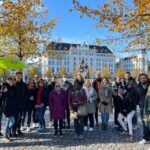
Copenhagen in two hours is a real sprint. This small-group walk strings together big sights—Marble Church, royal stops, and canal-side Nyhavn—while a local host explains how centuries of Denmark shaped the streets you see today. I love how efficiently it hits iconic landmarks without feeling like a checklist, and I love the human details: sailors’ families, royal power, and why each square looks the way it does. One drawback: if you want long, inside-the-building time, this pace is quick and most stops are brief.
The format works because the route is tight and logical. You start at Marmorkirken, move through Frederiksstaden and Nyboder, then keep going through the royal core and government sites, finishing where the city slows down. You’ll get plenty of photo chances, and you end in Nyhavn, which makes it easy to transition into coffee or a pastry without hunting for a place.
English is offered, and the guide makes a difference. In one outing, I saw how Maybritt’s clear English made the stories easy to follow, even when the weather turned wet and windy. Another guide, Maybee, even shifted the plan to a warm coffee lounge to keep the history coming. Consider packing a rain layer anyway, because Copenhagen weather loves surprises.
In This Review
- Highlights at a Glance: what this walk does best
- Start at Marmorkirken Metro: finding your guide fast
- Frederiks Kirke to Nyboder Memorial Rooms: marble dome and navy families
- Rosenborg Castle to the Round Tower: royal gardens and an observatory
- Gråbrødretorv and Amagertorv: squares that give your feet a break
- Christiansborg Palace to Nikolaj Church: power, law, and a 1200s spire
- Kongens Nytorv to Nyhavn: finishing at the famous canal
- Walking pace, tickets, and value for a 2-hour hit
- Should you book this medieval Copenhagen to Nyhavn walk?
- FAQ
- How long is the Highlights & Hidden Gems walking tour in Copenhagen?
- What is the price per person?
- How big is the group?
- Is the tour in English?
- Where do I meet the guide?
- Where does the tour end?
- Is a guide included?
- Are admission tickets included?
- What physical condition do I need?
- What is the cancellation policy?
Highlights at a Glance: what this walk does best
- A max group size of 12 keeps the pace human and the questions manageable
- English-speaking local host explains what you’re looking at in plain terms
- A smart stop order: Frederiks Kirke → Nyboder → royal landmarks → squares → Nyhavn
- Short, scenic stops make it workable even with only 2 hours
- Most sights are exterior/photo-focused, with a couple museum and building entries optional
Start at Marmorkirken Metro: finding your guide fast
The tour starts at Marmorkirken, the Marble Church area, at the address Marmorkirken 1264, Copenhagen. The meeting spot is practical: between the stairs leading down to the Marble Church Metro Station, right next to a 7-Eleven. That’s exactly the kind of landmark you can spot quickly, even if you’re a little jet-lagged and your brain is still buffering.
This matters more than it sounds. When you’re trying to see medieval Copenhagen in a limited window, starting smoothly prevents the usual problem of wasting your first 20 minutes figuring out where everyone is standing. Once the group gathers, the guide takes control of the flow and you move.
Expect moderate walking for about 2 hours. The stops are timed to keep momentum, and the route stays concentrated around central areas. It’s a good fit if you want structure but don’t want the pressure of a full-day tour.
Other canal and harbor boat tours we've reviewed in Copenhagen

Frederiks Kirke to Nyboder Memorial Rooms: marble dome and navy families
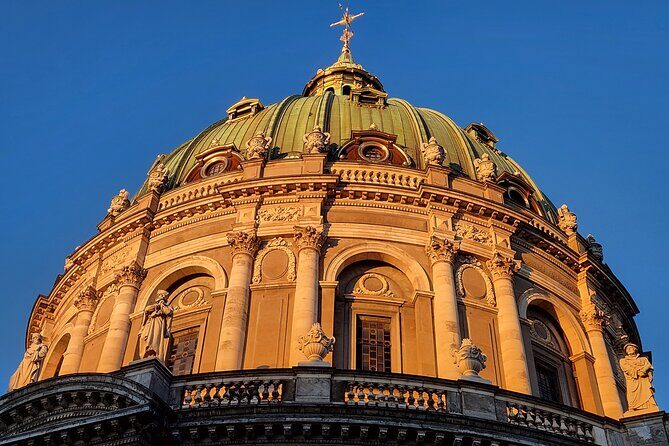
You begin with Frederiks Kirke, also called Marmorkirken. This church is famous for its massive dome and its long build story—more than 150 years—and it’s built from Norwegian marble. The design inspiration is also part of the talk: it was modeled with inspiration from St. Peter’s Basilica in Rome. Even if you’ve seen domes before, the scale and materials make this one worth your time.
You’ll also get context for Frederiksstaden, the royal district around the church. A lot of Copenhagen’s elegance can feel like it just happened. The guide helps you see it as planned and political, not random. This is one reason I like early stops: your brain is still fresh enough to connect details instead of just snapping photos.
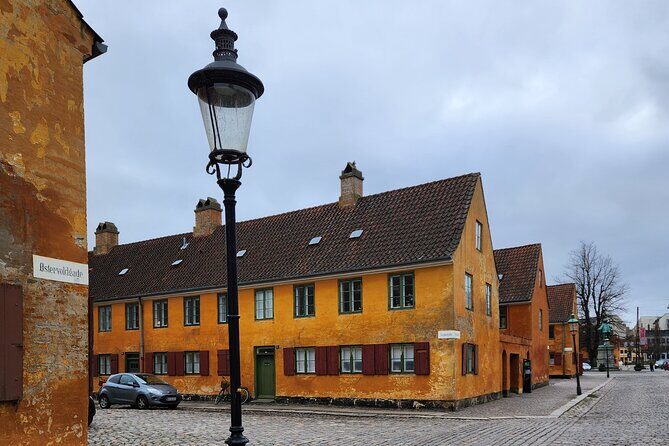
Next comes Nyboder, Copenhagen’s historic naval quarter. Founded in 1631 by King Christian IV to house Denmark’s naval families, it has a different texture than the grand royal blocks. The key stop here is the Nyboder Memorial Rooms, where you can peek through windows and get a glimpse of scenes from centuries past. If you want to go deeper, you’ll find preserved museum spaces with original artifacts, uniforms, and maritime relics.
Two practical notes. First, the memorial rooms entry is not included, so you’re deciding on the fly whether to spend extra time inside. Second, this part of the city is quieter in tone than the major monuments, so it can feel like a palate cleanser in the middle of the walk. If you enjoy everyday history—how people actually lived—this segment is a strong match.
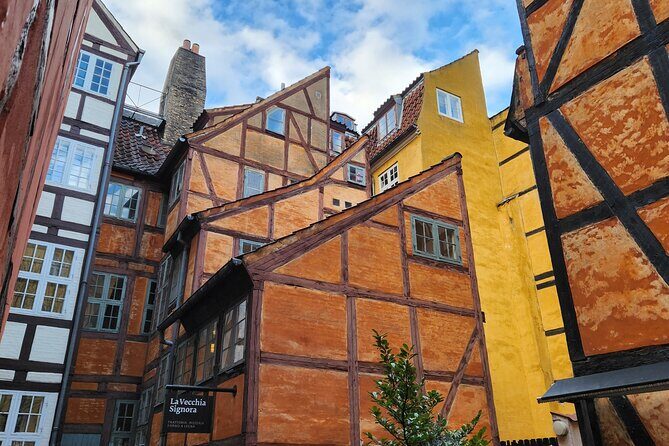
Between those points, you’ll also wander through Krusemyntegade, a peaceful street in the Nyboder area lined with colorful historic houses tied to that same maritime family story. This is the kind of stop that doesn’t require a ticket. You simply look up, notice the building shapes, and let the guide point out what to watch for.
Rosenborg Castle to the Round Tower: royal gardens and an observatory
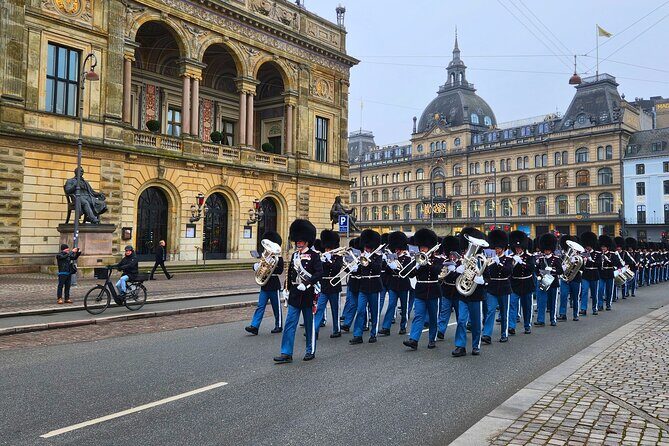
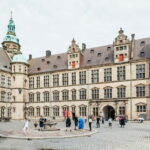
Rosenborg Castle is next, and it’s hard to miss. Built in the early 1600s by King Christian IV, it sits in King’s Garden (Kongens Have), Denmark’s oldest royal park. From the outside, it really does look like a fairytale setup, and you get great photo moments without needing to rush inside right away.
What I like here is the contrast. You go from naval-family streets into royal landscaping and ceremony. The guide helps you feel the shift: Copenhagen isn’t only about kings and palaces—it’s also about how rulers shaped the spaces people walked through.
Then you move to the Round Tower (Rundetårn). This is one of those Copenhagen icons that people recognize before they know why. Built in 1642 by King Christian IV, it was created as Europe’s oldest functioning observatory. That single detail changes how you look at the tower: it’s not just a pretty spiral on the skyline; it’s a statement about curiosity and science in a royal setting.
From the outside you can appreciate the elegant spiral design and the copper-clad roof. You’ll likely get a photo window with enough time to step back and take in the shape against the surrounding old town streets. The Round Tower entry is not included, so if you want to go farther than the exterior views, you’ll need to plan that separately.
Gråbrødretorv and Amagertorv: squares that give your feet a break
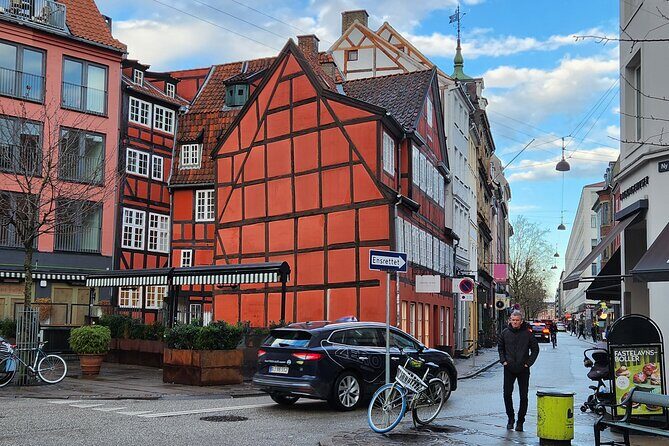
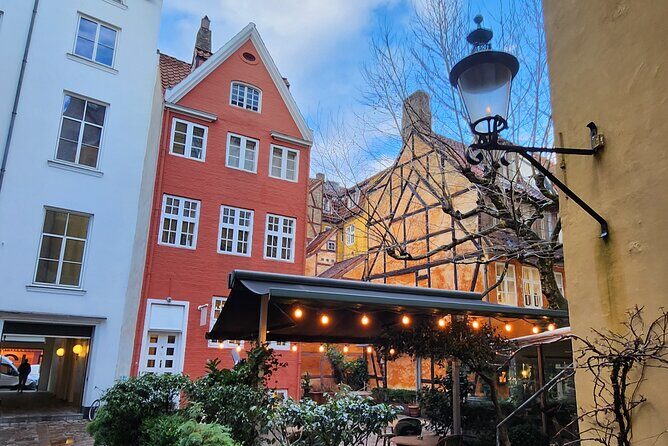
After the big monuments, you shift into squares—places where Copenhagen slows down just enough for you to reset. First is Gråbrødretorv, a picturesque square with colorful historic townhouses, shaded by large trees. Cafés and restaurants line the square, and the vibe here is relaxed in the good way: you can stop talking for a minute, notice people, and get your bearings.
Admission isn’t an issue here, and that’s part of the value of including squares. They let the tour breathe. If you’re walking in the city center and your pace depends on not getting overtired, these quick pauses make the second half feel easier.
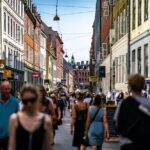
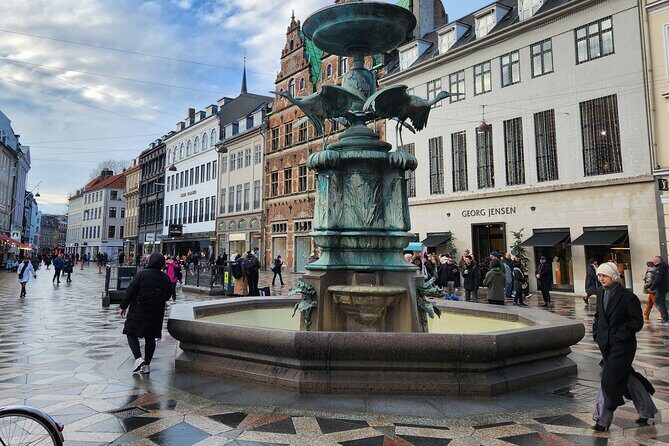
Next you head to Amagertorv, centered on the Stork Fountain. This is in the Strøget shopping district area, so it’s more active than Gråbrødretorv. You’ll hear about the fountain and the elegant surrounding architecture and also notice the mosaic pavement in the square. The guide’s job is to give you something to pay attention to besides crowds—so you look at design and placement instead of just moving forward.
This segment is also a good time to do a quick reality check: where are you in the route, how much energy do you have left, and whether you want to save time for Nyhavn later. Squares like these help you make that mental plan without stopping the whole tour.
Christiansborg Palace to Nikolaj Church: power, law, and a 1200s spire
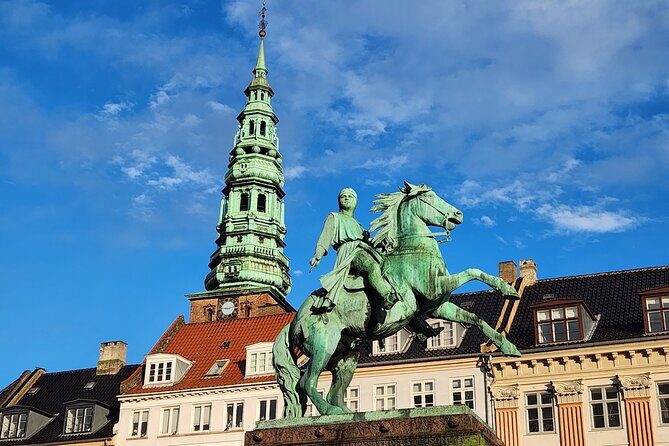
Christiansborg Palace is one of the most interesting stops on the walk because it connects old royal foundations to modern democracy. The building is located on Slotsholmen Island, and today it houses Denmark’s Parliament, the Supreme Court, and the Royal Reception Rooms. Even the guide’s framing is helpful: it’s the only building in the world that unites all branches of government under one roof.
From the outside, you’ll take in the grand façade and ornate copper spire. The stories here are about more than architecture. The site has burned and been rebuilt over centuries, and you’ll hear about kings, queens, and political intrigue shaping Danish history. Christiansborg is one of those places where you understand why the country is proud of its systems—once you connect the past events to the present institutions.
After that, you move to Nikolaj Church, which is now associated with Nikolaj Kunsthal. Originally built in the 1200s, it has an iconic spire that stands out on the skyline. You’ll see it from the outside, with a photo-friendly angle and a chance to compare its scale to the surrounding city fabric.
A key practical detail: the admission for Christiansborg and Nikolaj is not included. So treat this as a “see and understand from the outside” portion. If you want interiors, it’ll be a separate plan.
Other tours with a local guide we've reviewed in Copenhagen


Kongens Nytorv to Nyhavn: finishing at the famous canal
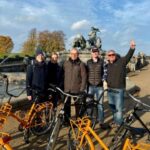
Kongens Nytorv (King’s New Square) brings you into Copenhagen’s grand central square world. It’s surrounded by major landmarks like the Royal Danish Theatre and Hotel d’Angleterre, and it has a recognizable equestrian statue of King Christian V. This is a great midpoint-to-finish step because it’s open, visual, and easy to transition from walking to relaxing.
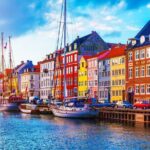
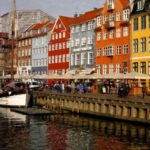
From there, you finish at Nyhavn, Copenhagen’s colorful canal waterfront. Nyhavn is famous for 17th-century townhouses, historic wooden ships, and the café culture lining the water. The guide ties it back to its working harbor past, when sailors and storytellers filled the area, and then to its modern role as one of Europe’s most photographed streets.
One detail I appreciate from the way the story is told: Hans Christian Andersen once lived here. Even if you don’t go deep into his life, that fact gives you a thread to notice the mix of literature, maritime work, and everyday city life.
Nyhavn is also the easiest payoff for your effort. The tour ends at Nyhavn 28, and you’re right where you want to be for a coffee or pastry. If your feet are tired or the weather turns, you don’t have to hunt for shelter—you can step into a café nearby.
Walking pace, tickets, and value for a 2-hour hit
This experience is built for a tight schedule. The route uses short stops (often around five minutes each) so you can see a lot without spending your entire day in motion. That also means you’re not looking at deep museum time for every site. You’re getting the stories and the visual impact first, then you can decide what to return to later on your own.
Price is listed as $28.43 per person for about 2 hours, with a maximum of 12 travelers. For Copenhagen, that’s a straightforward, short-format spend, and it earns its value by giving you context as you walk. You’re not paying for long entrances across multiple paid sites; instead, many stops are exterior and free to view.
Still, keep your expectations aligned with the ticket details. Some stops are marked as free entry (like Frederiks Kirke, Gråbrødretorv, and several central squares and the canal area), while others are not included (like the Nyboder Memorial Rooms, plus admission-not-included stops such as Rosenborg Castle, the Round Tower, Christiansborg, and Nikolaj Church). If you want to go inside everything, you should budget extra time and money for admissions you choose to add.
Small-group format is a big part of the payoff. In the reviews tied to this kind of tour, the most repeated praise is clear English and guides who adapt when weather changes. On a wet, windy day, the guide found a warm coffee lounge and kept sharing the city’s highlights from inside. That’s not just comfort—it’s smart tour leadership.
As for who should go: this is ideal for first-timers who want an efficient medieval-to-royal overview, couples and friends who like walking with a guide, and anyone who wants a dependable English explanation without committing to a full-day plan.
Should you book this medieval Copenhagen to Nyhavn walk?
Yes—if you want a focused introduction to Copenhagen that ends in a place where you’ll actually want to linger. I’d book it when you have limited time, you enjoy short story stops, and you want someone to point out what you’d otherwise miss in a few minutes of wandering.
I’d think twice if you’re the type who needs long museum time or you want to enter several major buildings during the tour itself. The schedule is designed for seeing and understanding from the outside, with a couple optional admission stops.
If you bring comfortable shoes and a rain layer, this is one of those city walks that makes Copenhagen feel legible fast. Start at Marble Church, follow the threads through navy homes and royal sites, then let Nyhavn do the relaxing part.
FAQ
How long is the Highlights & Hidden Gems walking tour in Copenhagen?
It runs for about 2 hours.
What is the price per person?
The price is $28.43 per person.
How big is the group?
The tour has a maximum of 12 travelers.
Is the tour in English?
Yes, the tour is offered in English.
Where do I meet the guide?
You meet at Marmorkirken (Frederiks Kirke) at Marmorkirken 1264, Copenhagen, between the stairs leading down to the Marble Church Metro Station next to a 7-Eleven.
Where does the tour end?
The tour ends in Nyhavn at Nyhavn 28, 1051 Indre By, Denmark.
Is a guide included?
Yes. The experience includes a live and local guide.
Are admission tickets included?
Some stops are marked as free, while others are not included (for example, Nyboder Memorial Rooms, Rosenborg Castle, the Round Tower, Christiansborg Palace, and Nikolaj Church).
What physical condition do I need?
You should have a moderate physical fitness level.
What is the cancellation policy?
You can cancel for a full refund up to 24 hours in advance of the experience’s start time. If you cancel less than 24 hours before, the amount paid is not refunded.